
| Download | Name | Description | Category |
|---|---|---|---|
 | Runcorn Busway Upgrade September 2026 v.3 | There is now an urgent need to progress this project. Runcorn faces worsening environmental pressures from road traffic, emissions, poor air quality and car dependency, while national bus statistics show that bus recovery remains uneven and still below full pre-pandemic strength in several markets. The Busway remains a valuable, segregated asset, but it now requires renewal: since the early 1970s, national bus use in Great Britain has fallen by around 60%, from roughly 13–14 billion passenger journeys a year at the start of the decade to around 5 billion journeys in recent years, underlining the need for a permanent fixed-track alternative in this corridor. By contrast, modern tram and light rail systems continue to show stronger passenger recovery: DfT light rail statistics report 231.2 million passenger journeys in England in the year ending March 2025, while England outside London recorded around 6% year-on-year growth. In this corridor, converting the Busway to hydrogen VLR would provide a permanent, zero-emission public transport spine, helping reverse decline, improve access to jobs and services, and directly reduce transport poverty for communities that currently depend on limited bus provision. | Halton Liverpool CR |
| Hydrogen Flyer Proposition Flyer Sept 2026 v.8 | Hydrogen Trams as a Service (HTaaS) is the UK’s first fully integrated, zero emission, whole system hydrogen mobility platform, enabling rapid deployment of Very Light Rail MRT (VLR) without the capital, delivery or operational risks associated with traditional tram systems. HTaaS replaces the conventional “procure build own operate” model with a single contract, OPEX based Energy as a Service framework, delivering predictable costs, guaranteed performance and verifiable carbon reduction from day one. HTaaS integrates hydrogen production, storage, refuelling, fleet operations, digital optimisation and lifecycle management into a unified service. This transforms hydrogen from a fragmented, project by project fuel into a bankable, city region scale energy system aligned with Net Zero 2030–2035 pathways. A defining feature of HTaaS is its ability to transform the municipality and others, from a transport operator into a local clean energy producer and distributor. | Hydrogen as a Service |
| CRRC ART Guided Bus | Autonomous rapid transit (ART)[a] is a lidar-guided[b] bi-articulated bus system intended for urban passenger transport. Developed by CRRC through CRRC Zhuzhou Institute Co Ltd, it was first unveiled in Zhuzhou, China, on 2 June 2017[4][9][10] and entered service in 2018.[4][9] Though marketed with terms such as "digital rail" (Lingang digital rail rapid transit) and "electric road", its core design consists of a multi-section articulated vehicle guided by optical sensors rather than rails. | Gadgetbahn Look a Likes |
| Halton Strategic Review Update 2026 V.4 | This Version 4 copy has been updated for the exclusive use of Councillor Pamela Wallace, and colleagues only. It is provided as a discussion document only, and no liability is accepted for reliance on its contents. This paper is intended solely to inform discussion of Halton’s strategic options and the proposed Daresbury station. It draws on the T57 Hydrogen Very Light Rail: Eccles to Widnes (Liverpool) Project. Prepared by Light Rail Solutions UK 2024 Ltd. Halton Impact Assessment: T57 Hydrogen Tram (30-Year Horizon) A Halton-specific extract, impact assessment for the T57 Hydrogen Tram corridor, focused on the Warrington–Widnes–Runcorn section and projected over a 30-year vehicle lifespan. This combines housing, employment, regeneration, health, and economic uplift—tailored for stakeholder briefings and funding justification. | Halton Liverpool CR |
| Morecambe Bay Coastal Flyer Aug 2026 | Morecambe Bay Coastal Benefits Improves coastal connectivity between Carnforth, Morecambe and Heysham Eden Project Morecambe, Heysham and park-and-ride gateways Enables phased VLR services linking the town loop, Eden Project Morecambe and future coastal extensions Increases ridership by offering a clean, convenient alternative to driving Reduces traffic congestion and CO? emissions Boosts visitor spend, tourism revenue and economic growth across Morecambe, Carnforth, Heysham and Lancaster Bay communities Raises development confidence and land values along the corridor, especially near VLR stops, interchanges and regeneration sites Enhances access for non-drivers, older residents, disabled passengers, students, visitors and coastal communities Demonstrates commitment to sustainable transport and hydrogen innovation | Morecambe Bay Coastal |
| Lines 1& 2, Port Erin to Ramsey via Douglas Central Aug 2026 v.11 | A proposed H2 VLR Upgrade TramTrain Line 1&2 Port Erin via Douglas Central to Ramsey Funded by HTaaS | IOM |
| Line 3 Proposed Peel to Douglas Central Aug 2026 v.11 | A proposed Line 3 Peel to Douglas, Funded by HTaaS | IOM |
| Line 4 Proposed Ramsey Circle to Peel | A proposed Line 4 Ramsey Phase 1 and Phase 2, Funded by HTaaS | IOM |
| Letter Bev Craig Mayoral Candidate July 2026 | Strategic Case Extracts from the conceptual Very Light Rail mini-study for GMCA officers, Wigan Council members and Makerfield parliamentary candidates identify several challenges affecting Ashton-in-Makerfield, Bryn, Hindley, Hindley Green, Abram, Worsley Mesnes, Orrell and Winstanley, including congestion on the A49, A58 and A577, slow and unreliable bus services, limited rail access beyond Bryn and Hindley, growth pressures from housing and employment development, and continuing concerns over traffic, safety and air quality; the study explores whether a low-cost, low-disruption VLR network could help address these issues while making clear that it is not a formal proposal or commitment. ?1-4920e0? Why VLR is Suggested The study presents VLR as a lower-cost alternative to conventional tram systems because shallow track construction of around 350–400 mm, battery or hydrogen propulsion without overhead wires, modular installation, fewer utility diversions and reduced construction disruption can support affordable delivery Less than £10m per km. while providing the fixed-infrastructure benefits needed for regeneration and placemaking; it also notes that Makerfield’s typical 5–8 km trip lengths align well with VLR operating characteristics. | Manchester Metrolink VLR |
| Why a VLR Golden Coast Line 9Jul 2026 | This proposal should be seen as more than a transport scheme. For MPs, councillors, and regional stakeholders, HTaaS offers a once-in-a-generation cross-party opportunity to align net zero, regeneration, transport inclusion, private investment, and local energy resilience within a single deliverable programme. Manchester's greatest achievement was not building a tramway; it was building long-term political consensus around a shared economic vision. THE GOLDEN COAST LINE now has the opportunity to do the same. The Golden Coast Line can become the transport spine that links Phoenix regeneration, housing growth, tourism, clean energy and opportunity across the conurbation, creating a legacy that extends far beyond transport alone. By linking Hydrogen Very Light Rail to local hydrogen production, municipal fleet decarbonisation, and third-party energy sales, THE GOLDEN COAST LINE could create the foundations of a new local clean-power industry — one that is less exposed to National Grid constraints and international fuel price volatility. Crucially, the model also offers the potential to lever private finance into public-purpose infrastructure, reducing pressure on public capital budgets while supporting regeneration, skilled employment, and long-term local economic resilience. A possible closing line: In political terms, HTaaS gives THE GOLDEN COAST LINE the opportunity to build a cross-party legacy: cleaner transport, local energy security, private investment, skilled jobs, and regeneration benefits delivered through one integrated programme. | BCP Bournemouth C/Church P/Mouth |
| Download | Name | Description | Category |
|---|---|---|---|
| Clyde Metro Rebuttal 5 July 2026 v.11 | “For too long, Scotland’s transport debate has been shaped not by evidence, but by Policy Constructs that predetermine outcomes before technical work even begins. The Clyde Metro programme is the clearest example of this. A single definitional choice in SPTR1 — restricting “mass transit” to segregated, heavy?infrastructure systems — removed modern tram and Very Light Rail (VLR/LR/TRAM MRT) solutions from scope before any appraisal took place. SPTR2 repeated the error. The result was a decade of lost opportunity. This report sets out, in forensic detail, what that decade has cost Glasgow’s communities. The evidence is stark. The failure to challenge SPTR1 early enough has resulted in: 1,100–1,400 avoidable premature deaths 18,000–22,000 avoidable hospital admissions 45,000–60,000 additional chronic illness cases £250–£320 million in direct NHS Scotland costs £1.45–£2.1 billion in total economic harm These harms fall overwhelmingly on the East End and Southside — the very communities with the highest PM?.?/NO? exposure, the highest transport poverty, the heaviest cardiovascular and respiratory disease burden, and the lowest life expectancy in Scotland. The Clyde Metro appraisal did not fail because of bad intentions. It failed because the framework was designed to exclude the right answer.” | Glasgow and District |
| VLR Golden Coast Line | Benefits of Very Light Rail for the BCP Corridor, Over thirty years life +of the Tram What we’re proposing A battery-dominant, OHLE and/or catenary-free VLR option for Line 1, “The Golden Coast Line”, using proven TiGM MRV-3 vehicles. These have operated for more than 14 years in Aruba in tourist-service mode and in Doha as city cars. Each MRV-3 carries around 100 passengers and can run in multiple-unit formation, for example two coupled cars providing about 200 passengers per train with one driver. The route would also be integrated with a high-quality greenway. This delivers a turn up and go service between Poole Station, Poole Hospital, Bournemouth Square with extendable stops at the Hospitals, to Christchurch Station | BCP Bournemouth C/Church P/Mouth |
| Metrolink VLR Feeder June 2026 | “Community Introduction In late spring 2026, a short segment on BBC North West Tonight captured something that people in Gee Cross had been feeling for years but had never quite seen reflected back at them. A local woman — speaking quietly but with unmistakable conviction — described how the newly announced housing plans around Hyde and Godley Green would “push even more traffic through roads that are already full.” Her words resonated because they were not abstract or political; they were the lived reality of school runs that take too long, buses that get stuck behind queues, and neighbourhood streets that feel busier and noisier with every passing year. For many watching across Tameside, her interview felt like someone finally saying out loud what whole communities had been thinking: that growth is welcome, but not if it leaves residents breathing worse air, sitting in longer queues, or feeling cut off from the places they need to reach. Gee Cross is a proud, close?knit place — people look out for each other, and they care deeply about the character of their neighbourhood. The fear expressed in that interview was not resistance to change; it was a plea for change to be done well. Residents know that new homes are needed. They know that young families need somewhere to live, and that Tameside must grow to thrive. But they also know that the A560 and A627 cannot simply absorb thousands more daily car trips. They know that Hyde town centre already strains under congestion. And they know that without a real alternative to driving, the burden of new development will fall hardest on the very communities who have carried the load for decades. This study begins from that place — from the voices of people who want their area to flourish, not fray. It recognises that the question facing Gee Cross is not whether new housing should come, but whether the infrastructure exists to support it fairly. The BBC interview did not spark this concern; it simply made it visible. Very Light Rail (VLR) offers a way to honour that community voice. It provides a clean, reliable, everyday alternative to the car — something that can take pressure off the roads, connect people to jobs and services, and give residents confidence that growth will not overwhelm the places they love. | Manchester - Metrolink |
| Wigan Very Light Rail Jun 2026 | 1. Strategic Context Makerfield sits in the southern and eastern part of the Wigan district, covering Ashton-in-Makerfield, Bryn, Hindley, Hindley Green, Abram, Worsley Mesnes, Orrell, and Winstanley. These communities form a chain of compact town centres and residential neighbourhoods linked by heavily used A-roads. The area has seen rising concern about congestion, air quality, and the impact of new development. These issues have been highlighted in local media and community discussions, including recent BBC North West coverage of residents expressing frustration about traffic pressures. The geography of Makerfield — short distances, constrained corridors, and multiple small centres — is well-suited to Very Light Rail (VLR), a low-disruption, lower-cost rail technology designed for exactly this type of urban form. For deeper context, GMCA officers may want to explore VLR corridor geometry, while members may find Bee Network policy relevant. | Wigan Makerfield |
| Hydrogen as a Service May 2026 V.26 | HTaaS is more than a Transport Solution. It is a new municipal energy model, a new commercial model, and a new pathway to net?zero cities. The transition to a net?zero economy requires solutions that are not only technically credible, but deliverable, affordable and capable of transforming the way our city’s function. Hydrogen Trams as a Service (HTaaS) represents precisely this kind of innovation: a UK?developed, commercially mature, whole?system approach that integrates clean transport, local energy production and municipal fleet decarbonisation into a single, coherent platform. | Hydrogen as a Service |
| LR UK CGT Glasgow Line 1 Consequences_Report_With_New_Conclusion May 2026 v.6 | Key findings suggest that if the modal shift is not achieved, Glasgow will continue to experience a disproportionate burden of mortality and morbidity due to air pollution and transport-related inactivity. These impacts are not only measured in premature deaths and increased instances of chronic disease but also in billions of pounds in economic costs to the healthcare system, lost productivity, and reduced quality of life. | Glasgow and District |
| BRT - Is the Myth Dead Yet? March 2026 | Bus Rapid Transit! is the Myth Dead yet! In recent years, a chorus of so-called Siren voices has continued to promote the mistaken belief that Bus Rapid Transit (BRT) is a direct substitute for Light Rail in urban development and can do the same job as a tram or light rail, often overlooking both the unique benefits of rail-based systems and the pace of technological innovation. These advocates persist with outdated arguments, disregarding advances such as Very Light Rail (VLR)—notably the proven trams capable of carrying 100 passengers—which now offer cleaner, more efficient alternatives to battery-electric solutions. A recent study of a proposed Mass Rapid Transit BRT ( an oxymoron in itself) for Greater Milton Keynes March 2026, elsewhere on this site confirms this | Bus Rapid Transit |
| Milton Keynes MRT VLR Mar 2026 | Mr Alexander Collicott, Westcroft, Milton Keynes. “We are late teen residents of Milton Keynes, including Mr Alexander Collicott (19) and peers, and we are speaking up because we will still be living with today’s transport decisions when we are in our forties and fifties—when we are building careers, raising families, and caring for others. The choices made now will shape not just how we travel as students or young workers, but whether Milton Keynes remains a city we can stay in, belong in, and build long term lives in. Many of us are car less or from low car households, and we feel how fragile access becomes when a city is shaped around vehicles we cannot always afford, at the same time as the future is clearly moving toward tighter environmental and health standards that will progressively constrain rubber wheeled traffic in key corridors. | Milton Keynes MRT (VLR) |
| T57 Salford – Partington March 2026 | The proposed T57 Hydrogen Tram route 9.151m/14.72m Km, connects Irlam Station with Partington Spur, culminating at Metrolink Brooklands and Altrincham. Beginning at Irlam Station, the tramline is envisioned to offer a sustainable, hydrogen-powered alternative for commuters, reducing environmental impact whilst improving connectivity. The route proceeds through Partington, integrating with existing transit options, and then links directly to the Brooklands Metrolink stop, ensuring seamless transfers to Greater Manchester’s established tram system. Ultimately, the line reaches Altrincham, providing efficient access for both residents and travellers heading into central Manchester | T57 Hydrogen Tram Project |
| Bristol; Gloucester Road | This document supports a previous document, Integrating Trams on the Gloucester Rd Feb 2026 and brings together the strategic tram proposition for the Gloucester Road (A38) starter line and the Hydrogen-Transport-as-a-Service (HTaaS) model into a single, unified briefing. It sets out how Very Light Rail (VLR), hydrogen innovation, and the wider West of England hydrogen ecosystem combine to deliver a financially viable, operationally robust, and strategically transformative mass transit solution for the region. | Bristol |
| Download | Name | Description | Category |
|---|---|---|---|
| Halton: a planning sin consequences 2008 - Feb 2026 | Halton Borough Shot sighted planning decision sin. "Between 2008 and 2025, Halton Borough and the wider Warrington–Runcorn–Widnes corridor endured preventable harm due to the non-adoption of a clean transit strategy. Had the Light Rail plan been implemented in 2008, over 1,000 premature deaths, 25,000 cases of respiratory and cardiovascular illness, and £61 million in avoidable NHS and social care costs could have been averted. This is not a retrospective blame exercise—it is a recognition of institutional inertia and a call to action. The failure to act on known pollution risks, despite feasibility studies and mounting health evidence, represents a breach of public duty. Under the Clean Air (Human Rights) Bill, such omissions carry legal and moral weight. The T57 Hydrogen Tram is more than a transport upgrade. It is a public health intervention, a legal safeguard, and a strategic correction. It delivers clean air, inclusive mobility, and long- term municipal value. It is our opportunity to reverse historic neglect, restore public trust, and ensure that future generations are not left breathing the consequences of delay. We must act decisively—not only to build infrastructure, but to rebuild accountability." | Halton Liverpool CR |
| Bristol WECA What is lost by going BRT Feb 2026 | This document is submitted in response to a potential decision by the West of England Combined Authority (WECA) to proceed with a bus based or Bus Rapid Transit (BRT led) solution on two strategic corridors: the A4 Bristol–Bath corridor and the Gloucester Road (A38) corridor. The purpose of this submission is to ensure that any such decision is lawful, procedurally fair, and supported by a complete and robust evidence base, and that it is not taken on the basis of incomplete appraisal, narrowed environmental scope, or asymmetric treatment of reasonable alternatives. The document is intended to clarify whether WECA has complied with its statutory duties in relation to environmental assessment, public health, equality, and evidence led decision making before committing to long life corridor interventions that may foreclose future options. | Bristol |
| Summary; VLR Feeder for Dockland Light Rail | VLR Feeder Opportunities Recommended Corridors 1. Abbey Wood Spine o North–south VLR feeder from Thamesmead estates to Abbey Wood (Elizabeth Line). o Reduces bus reliance and improves east–west rail access. 2. Beckton Riverside Link o Shorthaul VLR shuttle from Thamesmead Town Centre to Beckton Riverside (DLR). o Enables clean cross-river interchange. 3. Internal Thamesmead Circulator o Loop or linear spine connecting estates, schools, retail, and waterfront to DLR and Elizabeth Line nodes. 4. Woolwich–Abbey Wood Corridor o TfL is consulting on bus priority and active travel upgrades. o VLR could replace or parallel bus lanes for permanence and compliance | Docklands LR VLR |
| VLR Feeder for Dockland Light Rail | The DLR extension to Thamesmead has just been approved in the Autumn 2025 Budget and is now moving into procurement and early design. Construction is expected to begin around 2028, with two new stations planned: one at Beckton Riverside and one in Thamesmead A Three line Hydrogen VLR, either on board or by OHLE with integrated buses for Thamesmead Saving millions and almost doubling Pax on the DLR | Docklands LR VLR |
| Peace Tram for Ukraine | Imagine a color-coded map showing phased tram/light rail corridors for: • Mariupol: o Phase 1: Port ? City Centre ? Hospital Zone o Phase 2: Industrial Belt ? Residential Districts o Phase 3: East-West Connector for economic hubs • Kharkiv: o Phase 1: Reconnect damaged northern districts to metro spine o Phase 2: Tram loop linking universities, hospitals, and displaced housing o Phase 3: Integration with suburban rail for regional recovery • Donetsk Region (Avdiivka, Horlivka, Kramatorsk): o Phase 1: Civic corridors linking clinics and schools o Phase 2: Industrial-to-residential connectors for workforce mobility o Phase 3: Regional tram spine to reduce car dependency | Ukraine |
| Peace Tram for Ukraine | Imagine a color-coded map showing phased tram/light rail corridors for: • Mariupol: o Phase 1: Port ? City Centre ? Hospital Zone o Phase 2: Industrial Belt ? Residential Districts o Phase 3: East-West Connector for economic hubs • Kharkiv: o Phase 1: Reconnect damaged northern districts to metro spine o Phase 2: Tram loop linking universities, hospitals, and displaced housing o Phase 3: Integration with suburban rail for regional recovery • Donetsk Region (Avdiivka, Horlivka, Kramatorsk): o Phase 1: Civic corridors linking clinics and schools o Phase 2: Industrial-to-residential connectors for workforce mobility o Phase 3: Regional tram spine to reduce car dependency | Peace Tram |
| Peace Tram for Gaza | Supporting Gaza’s recovery through Clean Sustainable Transport Infrastructure Supporting restructuring challenges, Gaza with Tens of thousands of homes destroyed; major hospitals and schools rendered inoperable. Traditional recovery models relying on diesel powered traditional recovery and creating skilled jobs Very Light Rail (VLR) systems = offering a low emission system powered by solar, hydrogen to clinics, schools and markets, whilst creating skilled jobs | Peace Tram |
| A Peace Gaza Oct 2025 | 2025 2025 The Gaza Tram of Peace is a solar-powered, hydrogen-enabled Very Light Rail (VLR) system proposed to support Gaza’s post-conflict recovery. Based on the TIG/MRC3, robust Tatra double-bogie car, it combines heritage design with modern resilience and efficiency. • The tram will transport rubble trailers, construction materials, and the workforce, reconnecting homes, clinics, schools, and markets, while serving as a visible symbol of civic dignity and peace. Inspired by many post-war cities and towns, such as Hiroshima’s and other post-war tram restorations, • Tram systems were low-cost, high-impact, enabling mobility, employment, and civic pride during reconstruction. • After WW2, Germany, after the reconstruction of their significantly war-damaged local tramways, then used them to rebuild their cities and economy. Inspired by West Germany, cities like Dresden and Frankfurt used tramway restoration as a backbone for urban renewal, reconnecting housing, jobs, and services. • Post-WWII German The model proved scalable, resilient, and symbolic of democratic recovery | GAZA Palestine |
| LR Thames + 30 years. Oct 2025 | The proposed Lower Thames Crossing is being promoted as the UK’s greenest road. But without clean transit integration, it risks becoming a 30-year public health liability—measured not just in carbon, but in lives. | Thames Estuary - Kenex |
| Halton T57 Impact Assessment Oct 2025 | Halton Impact Assessment: T57 Hydrogen Tram (30-Year Horizon) A Halton-specific extract, impact assessment for the T57 Hydrogen Tram corridor, focused on the Warrington–Widnes–Runcorn section and projected over a 30-year vehicle lifespan. This combines housing, employment, regeneration, health, and economic uplift—tailored for stakeholder briefings and funding justification. | Halton Liverpool CR |
| Download | Name | Description | Category |
|---|---|---|---|
| IOM Consequeses of doing NOTHING | This report examines the consequences of maintaining the status quo and not pursuing hydrogen-powered Very Light Rail (VLR) integration on the Isle of Man’s rail network. It highlights ongoing operational, environmental, economic, and strategic challenges that will persist or worsen without the proposed project. | IOM |
| ramsey reversing and Airport Loop Sept 2025 | A reversing spur allows single-ended VLR vehicles to change direction without needing a full turning loop. This is particularly valuable in constrained urban environments like Ramsey.VLR Trams operate clockwise and anti-clockwise, partially running on street infrastructure near the airport. • VLR loop offers direct, zero-emission access to terminal • Reduces taxi/car dependency, especially for short-haul and commuter traffic • Estimated uplift: £3M–£6M in transport efficiency and reduced congestion | IOM |
| Isle of Man H VLR F- Study Upgrade Sept 2025 | This study explores the potential for integrating hydrogen-powered Very Light Rail (VLR) technology into the Isle of Man’s existing rail ecosystem. The aim is to enhance connectivity, reduce emissions, and preserve heritage operations. The concept retains the Ramsey–Douglas line, Douglas horse tramway, and Douglas–Port Erin steam railway, while introducing hydrogen VLR vehicles for supplementary services, greater connectivity, through running and future-proofing. | IOM |
| Air Quality Fact Sheet 9 September 2025 | ©Disclaimer: This document is provided for informational and guidance purposes only and does not constitute legal, financial, technical, or professional advice. Light Rail UK accepts no responsibility or liability for any direct or indirect losses or actions arising from reliance on the content herein | Disclaimer |
| York City Updated Aug 2025 | *This starter line will pass through key stops like York Rail Station, Stonebow, and Woodthorpe, York Racecourse and out to a P+R on the South Western Ring Road It will operate throughout the day at a proposed 6-minute peak headway, serving a mix of commuters, shoppers, and local residents High frequency: every 6 minutes during peak times Trams address the “Pollution Air Quality Task Group report A non-polluting distributor, steel-on-steel is clearly needed! Globally, PM pollution is linked to 9 million premature deaths annually. For example, in 2019, nearly 70% of the 4.2 million deaths attributed to ambient air pollution PM10s & PM2.5 were due to cardiovascular conditions. A major contributor to Alzheimer's, Dementia and other issues A Clean and Green Recycled transport gateway in the centre of York No Road/Tyre/Brake Particulates (NEE) (Trams are genuine zero-emission vehicles at the point of use!). A 2nd-generation working Tourist tram museum line a possibility ?. Tourist and City tramcars for all weathers Addresses Transport Poverty and Social Exclusion by being disabled friendly and level boarding as standard A Clean and Green Recycled transit system in the centre of York with No Road/Tyre/Brake Particulates (NEE) (Trams are genuine zero-emission vehicles at the point of use!). Reduces the country to city centre buses, which then can offer a more frequent local feeder service in the outskirts of York to the tram Single ticket operation is possible. | York City |
| Edinburgh South Suburban Line v.10 June 2024 | An updated pre-feasibility study flyer June 2024 | Edinburgh Suburban Circular Line |
| Edinburgh South Suburban Circular | Green Hydrogen from Waste and Revenue sources for Edinburgh South Suburban Regeneration | Edinburgh Suburban Circular Line |
| Basildon Starter Line v.5 | Basildon (The “City”) of South Essex with key rail station. Basildon Hospital – Major general hospital. Corringham – new housing and rail station proposed (Land Value Capture). DP World London Gateway Port – Part of Thames Freeport. Thames Enterprise Park (Poorly connected in need of development. Free land for development). Canvey Island = population c 40,000 on reclaimed land at risk of flooding and at risk in case of emergency or evacuation. Although close geographically, the island has very poor access to employment at e.g. DP London Gateway and Basildon. Environment, improved air quality as a result of transfer from road to tram. Community, Fast, Clean & Affordable transport for local communities.Cost, Estimated at <£10M per track Km Modal Switch is anticipated to remove 25%-34% of local traffic from the road network. No Road/Tyre/Brake Particulates (NEE), genuine zero emission vehicles. No Air Pollution at Point of Use! | Basildon |
| Canvey Island All Routes v.5 | DP World London Gateway Port – Part of Thames Freeport,Thames Enterprise Park (Poorly connected in need of development. Free land for development)Canvey Island = population c 40,000 on reclaimed land at risk of flooding and at risk in case of emergency or evacuation.Although close geographically the island has very poor access to employment at e.g. DP London Gateway and Basildon.Environment, improved air quality as a result of transfer from road to tram.Community, Fast, Clean & Affordable transport for local communities. Cost, Estimated at <£10M per track Km Modal Switch is anticipated to remove 25%-34% of local traffic from the road network No Road/Tyre/Brake Particulates (NEE), genuine zero emission vehicles. No pollution at the point of Use | Canvey Island |
| Hydrogen trams as a Service V.23 | Updated 7 April 2025. "Hydrogen Trams as a Services v.23" has been modularised and starter models can be chosen to suit: Podcast @ https://www.railindustryconnect.co.uk/rail-industry-connected-hydrogen-trams-as-a-service-with-jim-harkins-light-rail-uk/ A summary of some significant benefits: • The benefits of Light Rail & VLR when combined with the emerging low cost benefits of the Hydrogen Industry point to a significant game changing outcome. • Within our consortium we can supply funding for infrastructure, vehicles, and legislation to be repaid over an agreed term, 25 years+. • A design and build team will work with the client as in house or as DBOM type partnership. • A possible matched Hydrogen plant investment dowry circa £11M. • Establish a Tram vehicle assembly factory for domestic and European export. • We have a range of game changing Hydrogen Products such as Tritonex Hydrogen Barrier System, the only coating in the world that creates a 100% isolation barrier between hydrogen gas and the substrate easing transportation, storage, traction, and distribution. Tritonor. • A “cold process” of tip site plastic recovery and anaerobic food waste conversion and blending to high quality green Hydrogen. • A low cost supply of green hydrogen for either on board the tram or supplied by traditional overhead line. • A standard vehicle pump fueling facility for use with domestic rubber wheeled municipal vehicles including bus fleets. • | Hydrogen as a Service |
| Download | Name | Description | Category |
|---|---|---|---|
| LR Thames Estuary Starter Line April 2025 | By developing the economic potential of the Thames Estuary, we have a viable access to national and international markets and directly into London transport systems. Updated and amended April 2025 | Thames Estuary - Kenex |
| Wirral Tourist Line April 2025 | The new and emerging details of the Very Light Rail (VLR) project in Coventry, Doha, Aruba, and elsewhere, with the gathering of data and monitoring of progress from the outset so its implications for new schemes and LTPs schemes in Liverpool City Region and specifically the Wirral can now be realistically appraised. Light Rail UK Group (Believes) Pre-feasibility scoping and initial appraisal of potential schemes to include: Identification of a potential further VLR prototype scheme in Liverpool City Region.A Hydrogen VLR demonstrator/starter line in Wirral by extending the Woodside Line to New Brighton A possible Cross-river service using Mersey Ferries A Wirral Tram line exists serving the Ferry Terminal Birkenhead (Abandoned?) Revisiting the original Wirral Streetcar Project will open significant housing p | Wirral Streetcar 2 |
| Liverpool Cruise Liner Shuttle Flyer v.5 | The answer to safely and comfortably moving Everton FC and Away fans especially in inclement weather | Liverpool Waterfront Shuttle |
| Blackpool Fylde Coastal Tram Loop Extention Mar 2025 | In 2023, approximately 0.33 billion vehicle miles were travelled on roads in Blackpool In 2023, road transport in Blackpool produced approximately 21.3 tonnes of particulate matter (PM). Globally, PM pollution is linked to millions of premature deaths annually. For example, in 2019, nearly 70% of the 4.2 million deaths attributed to ambient air pollution were due to cardiovascular condition A non-polluting distributor, steel on steel is clearly needed! | Blackpool - Fylde Coast |
| Warrington Hydrogen trams as a Service Presentation v.4 Feb 2025 | A presentation on the benefits of Hydrogen trams as a Service including potential revenue streams | Warrington |
| Liverpool Waterfront Cruiseliner Shuttle 5th Feb 2025 | Direct access from/to the City Centre transport Hubs. Link to Lime St. Railway Station and Bus Station and Liverpool One Retail Centre. Frequent and Flexible Service, Additional timings for Cruise Liner’s arrivals and departures 200,000 passengers in 2024 and will exceed 300,000 once the new infrastructure works are completed. IOM Steam Packet Company terminal 623,037 pax Mersey Ferries Pierhead terminal 1,200,000 Everton Stadium estimate 1,004,872 fans to events Estimated traffic 2,123,037 potential passengers Tourist and City tramcars for all weathers. Tourist spends captured in LCR A 2nd generation working tram museum line. A Clean and Green Gateway to the North West No Road/Tyre/Brake Particulates (NEE) (A genuine zero emission vehicle). No Air Pollution at Point of Use! | Liverpool Waterfront Shuttle |
| BCIMO; Hydrogen Trams as a Service v.4 12 Dec 2024 | Hydrogen Trams as a Service v.4 given to BCIMO Dudley 12 Dec 2024 Light Rail UK believes in the proven success of current UK Tramways and the merging of the ongoing successful development of science & technology in the Hydrogen field, driven by Climate Change demands | BCIMO Dudley |
| BCIMO Report ; H2 Trams as a Service ; Dudley 12 Dec 2024 | As the imperative for cleaner and thus greener transport continues apace, the exploration of potential solutions becomes ever more important, including a range of options for propulsion to ensure sustainability of both source and supply. The discussion opened this week on the role of clean hydrogen, encompassed in an ‘as-a-Service’ model for very light rail, with a new working group at BCIMO. | BCIMO Dudley |
| Stoke City Council VLR Outline Study | A flawed report? | Stoke on Trent |
| BCIMO Clean Futures Accelerator Road Map 2025 | Clean Futures Accelerator Road Map 2025 | BCIMO Dudley |
| Download | Name | Description | Category |
|---|---|---|---|
| Warrington East-West Line v.7Jan 2025 | Park & Ride, direct access from/to the Town Centre and Transport Hubs. Link to Central, Bank Quay Stations and Bus Station and Pedestrian Retail Centre. Frequent and Flexible Service, A Clean and Green Eastern Gateway to Warrington Opens up Fiddlers Ferry for Housing Eliminates LEZ Requirement along A57 No Road/Tyre/Brake Particulates (NEE) (A genuine zero emission vehicle). “High Street, Town Centre” Retail Access. | Warrington |
| Edinburgh: Records Tumble Jan 2025 | Lea Harrison, Edinburgh Trams Managing Director, explained: “Last year saw a series of remarkable achievements, not least our busiest ever day when more than 74,000 trips were taken onboard our trams | Edinburgh |
| Baroness Jenny Randerson RIP | The Welsh Liberal Vice Chair, All Party Parliamentary Light Rail Group, Jenny Randerson RIP Democrat politician Jenny Randerson has died at 76. | APPG - Light Rail |
| BCIMO 12 Dec 2024 Presentation "Hydrogen Trams as a Service v.4" | A link to our video video blog "Hydrogen Trams as a Service v.4 at https://www.railindustryconnect.co.uk/rail-industry-connected-hydrogen-trams-as-a-service-with-jim-harkins-light-rail-uk/ | BCIMO |
| BCIMO Invitation 12 Dec 2024 | I am delighted to invite you to the Hydrogen Trams as a Service Working Group, proudly supported by Clean Futures and hosted by BCIMO at the esteemed Very Light Rail National Innovation Centre Dudley This exclusive session brings together key light rail stakeholders from across the UK for an engaging and thought-provoking discussion. Participants will explore the latest advancements in hydrogen technology and the transformative opportunities it presents for the future of the UK’s light rail sector, particularly within regional development | Hydrogen as a Service |
| Tritonex Flyer Dec 2024 | Tritonex ® ISO 17081 The game changing solution to Hydrogen Storage, Transportation, Corrosion and Permeation. and the only coating in the world certified ISO 17081 for 0% permeation to 900 bar. Now we can have hydrogen gas at affordable prices for many industries and applications | Triton Hydrogen |
| UTG Transport Review Report Aug 2024 | 1. A Bold Long-term Vision and Ambition for Transport Infrastructure: An ambitious national transport strategy to increase journeys by public transport, walking, and cycling by 2035, and to double the mode share of rail within a decade. 2. Accelerating Delivery of Transport Infrastructure Across the Nation: Proposing a "Greener, Faster, Cheaper" framework, the review suggests reducing project delivery costs by 20% and timelines by 25%. Catalysing growth by building on the progress of English devolution. 3. Harnessing the Benefits of Public-Private Partnerships: Recognising the essential role of private investment, the review recommends developing an infrastructure investment playbook to facilitate public-private partnerships. A HM Treasury should support this to develop a new approach to private finance. 4. Getting the Structure Right for Delivery Now and in the Future: A clear, long-term national transport strategy aligned with the UK's industrial strategy and housing delivery. This includes reforms to planning processes and enhancing the role of local authorities in delivering transport infrastructure. 5. The Voice of Britain’s Transport Users and Workforce at the Heart of Transport Plans: Emphasising the importance of user and workforce engagement, the review calls for greater involvement of trade unions and underrepresented groups to ensure inclusive and effective infrastructure development. | United Kingdom |
| Midland Metro: Catalyst for Change LRC Leeds 2024 | The way forward showing the percentages of LR in urban Renewal West Midlands by Ian Anderson • The purpose of investing in LRT must be clear: the outcomes, aims and goals as this influences everything from the business case to the public perception. • The industry has a huge amount of knowledge, skill and experience in delivering safe and efficient LRT across cities – we need to retain this. • The industry needs a more consistent, forensic way of capturing, allocating and representing the costs associated with regeneration schemes enabled by LRT. • Currently circa 1/3 of the total cost is delivering regeneration - to unlock future schemes we need to consider the funding streams for the value for inner city projects. • As an industry, we need to cohesively present our case – not by city or by project, but by the overall benefits that LRT brings – a catalyst for Regeneration | Centro West Midlands |
| Hydrogen FT Report August 2024 | In March 2023, a small plane took a 15-minute flight around an airfield in the US state of Washington. Despite the size of the aircraft and its brief time in the air, the flight was momentous: one of the plane’s engines was powered by hydrogen.Despite clean hydrogen’s potential, it faces several obstacles, including regulatory fragmentation. This is a challenge in Europe, where jurisdictional variations in everything from planning and competition laws to specifications for pipelines can hamper the implementation of hydrogen investments. “While you have support at the macro level, when it comes to developing the projects there are significant regulatory burdens,” says Ryan Gawrych, a London-based senior associate in White & Case’s Energy, Infrastructure and Project and Asset Finance Group. | Hydrogen2 |
| Why Trams Slough to Terminal 5 Heathrow | Key health and wellbeing challenges for the borough include ensuring a healthy start to life, improving childhood obesity, oral health, smoking, physical inactivity, diabetes, TB, alcohol and substance misuse, mental health issues and early deaths from cardiovascular disease, a major result of Transport Corridor pollution | Slough to T5 Heathrow |
| Download | Name | Description | Category |
|---|---|---|---|
| Light Rail Industry May 2024 | Transport Times Award: Nominated and short listed for the Best Transport Team/Partnership of the Year 2024 category | Conferences |
| Hydrogen CleanTech Emisssions May 2024 | Breakthrough study – new hydrogen cleantech reduces worst carbon emissions by 91% An independent 18-month trial of Advanced Hydrogen Technologies (AHT) Group’s carbon capture device has reported significantly lower emissions from a fleet of Abels Moving Services’ diesel lorry exhausts. | Hydrogen2 |
| Warrington Lines 1 & 2 April 2024 | A Hydrogen VLR Tram will :- The first two lines will Improve non car access and connectivity to the two main North South and East West Road corridors Provide a greater service frequency i.e. 4-8 trams per hour, Employment including industrial and logistics sites New housing developments including denser housing without parking spaces. Provision of cleaner air to schools and hospitals On board Hydrogen or by overhead This Project may have a £10M +Hydrogen Investment Dowry the cost of the Western Link scheme has increased from the original estimate of £212.7m up to £269m as of 2022 £269m buys approximately 38 Km of double track and vehicles Has at least three times the Transport Legacy of Zebra Buses being introduced i.e. Thirty Five years + | Warrington |
| T57 Hydrogen Tram for Salford April 2024 | Update Why a Very Light Rail (VLR), tram system can have a significant effect on Climate Change and benefits to Manchester – Salford – Warrington - Halton – Liverpool Corridor. This is a serious opportunity in the proposed rebalancing of the North - South economy, and at the same help prevent the “Grand Plans of Rail North” becoming a major source of Transport Corridor Pollution. | T57 Hydrogen Tram Project |
| Hydrogen as a Service - Public Transport | To date, effective storage and distribution of hydrogen have been two of the main constraints on its development as a green fuel for decarbonisation of the economy. However, a UK nano-technology company called Triton Hydrogen has developed a simple coating product which provides a quantum leap forward in the delivery of hydrogen as the green fuel of the future. Tritonex Barrier Coating System can be applied to new or existing infrastructure and forms an impermeable seal to the surface, preventing permeation and embrittlement | Hydrogen as a Service |
| Trams as a Service Mar 2024 | There is a widespread recognition within the UK and Internationally of the benefits of light rail as an environmentally friendly form of sustainable mass transit. On average there is a modal switch of 25% - 32% resulting in lower road mileage with resultant cleaner air, Nottingham does not require LEZs etc., That electric/hydrogen buses can only be seen as an interim measure and that rubber wheeled vehicles despite their (short term benefits) remain a source of significant local particulates & heavy metals pollution arising from the friction between tyres and road surfaces while steel wheels running on steel rails create zero emissions at point of use. | Triton Hydrogen |
| Light Rail Industry March 2024 | Story Contracting is a privately-owned,award-winning infrastructure company.With regional offices across England and Scotland, Story is highly respected nationally for providing rail, plant and construction solutions. We are one of only four plant providers in the UK to be awarded ‘Gold’ on Network Rail’s Route to Gold for reliability and continuous improvement. Story Contracting has also earned a reputation of maintaining outstanding health & safety practices across all our regions and operating divisions – this was recognised nationally with the awarding of the prestigious RoSPA ‘Gold’ Award for seven consecutive years. | Story Contracting Ltd |
| London Mayor Elections 2nd May 2024 | The London Mayoral election will be held on 2nd May 2024. Despite the amount of progress made on cleaning up London’s air over the last few years, we need London’s next Mayor to go much further if we want children to be truly protected from the lifelong health impacts of air pollution. | Mums for Lungs |
| Trams offer a vital solution to UK Decarbonisation Mar 2024 | Few people have more experience of tram-trains than new UK Tram Chairman Steve Edwards. He was Director General for South Yorkshire Passenger Transport Executive (SYPTE), which was responsible for introducing (in 2018) Britain’s first tram-train between Sheffield Cathedral, Rotherham and Parkgate Shopping as part of Sheffield Supertram. | UKTram |
| The Mayor of South Yorkshire talks TramSense on YouTube Jan 2024 | Oliver Coppard, Mayor of South Yorkshire, was in conversation with Louisa Harrison-Walker, Chief Executive of the Sheffield Chamber of Commerce. During the discussion, the Mayor spoke about the potential opportunities that franchised bus services could bring, the challenges of meeting net zero targets and boosting active travel, and the rationale for bringing South Yorkshire’s tram network under public control. His views on Mass Transit are far thinking and a template for those considering only Bus and Train mass Transit Schemes. | UTG - Urban Transport Group |
| Download | Name | Description | Category |
|---|---|---|---|
| Norfolk; Court Air Quality Challenge 5 Feb 2024 | Following the appeal hearing on 16 January, Boswell said in a statement: “Government climate policies are failing, and especially for transport which is the UK’s largest carbon emitting sector. Each time a minister approves a new road scheme whilst stubbornly refusing to consider the full climate impacts, the national challenge of meeting our climate targets is severely undermined.” | Pollution |
| Buses. A Mode for everything? Not really! Feb 2024 v.6 | Today, 2024,Buses claim to be the everything mode! Buses carry about 5bn passengers a year or 7% of all trips made in Britain, compared to 1.4bn by rail (1.7%). When car ownership was much lower, until the 1960’s most people in towns only had the choice of walking or cycling instead of buses or trams. Municipal operators saw buses as a low cost replacement for trams wearing out and for which no financial contingency had been made. Bus use peaked in 1955 at about 15bn trips pa (London had 5bn), although there were still tramways in Aberdeen, Blackpool, Dundee, Edinburgh, Glasgow, Leeds, Liverpool, and Sheffield. But experience shows that buses shrink our productivity on their own. | Pollution |
| Why Aberdeen Harbour? | Hydrogen trams are a sustainable form of transport to enable Aberdeen Port to become Scotland's premier net zero port, offering world class facilities and services at the heart of the nation's energy transition efforts. | Aberdeen South Harbour |
| BCIMO DudleyJan 2024: Rooms for Hire | ROOMS FOR HIRE The second floor of the Very Light Rail National Innovation Centre (VLRNIC), home to the Black Country Innovative Manufacturing Organisation (BCIMO), offers a choice of six, hi-tech, flexible spaces accommodating from 8 to 170 guests, making it an ideal venue for all your meeting and event needs. | BCIMO Dudley |
| LRSSB 5 Jan 2024 | Landmark year ahead as LRSSB leads on light rail safety 5 Jan 2024 Building on a series of successes over the past 12 months, the Light Rail Safety and Standards Board will continue to grow and evolve, and is on track to deliver even more support for the sector in 2024. Already established as the driving force behind improvements to tramway safety, the organisation is now well set to lead a new era of risk reduction on networks across the UK. In a New Year message to the sector, its Chief Executive, Carl Williams, said that plans are in place to further strengthen its expert team while forging new partnerships with key stakeholders. “2024 promises to be one of the most important years in the history of the organisation as we look towards even closer collaboration with statutory bodies and sector professionals,” he explained. “In the closing weeks of 2023, we entered a landmark agreement with the Office of Rail and Road by signing a Memorandum of Understanding that will see us working hand-in-hand with the regulator on cross-industry health and safety initiatives and specialist policy topics. “Representing a huge vote of confidence in the LRSSB by the regulator, the MoU also outlined how we collaborate on research into new technology while collaborating on the continued development of our pioneering Tram Accident and Incident Reporting system | LRSSB |
| Triton Hydrogen | However, hydrogen usage is not without its challenges. Its small molecular size makes it prone to leakage (permeation), which poses a challenge for transportation and storage. Conventional infrastructure often requires expensive adaptations to prevent permeation, whilst existing large-scale storage solutions, such as underground salt caverns, may not be practical as they only exist in certain geographic locations. | Partners |
| Aberdeen Harbour Shuttle Flyer Nov 2023 | Direct access to the City Centre (Union Square). Link to the Railway Station and Bus Station. Frequent and flexible Service. Additional timings for Cruise Liner’s arrivals and departures A clean and Green Gateway Tourist and City Cars No Road/Tyre/Brake Particulates (NEE) (A genuine zero emission vehicle). No pollution at Point of Use | Aberdeen South Harbour |
| Hydrogen Germany Norway Study Dec 2023 | Based on the definitions of the EU Commission3 this report refers to low-carbon hydrogen and renewable hydrogen instead of blue and green hydrogen. Low-carbon hydrogen in this report refers to hydrogen produced from natural gas with CCS with a carbon intensity well below 1 kg CO2e/kg H2, and renewable hydrogen refers to hydrogen produced through the electrolysis of water powered by electricity from renewable sources. | Hydrogen2 |
| The Lines that Glasgow Metro Forgot? | This proposal for an East-West Line 1 and a West-East Line 2, apparently omitted from the Glasgow Metro Plan, will address these issues using the latest in Light Rail development (2023), for Very Light Rail (VLR), vehicles, to bring down construction and operating costs, strengthen the home Hydrogen market which is needed for a successful export base and relieve significant transport poverty along the two routes, improve air quality and bring connectivity of 1.8 million passenger journeys per annum with these two routes alone at a significantly less cost to build than the equivalent road | Hydrogen Trams |
| Aberdeen harbour Connector Flyer Nov 2023 | Direct access to the City Centre (Union Square). Link to the Railway Station and Bus Station. Frequent and flexible Service. Additional timings for Cruise Liner’s arrivals and departures, A clean and Green Gateway, Tourist and City Tramcars, No Road/Tyre/Brake Particulates (NEE), (A genuine zero emission vehicle). No pollution at Point of Use | Hydrogen Trams |
| Download | Name | Description | Category |
|---|---|---|---|
| Mersey Gateway Public Transit Options 2008 | Thr critical Tram study that was paid for but ignored and distorted and now shows how wrong the Halton BC got it. | Halton Liverpool CR |
| Triton Hydrogen 2023 | A MAJOR BREAKTHROUGH IN HYDROGEN CONTAINMENT We are the creators of the Tritonex barrier coating system - a global phenomenon in preventing hydrogen leakage. Tritonex is the only barrier coating product anywhere in the world that provides a scientifically tested containment solution - giving 100% isolation. THE ANGEL'S SHARE IS NOW CONTAINED! | Triton Hydrogen |
| Triton Hydrogen Leaflet Sept 2023 | A MAJOR BREAKTHROUGH IN HYDROGEN CONTAINMENT We are the creators of the Tritonex barrier coating system - a global phenomenon in preventing hydrogen leakage. Tritonex is the only barrier coating product anywhere in the world that provides a scientifically tested containment solution - giving 100% isolation. THE ANGEL'S SHARE IS NOW CONTAINED! | Hydrogen2 |
| Triton Hydrogen Leakage Solved | Tritonex – an absolute game changer for all things hydrogen | Triton Hydrogen |
| Triton Hydrogen Leaflet Sept 2023 | Sept 2023 THE SOLUTION: A UNIQUE PRODUCT By successfully sealing hydrogen within a contained space, it solves the hazardous problems associated with storing and transporting hydrogen, eliminating leakage and eliminate risk of metal embrittlement. It is the only coating to be accredited to the International Standard ISO 17081 2014 for hydrogen diffusion. And we make a big claim: Tritonex HBCS will be the single most important environmental breakthrough of the decade and the only proven hydrogen containment barrier with 100% effectiveness. Tritonex HBCS will enable hydrogen to be an enormous and lucrative energy and environmental game changer by cutting carbon emissions and being used as the world’s primary energy source. Using nano-technology (PCT Patent is pending), our product – called Tritonex Hydrogen Barrier Coating System (HBCS) – is currently the only known solution that creates a 100% isolation barrier between hydrogen gas and all surfaces including steel, plastic, composites, etc | Triton Hydrogen |
| Aberdeen Two Bridge A92 Repurposing Sept 2023 | Trunk Road 1. Why Trams? There is a need for a top-level step change on who uses our roads! Is it only exclusively rubber wheeled vehicles or as just over a generation ago, steel on steel in the road? The excessive use of the former which has contributed significantly to poor air quality etc., the tram is a not so small but significant green starter tool in our armoury to fight Climate Change | Aberdeen |
| Triton Hydrogen Sept 2023 | A MAJOR BREAKTHROUGH IN HYDROGEN CONTAINMENT We are the creators of the Tritonex barrier coating system - a global phenomenon in preventing hydrogen leakage. Tritonex is the only barrier coating product anywhere in the world that provides a scientifically tested containment solution - giving 100% isolation. THE ANGEL'S SHARE IS NOW CONTAINED! | Hydrogen2 |
| LR UK Why Trams Let Warrington Breathe Sept 2023 | Presentation given today to Ms Charlotte Nicholls MP, Labour Warrington North | Warrington |
| LR UK Trams for Warrington Response Nov 2021 | Presentation given today to Ms Charlotte Nicholls MP, Labour Warrington North | Warrington |
| CEDA Response Chard Sep2023 | THOUSANDS of new homes could still be approved in Somerset in 2021 if the government acts to end local authorities’ planning paralysis. The four Somerset district councils have been struggling to make decisions on major planning applications since a court ruling which required additional tests to be carried out on developments planned in the county. | Chard |
| Download | Name | Description | Category |
|---|---|---|---|
| Transport Scotland SPTR2 Summary Jan 2022 | A metro transport system that transforms connectivity in the Glasgow City Region up to around 15km from the city centre would target areas where connections are currently poor, including places where there is deprivation. Metro transport systems include one of or a combination of bus rapid transit, light rail and metro rail. | Transport Scotland SPTR 2 Report |
| ScottishPower : Barry Carrurhers 2023 | There are “five key elements” which will drive forward hydrogen power: 1. Capital support is required at the production side. 2. Capital grants and support is needed for customers and hydrogen users. 3. There needs to be a creation of a green hydrogen market and business model. 4. Legislation and regulation around green hydrogen planning consent 5. A change in operational mindset which will lead to a wider acceptance of the new renewable source of energy | Hydrogen2 |
| Mass Transit pollution studies | Otago University conducted a public health study in April to May 2023, using Aranet 4 devices to measure CO2 levels on buses and trains across three cities. This study’s findings also supported the previous studies, indicating a strong correlation between CO2 levels and passenger numbers. Are Urban buses a danger to their passengers' health? It reported that buses are at high risk 49% of the time when more than half the seats are occupied, | Pollution |
| UTG Light Rail Briefing. | Light Rail reduces congestion and better environment: Light rail systems can carry 4,000 people per hour per direction, per hour, equivalent to 2,500 cars. 25% of Manchester Metrolink users said they would travel by car instead if Metrolink wasn’t available, and 42% of Tyne and Wear Metro users in North Tyneside said they would switch to car or taxi if the Metro was to close. The reduction in road traffic associated with light rail schemes not only cuts congestion but also reduces ambient noise levels and improves air quality.Higher quality urban realm, attracting new visitors, new investment and changing the overall perception of urban areas: in Croydon, surveys of residents and businesses before the opening of Tramlink suggest that many viewed Croydon as in decline. After the opening, most saw the area as experiencing regeneration and expansion. In Manchester, it seems unlikely that the successful regeneration of Salford Quays would have taken place without the Metrolink connecting the former industrial area to the centre of the city. The Salford Quays extension cost £150 million but created over 3,000 permanent jobs, stimulated £60 million of investment by business and boosted the economy of Greater Manchester by £70 million a year | UTG - Urban Transport Group |
| Public Transport Decarbonising Inquiry Jul 2023 | CPG convenor Graham Simpson MSP said: “In recent years, the Scottish Government has made some ambitious commitments to bus, rail and ferry decarbonisation, as part of its plans to cut climate emissions. The Parliament has a key role in ensuring that these targets are met. The Cross Party Group will take stock of progress and review the next actions required to ensure that emissions are cut in an efficient and timely manner. “This work follows on from the Cross Party Group’s successful inquiry into traffic reduction last year which used expert evidence to set out a set of recommendations the Government should consider when progressing policies to reduce car kilometres by 20% by 2030.” Trams were omitted from this call but we have lobbied successfully for their inclusion and our response is posted here and has been accepted as evidence from Light Rail UK Group and LRTA members | Cppg Sustainable Transport |
| Decarbonisation of Public Transport = Buses May 2023 | Public Transport Decarbonisation We are not opposed to buses as a method of public transport, in fact we support this mode particularly on low passenger feeder routes. We have serious concerns that in the coming 25 years +, the high cost of car usage, the ordinary man in the street will not be to afford to run a car, public transport in the form of rubber wheeled vehicles will be excluded on pollution/legislation/claims grounds etc. From the Urban Transport Corridors Buses, Busways & BRT- are they an environmentally successful in attracting car drivers and solving congestion? Or are they a contributing polluting mode from NEE? | Pollution |
| A Green Foliage Tram - Antwerpen June 2023 | The car running on line 1 had been transformed into a lush mobile garden for a day, with plants squeezed into every available space. - The foliage-filled tram in Antwerp was part of an initiative by the local council called Neighbourhood in Bloom. If you hopped on the tram in the Belgian city of Antwerp last week and you might have found yourself in a surprising verdant paradise. | Pollution |
| Free Public Transport - Luxembourg June 2023 | As countries look to increase the use of public transport, experts explain why making buses, trams and trains free might not be a 'magic wand' to solve the problem. Luxembourg recently celebrated three years of free public transport. And, according to the people who live there, it has been a resounding success. | Pollution |
| KLM Greenwashing Court Case Jun 23 | A ground-breaking greenwashing lawsuit against airline KLM challenging its misleading advertising has been granted permission to proceed to a full hearing by a Dutch court. | Client Earth |
| House of Commons Magazine Jun 23 | The government has promised to look at how light rail can give commuters around the country reliable and clean transport options. But a new scheme hasn’t opened since 2004. Rob Merrick explains why we can’t get them up and running | APPG - Light Rail |
| Download | Name | Description | Category |
|---|---|---|---|
| Edinburgh: Newhaven Extension opened 7 June 2023 | With the launch of passenger services to Newhaven today (Wednesday, June 7), the Edinburgh Trams team stands ready to introduce its award-winning brand of service excellence to tens of thousands of new customers. | Edinburgh |
| Air Quality Conference Bristol 21/6/23 | Final call | Pollution |
| Coventry VLR | A senior Coventry counsellor has expressed concern that the city’s trailblazing very light railway (VLR) will be delayed because the Department for Transport (DfT) is taking longer than expected to deliver the promised funding. | Coventry VLR |
| LRTA Membership Form | For potential new members, we are extending the offer of a free three-month digital subscription to Tramways & Urban Transit – the ‘sector’s leading resource for news and analysis of the global light rail marketplace | Tramway & Urban Transit |
| Better Transport Week | Calendar for week Monday 12th June until Sunday 18th June 2023 | Campaign for Better Transport |
| CPSTG: Bus Decarbonising Jun 2023 | We are not opposed to buses as a method of public transport, in fact we support this mode particularly on low passenger feeder routes. | Cppg Sustainable Transport |
| Vortex is the UK’s leading provider of smart city solutions | We provide environmental sensors, networks and data solutions to support decarbonisation efforts globally. We drive real environmental change by leveraging the power of real-time data with cleantech technologies. As experts in the latest IoT, AI, 5G, and LiDAR technologies, Vortex enables smart cities and smart infrastructures to become more efficient, safer and greener. | Vortex IoT |
| Air Quality Symposium March 31st 2023 | Warringtons first Air Quality Symposium sponsored by Trams for Warrington | Warrington |
| Coventry VLR: Engineers April 23 | Steering things at the new centre is Nick Mallinson, director of Business and Innovation at BCIMO. An electrical engineer by trade, Mallinson formerly worked at WMG where he helped develop Revolution, a VLR vehicle project that was something of a precursor to Coventry VLR but aimed primarily at line extensions and reopening rather than entirely new tram systems. “We’re based in Dudley on the site of the old Dudley railway station and we have a test track that uses the old railway line,” Mallinson told The Engineer | Coventry |
| Moving Bristol Forward 1 of 3 | The Tram Network will :- • A Political Statement of Permanence • Encourages of Inward Investment • A belief in the Greater Bristol Area • Provide a greater service frequency i.e., 4-8 trams per hour, • Improve non car access and connectivity to the Transport Corridors • Relieve pressure on the “Road corridors” thus providing significant savings on maintenance etc., • Provide a low-cost car flexible “Rail” corridor initiative between all points of Greater Bristol | Bristol |
| Download | Name | Description | Category |
|---|---|---|---|
| Preview TAUT May 2023 | Evolution in Olomouc, a very small tram system using VLR vehicles | Tramway & Urban Transit |
| Bristol Stefconfer Track 2a | What We Can Do for Bristol LRT Whereas we can provide trackwork, power distribution, and signaling systems we believe that the concept for Bristol is to have and benefit from the environmental sustainability and technical advantage of a 21st-century Ultra Light Self Powered Tram System. This means that Bristol would not require a lineside traction power supply system in the form of a Third Rail, or Overhead Line System. Although our area of expertise does include Overhead Line installation, we do have experience in delivering this type of forward-looking transit solution having worked with, partnered with, and built a successful relationship with the Global Leader in terms of Self Powered Tram Systems. It therefore would be our privilege to limit our potential scope of supply to the installation of the trackwork, including the preparation and construction of the track bed. | Bristol |
| Preview TAUT March 2023 | Your weekly round-up of all the latest LRT news... In your next Tramways & Urban Transit... Now in its 85th year, Tramways & Urban Transit is an essential and trusted source of news, insight and industry information for thousands of readers around the world. In the next issue you’ll find... | Tramway & Urban Transit |
| TramTrain: A report Jan 2023 | Günter Koch, Head of Metro and Tram Design at DB Engineering & Consulting in Karlsruhe, assesses the strengths, weaknesses and ways forward for systems that combine rail and tramways. Courtesy TAUT | Tramtrain |
| Infrastructure Bank Extract Jan 2023, | The UK Infrastructure Bank is a new, government-owned policy bank, focused on increasing infrastructure investment across the United Kingdom. Our mission is to partner with the private sector and local government to increase infrastructure investment in pursuit of our two strategic objectives: •to help tackle climate change, particularly meeting the government’s net zero •to support regional and local economic growth through better connectedness, opportunities for new jobs and higher levels of productivity | APPG - Light Rail |
| Applrg:" A question for the Floor" 3 6 Jan 23 | Q. Why are the UK Government/DfT blocking the release of CO2 figures behind transport plan TramForward: “DfT refuses to publish emission figures, which campaigners say could make new road projects unviable and not acceptable in a modern democracy!” | APPG - Light Rail |
| LR Aberdeen Harbour South 4th Jan 2023 Update | Emission limits for tyres and brakes: tyres and brakes shed particulate matter (microscopic pieces of material) as they wear. Euro 7 will set limits for how much brake dust and tyre particles can be produced by rubber wheeled vehicles (Particulate Matter PM2.5) | Aberdeen South Harbour |
| Applrg A question for the "Floor" 2 - 4th Jan 2023 | TramForward The purpose of the law is to significantly lower the cost of clean hydrogen technologies. The funding is a vital part of the Administration’s comprehensive approach to hastening the widespread use of clean H2, and it is expected to play a key role in backing the deployment of commercial-scale hydrogen. | APPG - Light Rail |
| Glasgow Trams: McAulay & Loarridge Dec 2022 | Historic Publication This book portrays the city streets of Glasgow, its suburbs and the routes beyond its boundary. Standards, Coronations and Cunarders are shown to good effect with each picture having the date and time it was taken. Many believe that Glasgow was the greatest tramway city in the United Kingdom; this book illustrates why they think that. | Publications (2) - Historic |
| Active proposed, Update Dec 2022 | Industry: Upgrade of Leigh Guided Busway October 2020 Light Rail (UK) believe that Leigh, Atherton & Wigan lack of quality public transport leads to congestion, serious transport air pollution, and transport poverty which can best be tackled by provision of high-quality steel on steel street running public transport. It will also help futureproof connectivity for epidemics that have been advised to follow Corvid 19 This is also a serious opportunity in the proposed rebalancing of the North - South Economy especially in the “Red Wall Constituencies” This can be provided by “Build Back Better” and TfN as part of the "Rail North" proposals must include light rail and tramways, each mode providing optimal service for varying traffic flows. The essential requirement is full integration of modes, in terms of interchange and through ticketing, allowing seamless journeys. Trams and light rail should form an essential component of our public transport provision especially connections in the East with Manchester Metrolink and eventually West to Liverpool City Region | Leigh Guided Busway Update |
| Download | Name | Description | Category |
|---|---|---|---|
| active/proposed Dec 2022 | A possible VLR Starter line answer to air pollution, connectivity, congestion, regeneration etc | Dorchester & District |
| APPLRG< A question for the "Floor" 20th Dec 2022 | UK Government blocks release of CO2 figures behind transport plan DfT refuses to publish emission figures, which campaigners say could make new road projects unviable | APPG - Light Rail |
| Aberdeen Hydrogen Hub | Aberdeen Hydrogen Hub: vision and business case for establishing scalable renewable hydrogen supplies in the city 2022 | Aberdeen |
| Warrington Worst Air Quality by Who Dec 22 | According to the latest WHO report, 99% of the world’s population live in areas where air pollution exceeds the guideline limit of 10 micrograms per cubic metre. So what are the current best and worst towns for air quality in the UK? | Pollution |
| Stagecoach: Study: Benefits of less car use Nov 2022 | Article updated without prejudice to include Trams as part of the Public Transport Mix and in our opinion, the writer has forgotten that they also operate very successfully Sheffield SuperTram and all the points highlighted in this report apply to their Sheffield operation | Stagecoach Group |
| How to Join the LRTA | Since our formation in 1937, the LRTA has promoted the adoption of environmentally-friendly urban rail systems. Our worldwide membership includes tramway and light rail professionals, local and national authorities, planners, designers and operators, as well as enthusiasts and campaigners. For potential new members, we are extending the offer of a free three-month digital subscription to Tramways & Urban Transit – the sector’s leading resource for news and analysis of the global light rail marketplace. Use REF: LRUK/JH | LRTA |
| Norman Baker: Light Rail Prospering Nov 22 | Dec 14 Norman Baker: Green Light for Light Rail How we can make sure light rail prospers as we go forward | LRTA |
| Micro plastics in Breast milk Oct 2022 | “As yet, there is no knowledge about the possible impact of microplastics and related contaminants on the suckling infant. Therefore, there is an urgent need for more studies because early life stages, newborns, and young children seem more susceptible to chemical and particle exposure. This should be a health research priority.” | Pollution |
| Mums for Lungs Petition Oct 2022 | Schools are where children spend most of their time and have always been a clean air priority for Mums for Lungs. Children are often exposed to high levels of air pollution during the school run and the school day - but there is lots that can be done to reduce this exposure. | Mums for Lungs |
| A guide to upper Silesia Tramways Oct 2022 | Local political support and a determined and committed management who, even in the darkest days, never lost faith in the tramway’s future potential, has resulted in the transformation of infrastructure and introduction of modern, low-floor rolling stock to cater for the needs of present-day passengers. | Publications (1) - Modern |
| Download | Name | Description | Category |
|---|---|---|---|
| LR Kenex CILT Conference 13 Oct 2022 | The aim of the project is to create sustainable public transport infrastructure that supports residential growth either side of the Thames and provides excellent connections to places of work, recreation, retail, and health facilities – key enablers for the Thames estuary area growth expected over the next 50 years. | Thames Estuary - Kenex |
| LR Kenex CILT Conference 13 Oct 2022 | The aim of the project is to create sustainable public transport infrastructure that supports residential growth either side of the Thames and provides excellent connections to places of work, recreation, retail, and health facilities – key enablers for the Thames estuary area growth expected over the next 50 years. | APPG - Light Rail |
| Schweizer Electronics Ltd | Schweizer Electronic is the market leader in Europe for on track automated protection on busy railways for both passenger and freight lines | Schweizer Electronic Ltd |
| Southend on Sea | Dear Councilor Wakefield, Many thanks for taking my call as Secretariat on Friday in response to the article in your local Echo and the short discussion that we had about it Several points arose as follows:- 1. You envisage using automated rubber wheeled vehicles sometime way in the future 2. Trams are too expensive 3. Miss the shops • As your automated vehicles run on rubber wheels, we see that this type of vehicle in the built-up area will not be in compliance with the Climate Change Act which will on the statute book shortly, as the road tyre brake dust are a significant producer of fine particulates which are extremely toxic with no safe minimum limits, attached is a study that we have done recently for Bristol which will explain this in greater detail • Trams (VLR) for smaller towns and cities are available off the shelf now, again in the Bristol Report there are examples of Hydrogen autonomous trams with no overhead and using track developed for Coventry VLR Shuttle the cost subject to a pre-feasibility study similar to the Bristol Report • The type of tram available is very broad from a tourist new build “old car” or to a modern car (100 x passengers) which can be coupled up autonomously x 3 at a later date. This type of vehicle is available from the supplier of your Pier Line • I have also attached a suggested retail route map to show how in actual fact the retail footfall access will rise and regenerate your “High Street” I have copied my colleagues at LRTA Campaign Group, TramForward for a complimentary E- copy of the LRTA Magazine “Tramway and Urban Transit” to come to you FOC for three months for your perusal (cllrstevenwakefield@southend.go.uk; cllrterry@southend.gov.uk anna.firth.mp@parliament.uk; james@jamesduddridge.com I would like to draw your attention to our website www.lightrailuk.co.uk and have a look at videos and pollution sections. We believe that “steel on steel” is a major tool especially with a high modal switch and no pollution at the point of use is a major tool to assist us achieve Net Zero in compliance with Government aspirations | Southend on Sea |
| Southend on Sea | SOUTHEND Council is exploring ambitious plans to revitalise the city centre which could see electric trams running visitors and residents down to the seafront. The bold new ideas form part of the council’s new city centre strategy and vision, costing £120,000 to develop, which aims to boost the city centre, seafront and businesses across the city. Next week, cabinet will meet to discuss ideas to revitalise the city, including new and green public transport options.The council is looking into delivering a “light rapid transit link” from Southend Victoria Station to the seafront – among the possible schemes to achieve this would be an electric tram running along Chichester Road parallel to the High Street | Southend on Sea |
| Warrington Public Enquiry Main Oct 22 | 3. By reducing mortality and diseases linked to poor Air Quality, almost 17,000 premature deaths every year and rising, preventing these deaths and allowing the individuals to live longer, the UK could gain almost 40,000 productive years which is estimated to provide a £1 Billion gain in the first year and in subsequent years, plus as the individuals are prevented from early retiral due to ill health, the UK could also gain an additional three million working days by reducing morbidity associated with poor air quality | Pollution |
| Warrington Public Enquiry Oct 22 | Irmina Kotiuk, Senior Lawyer and Fundamental Rights Specialist in the clean air programme at environmental law charity Client Earth, explains how *human rights law can be used to fight for clean air. | Pollution |
| Hurontario Sept 2022 | “With this approach, the track installations can occur quickly and more efficiently with less impact overall,” Metrolinx officials say. “Once the track is laid, the intersections will reopen with no more than two consecutive intersections being closed at the same time.” | Hurontario |
| TFN Business Plan 2023 | Looking to the wider transport sector we will continue to work with our partners to ensure that we have a transport system that offers choice, to champion investment in our highways, and to promote active travel. A well produced report for the 80s/90s promoting more of yesterday's failed thinking! Highways investment will create more nee pollution, fail to understand that you cannot build your way out of congestion. No alternative to rubber wheeled transport including buses. No mention of sustainable public transport and does Metrolink exist to them ? The world has changed this year and sadly TFN hasn't noticed. Get out of the silo thinking and redo this report. | Political Reports |
| TramTracker:Coventry Rail News Aug 2022 | The system can therefore be installed quickly without causing significant disruption. The reason such systems are best suited to small to mid-sized cities and towns, is that they cannot offer the same capacity as traditional tram and light rail systems because of their weight limitations they can be autonomously coupled up to the power of three as patronage grows | Coventry |
| Download | Name | Description | Category |
|---|---|---|---|
| VLR | TRAMFORWARD ULR-VLR PROJECT Aims: Promote a wider, informed conversation and debate about the prospect of ULR-VLR emerging as a public transport game-changer during the next few years. Support tram campaigns groups to take full account of ULR-VLR’s potential role in improving public transport and reducing car use in their area. | VLR |
| VLR : What is VLR | Aims: Promote a wider, informed conversation and debate about the prospect of ULR-VLR emerging as a public transport game-changer during the next few years. Support tram campaigns groups to take full account of ULR-VLR’s potential role in improving public transport and reducing car use in their area. Audience: Decision makers in central & local government and the private sector, together with a wide range of campaigning organisations at national and local levels. | Lightweight Community Transport |
| Professor Michael S. Gibson MSc BA DipTP MRTPI | Mike Gibson is Chair of Lightweight Community Transport Ltd, (LCT) a member of the Light Rail Transit Association Tramforward Group and Emeritus Professor of Urban Planning, London South Bank University. As a chartered geographer-planner, he has over 50 years’ experience of teaching, management and research, in UK universities, local government and consultancy. He has worked in the USA, the Netherlands, Cyprus, the UAE, Israel, Australia and Turkey and is a published author of books, professional journal articles and local campaigning material. | Consultants |
| Lightweight Community partners Ltd July 2022 | Our goal is public transport that delivers zero CO2 emissions, zero toxic pollution and A-class energy efficiency. That's the idea behind Lightweight Community Transport Ltd. We offer services to communities that are seeking to promote and develop ultra light rail - that is, light rail with the simplest, most lightweight technology | Partners |
| Liverpool City region U-Turn on CAZ | Liverpool’s clean air U-turn ‘risks lives’, leading charity says Plans to abandon a Clean Air Zone in Merseyside’s biggest borough have sparked criticism from experts. A perceived U-turn on a Clean Air Zone (CAZ) for the city of Liverpool has angered Asthma + Lung UK, the country’s leading charity for respiratory illnesses. | Pollution |
| LR UK UKTram Strategy for Light Rail July 2022 | The benefits of light rail, however, are not limited to benefits felt by its users. There are wider societal benefits too. Indeed, it is these wider benefits that promoters of light rail systems are looking to realise when they bring forward their proposals. | UKTram |
| VLR | Aims: Promote a wider, informed conversation and debate about the prospect of ULR-VLR emerging as a public transport game-changer during the next few years. Support tram campaigns groups to take full account of ULR-VLR’s potential role in improving public transport and reducing car use in their area. Audience: Decision makers in central & local government and the private sector, together with a wide range of campaigning organisations at national and local levels. | Asthma UK + British Lung and British Lung Foundati |
| Stefconfer Trackwork Lund | This project was very exciting mostly due to some particular and complex aspects. Effectively, along a considerable amount of the route, there is sensitive research equipment that, together with the university hospital's X-ray departments, forced the construction of the overhead contact line to take special regards to EMF (Electric and Magnetic Fields) to minimize the risk of affecting those facilities. This system, second in the world, consisted of the assembly of section insulators on every console in order to interrupt the electrical continuity of the contact wire in between consecutive cantilevers. This also originated the need of having to inject current on one side of all those insulators, section by section, to keep the system energized, | Stefconfer Trackwork |
| Stefconfer Trackwork Ontario | The 18-kilometre Hurontario Light Rail Transit will bring a new, environmentally friendly, and reliable method of transportation to a rapidly growing region. The new transit system will feature 19 stops, travel through two urban growth centres and connect to major transit systems including GO Transit (Milton and Lakeshore West lines), the Mississauga Transitway, Brampton Transit, ZUM and MiWay. The Hurontario LRT will also have its own dedicated lane ensuring a smooth, reliable, and convenient ride along the region’s busiest street | Stefconfer Trackwork |
| Industry | The 5.9 km extension of the existing Luas Green Line runs north from the former Green Line terminus at St Stephen's Green, crossing the Red Line at the junction of O'Connell Street Upper and Abbey Street and serving the new Dublin Institute of Technology campus at Grangegorman before terminating at IE's Broom bridge station. | Stefconfer Trackwork |
| Download | Name | Description | Category |
|---|---|---|---|
| Industry | Steconfer was founded in 1997 starting with track works. It grew steadily and sustainably adding rail electrification and rail signalling installation to its portfolio. Recently the company widened its portfolio to all rail systems supporting its client needs and rail market development. | Stefconfer Trackwork |
| BCIMO Dudley July 2022 | “Interesting and thought provoking. I am sure that the VLR-concept will be of interest not only for the UK but for many European countries in the future. As fuel prices increase the need to get this project moving from concept to operational is greater than ever before. Also medium and small cities need and deserve rail transport to provide an attractive mode of transport that can attract new riders and lessen the financial burden of the public’s travel needs.” Hans Cruz, Director at Sparvagnsstaderna | BCIMO |
| Besancon VLR/ULR | In 2014, a new low-floor Ultra Light Tramway system started its operations in France – in the city of Besançon. It differs from other new systems in the country, mainly because of its lower cost approach: the usually very complex design of the infrastructure as well as the redesign of the street environment were kept simple by French standards. In addition, the procurement of low-cost vehicles was also part of this initiative. For the very first time, Spanish manufacturer CAF delivered 19 vehicles of its “Urbos” model to a French city, a 24 meter short version composed of three sections. | VLR/ULR |
| Transport Pollution | The opinion, by Advocate General Kokott, was issued to guide an ongoing court case in France, in which a citizen is asking for €21m in compensation for damage to his health caused by air pollution. Kokott’s opinion confirms that people have an individual right to clean air and can claim damages based on that, if certain tests have been met. | Pollution |
| Two Bridges: Report 7th March 2019 | T57 Hydrogen Tram Project. TFGM study of Two Bridges, Cadishead viaduct line A good lobbying result! | T57 Irlam Two Bridges |
| Mums for Lungs Webinar 22 June 22 | What we can learn from other European Cities | Mums for Lungs |
| T57 Hydrogen Tram Salford | A proposal to follow the A57 from St Peter's Square Manchester via the A57 - Salford, Irlam, Cadishead, Warrington, Haltom, Liverpool 2017 | T57 Hydrogen Tram Project |
| Political: Transform Scotland | We need Scotland to meet its legal responsibilities to cut air pollution and carbon emissions. We want to see opportunities taken for swift cuts in emissions. It’s not acceptable that people are still being killed in Scotland because air pollution from traffic remains too high. Scotland’s towns and cities have a responsibility to meet the air quality targets laid down in EU law. But statutory European limits for key pollutants continue to be exceeded across Scotland’s five largest cities. The situation – primarily caused by road transport – is in some cases getting worse rather than better. | Transform Scotland |
| International:Danish Tram Study Sept 2022 | The program is now completed for our study visit to Denmark where we will visit three different light rail systems in different stages of completion. When we visit the cities, Aarhus will have been operating for a while. Odense will have recently opened, and Copenhagen are in the midst of construction. | International |
| Transport Pollution: You can sue! | A top EU court adviser has said that individuals should be able to demand compensation from EU governments over harm they suffer as a result of illegal air pollution. The opinion, by Advocate General Kokott, was issued to guide an ongoing court case in France, in which a citizen is asking for €21m in compensation for damage to his health caused by air pollution. | Cases |
| Download | Name | Description | Category |
|---|---|---|---|
| Mission Statement: Feb 2021 | Light Rail (UK) Group operates as an voluntary and independent, not-for-profit consultancy specialising in the delivery of green projects, supporting innovation, regeneration and market development, focused on low cost Light Rail, Trams, VLR/ULR (3rd Generation Tramways) and associated energy infrastructure. | Mission |
| Publications (1) Modern | "....Tony Young's impressive chronicle gives us the material needed for future advocacy | Publications (1) - Modern |
| LRUK Team | RIP Dan Giblin Financial Director Light Rail (UK) Group | Directors |
| Mums for Lungs Appeal November 2022 | Mums for Lungs Appeal. We need all the help we can get on this very urgent issue - the consultation on the environmental targets that is currently running (it closes on 27 June). Government is consulting on its proposal to enshrine a commitment to air pollution targets of 10mg/m3 of particulate matter (PM2.5) by 2040 - ie in 18 years. This is incredibly disappointing and will cost the health of thousands or even millions of people across England. PM2.5 is one of the most toxic pollutants, basically tiny bits of matter from all kinds of sources including woodburning and tyre wear that can cross our lungs and enter brains, placentas and other organs. | Mums for Lungs |
| Air Quality Conference Manchester 2022 | This is a problem we need to discuss more, partly as it leads to premature deaths – every year, up to 64,000 of all premature deaths are associated with air pollution, with up to 40,000 premature deaths linked to exposure to particulates and nitrogen dioxide. It’s a costly problem too. The Environment Food and Rural Affairs Committee noted in February 2021 that health problems caused by air pollution are costing society around £20bn a year. | Air Quality |
| Air Quality Conference: Manchester May 22 | this is a problem we need to discuss more, partly as it leads to premature deaths – every year, up to 64,000 of all premature deaths are associated with air pollution, with up to 40,000 premature deaths linked to exposure to particulates and nitrogen dioxide. It’s a costly problem too. The Environment Food and Rural Affairs Committee noted in February 2021 that health problems caused by air pollution are costing society around £20bn a year. | Air Quality |
| Dundee 2022 | An essential goal of Dundee City Council and the Scottish Government is a 20% reduction in car usage by 2030. This is only possible by achieving a modal shift from private car to public transport. The remainder of this decade is a critical time in the fight against climate change, we must take action now to prepare a better, greener and healthier future for Dundee | Dundee 2022 |
| LRTA: Press Release :Pollution April 2022 | The Government’s proposed target will not come into full affect until 2040 and , even then, will not meet the internationally accepted WHO target of 5?g/m3. Instead, it suggests a target of 10?g/m3, alongside a 35% reduction in exposure to the population by particulate matter over the same period. A 1?g/m3 reduction, it is claimed, could prevent an estimated 50,000 cases of coronary heart disease, 16,000 strokes, 9,000 cases of asthma and 4,000 cases of lung cancer over this 18-year period. | LRTA |
| CPPG:Scotland: 1st Meeting 27 Jan 2022 | New Parliamentary cross-party group established to study sustainable transport policy, Published 25 November 2021 by Transform Scotland Today 27 Jan 2022 saw the first meeting of the proposed Scottish Parliament Cross-Party Group on Sustainable Transport. Following today’s meeting, a formal proposal will be made to the Scottish Parliament to establish the group. It was agreed that the purpose of the group is ‘To raise the profile of sustainable transport, with a particular focus on cross-modal issues, within the Scottish Parliament, and to promote policies and priorities relating to sustainable transport.’ | Cppg Sustainable Transport |
| VLR Besancon April 22 | Besancon VLR has come of age, In 2014, another new low-floor, VLR low cost tramway system starter line commenced its operations in France – in the city of Besançon. It differs from other new systems in the country, mainly because of its lower cost approach: the usually very complex design of the infrastructure as well as the redesign of the street environment were kept simple by French standards. | Besancon France |
| Download | Name | Description | Category |
|---|---|---|---|
| Political: Hydrogen APPG 25 April 22 | The session will now take place on Monday April 25 at 4pm, in person in the Houses of Parliament, exact venue to be confirmed shortly. This session will focus on hydrogen production and energy security, discussing the scope and ambition of the Government's existing policy both in terms of investments and policy changes, and to maximise hydrogen production and rollout across the economy. | APPG - Hydrogen |
| Clean Air Fund Report March 22 | The gain in life years is the dominant part of the health benefits but other health outcomes were also calculated in a more approximate way. These analyses also showed substantial health benefits from both the PM2.5 reductions and from reductions in PM10 and NO2 that occurred as a consequence of the policies that reduced concentrations of PM2.5. | Clean Air Fund |
| Tram Suppliers: Schweerbau Int April 22 | Schweerbau International GmbH & Co. KG is developing and manufacturing machines and special solutions for mobile rail treatment of rails and switches. | Schweerbau International |
| ULR/VLR Brookville USA April 22 | The Sound Transit Tacoma Link LRVs will include an eight-foot-wide car body with seating for up to 26 passengers, including four accessibility seats for passengers with bikes, wheelchairs and the ability to comfortably transport more than 100 passengers. The new fleet will be ADA compliant with deployable bridge plates for easy boarding and roughly 68.570 percent low-floor available standing area. | Brookville USA |
| Join LRTA Mar 22 | If you wish to see improved public transport in our cities then you should join the LRTA — the more members the more effective we can be in campaigning for the introduction of trams and light rail. | Tramway & Urban Transit |
| LR UK Advertise – Donate Mar 22 | Advertising Rate Card and Bank Details | Sponsor - Donate |
| UKTram News 18th mar 2022 | In this weeks light rail news – NET users told to ‘pay up duck’, recruitment drive launches in Edinburgh, zonal ticketing introduced in the West Midlands, six days of works on the Ashton line and half price entry with a lottery ticket to Seaton Tramway. | UKTram |
| UKTram News 18th mar 2022 | In this weeks light rail news – NET users told to ‘pay up duck’, recruitment drive launches in Edinburgh, zonal ticketing introduced in the West Midlands, six days of works on the Ashton line and half price entry with a lottery ticket to Seaton Tramway. | UKTram |
| LR Aberdeen Harbour South Mar 22 | The growth of the cruise market is supported by the growth in both the number and size of cruise ships. It is however expected that the majority of cruise ships in use by 2015 will be too big to dock in Aberdeen Harbour. Cruise Market Watch reports that in 2014-15 a further 13 ships will be added to the global cruise market fleet, with an average passenger number of over 3,000. Only two would have the capacity for fewer than 2,000 passengers and these are being built by operators that do not currently travel to Scotland. Accessibility (Road/Rail) The Pre-Feasibility Study carried out by HR Wallingford on behalf of the Harbour Board and referred to later in this document worked on the assumption that improved road and rail access would be required to allow any expansion of the harbour to link to the existing road/rail networks. There is a need to minimise adverse impact upon the existing transport infrastructure network, in particular in the City Centre which is already at capacity during peak times. Where infrastructure upgrades might be necessary to facilitate development at any of the options then these should be identified as early as possible. Bob Sanguinetti, Chief Executive of Aberdeen Harbour Board said: “We welcome the agreement between the UK and Scottish Governments regarding green freeports in Scotland, and believe the move will allow a level playing field in port operations across the UK. | Aberdeen South Harbour |
| LRTA :TAUT March 22 Edition | INSIDE THE MARCH ISSUE: TRAMWAY PROSPECTS FOR 2022:Which openings can we expect as the world emerges from the pandemic? Michael Taplin offers a few predictions in his annual survey. US PIONEER GOES FOR GROWTH | Tramway & Urban Transit |
| Download | Name | Description | Category |
|---|---|---|---|
| ULR: Draisy SNCF Mar 2022 | https://www.youtube.com/watch?v=KXUGh6YBeOg A new french entry into the VLR/ULR arena | Draisy ULR SNCF |
| BCIMO: Dudley R+D Mar 2022 | The Black Country Innovative Manufacturing Organisation (BCIMO) was set up to oversee the build, launch and operation of a new Very Light Rail (VLR) national innovation centre, to be built in Dudley. Our vision is to positively transform the UK rail industry, through the creation of new and more affordable VLR transport solutions. | BCIMO |
| UKTram News 4 Mar 22 | In Light Rail news this week – prestigious award for Edinburgh Trams, NET seeks customer feedback, pay-as-you-go travel on Metro, Seaton Tramway in the running for three awards and planning application lodged for Dudley Interchange. | UKTram |
| UKTram News 4 Mar 22 | View this email in your browser Light Rail News from UKTram Welcome to the latest update from UKTram, the voice of light rail UKTram Welcomes Further Funding to Safeguard Services UKTram has welcomed further funding for essential transport services as the country emerges from the pandemic. Tramways, metro systems and other similar transit systems are set to receive a share of a £150 million package of support for vital bus and light rail services announced by the government this week. UKTram has worked closely with ministers and officials at the Department for Transport throughout the health crisis and has already helped to secure more than £250 million for the sector from the UK and Scottish governments. Read the full story here Light Rail News Round-up All the latest news from across the UK light rail industry In Light Rail news this week – prestigious award for Edinburgh Trams, NET seeks customer feedback, pay-as-you-go travel on Metro, Seaton Tramway in the running for three awards and planning application lodged for Dudley Interchange. | UKTram |
| Aberdeen A92 Response Mar 22 | The study will take cognisance of the opening of the Aberdeen Western Peripheral Route and the desire to ‘lock in’ local benefits, including opportunities for improving local connectivity, as identified in the Roads Hierarchy, agreed by ACC in 2019. Consideration will be given to options for how the A92 should function, given that it is no longer a strategic route. Page 14, The study area includes The Parkway, Persely Bridge, Haudagain Roundabout and Anderson Drive (North and South) as well as the B997 Scotstown Road / North Donside Road. | Aberdeen |
| Tram Suppliers: Severn Lamb Mar 22 | A Royal Welcome! Yesterday marked quite the momentous occasion for everyone here at Severn Lamb, with The Prince of Wales and The Duchess of Cornwall officially presenting Southend Pier’s new eco-friendly train to the City. The train, named after the late Sir David Amess, MP, was unveiled by their Royal Highnesses (TRH), no less than 36 years after Princess Anne, bestowed the same honour on our original pier trains, manufactured back in 1986 | Severn Lamb - ULR |
| Political Hydrogen APPG Report 2020 | June 2020 Hydrogen Report; Although this reports fails to include the use of this fuel for Light Rail and Trams ,a serious omission, it is none the less a significant report that by using steel on steel vehicles, will significantly move forward the effort to decarbonise road transport especially in the urban corridors of our cities, towns and connecting communities | APPG - Hydrogen |
| Glasgow: Missed Commonwealth Games 2014 | In effect, this is a repeat of Manchester’s 2002 games. Bus-based transport policy did the job then, but the legacies are fading bus lanes and a handful of road improvements. Metrolink investment was promised, but will not be fully realised until at least 2012. Political unity is now the order public transport. | Glasgow and District |
| North East Transport Plan Consultation 2022 | Members of the public are being asked to have their say on the new North East Rail and Metro Strategy (NERMS) which highlights the region’s rail and Metro ambitions and what the network could look like by 2035. Developed on behalf of the North East Joint Transport Committee, the strategy outlines the important part rail plays in the day-to-day lives of local people both now and in the future. It follows the adoption of the region’s shared vision for transport, the North East Transport Plan in 2021 | Nexus |
| A92 Bridge of Dee to Bridge of Don Study Feb 2022 | Overview Aberdeen City Council is carrying out a transport study to investigate problems and opportunities along the A92 corridor (Anderson Drive and the Parkway) between Bridge of Don and Bridge of Dee, with a particular focus on walking, wheeling, cycling and bus travel.The main aim of this study is to identify improvement options that will encourage more people to travel sustainably for trips along the corridor (i.e. walking, cycling and using public transport), particularly for regular commuting journeys. | Aberdeen |
| Download | Name | Description | Category |
|---|---|---|---|
| Clean Cities Ranking Feb 22 | Cities hold the key to leading Europe towards healthy and climate-friendly mobility. Not only do almost 3 in 4 Europeans live in urban areas8, mobility in cities is also responsible for 23% of the EU’s greenhouse gas emissions from transport – the only sector that has seen its emissions rise since 1990.9 Many urban areas also remain hotspots of toxic air pollution, with EU air quality limits still being breached in more than 100 cities across the continent | Centre for Cities |
| Building Car Dependency Feb 22 | We very much wanted to see new development pinned on trams and light rail as we had seen in other parts of Europe. However, we were disappointed to find that none of the large-scale housing developments outside our very largest metropolitan areas were close to a tram or light rail network. A number of areas are becoming urbanised and seeing a very large amount of development. Here there is a real opportunity for new light rail networks using new technologies, integrated with modern buses at | Political Reports |
| Clyde Metro Proposals Jan 2022 | Susan Aitken, leader of Glasgow City Council and chair of the Glasgow City Region cabinet said the development was “a major step forward in our commitment to creating a modern, sustainable, integrated public transport system for the city of Glasgow and its surrounding metropolitan region”. She added: “Metro will be transformational - reducing social and economic inequalities, delivering on economic growth, better connecting outlying and poorly served communities and incentivising large-scale modal shift from private car to public transport | Glasgow and District |
| Scottish Government NTS 2 | Ministerial Foreword In February of this year I set out Scotland’s new National Transport Strategy (NTS2). This Delivery Plan brings together for the first time the actions across Scottish Government to support delivery of the Strategy to help to realise our vision for transport and support the transformation to more sustainable options. It sets out the actions we will take over the next couple of years, as part of delivering on our 20 year vision we committed to in our Strategy – to deliver a transport system that is sustainable, inclusive, safe and accessible. | Scottish National Strategy Feb 2022 |
| Presentation: Let Glasgow Flourish Mar 21 | There is no alternative to having a 21st century integrated, accessible and sustainable public transport system with a tram network as a major component - needed to deal with pollution, congestion and inefficient travel patterns and encourage active, healthy travel. •Brings more measurable benefits to passengers including cleaner air, improved connectivity, regeneration, employment opportunities etc, achieving wider economic and social objectives of regeneration, employment, inclusion, and accessibility in the communities served Trams to assist in Local Climate where the rails are located | Glasgow and District |
| Presentation; Urbanism | The Academy of Urbanism is a politically independent, not-for-profit organisation that brings together both the current and next generation of urban leaders, thinkers and practitioners. We embrace city management and policy making, academic research and teaching, development planning and design, community leadership and urban change-making, arts and cultural development, infrastructure and engineering, property law and management, politics and media. | Media |
| Media: Light Rail Analysis Jan 21 | An analysis of Light Rail CLIVE KESSELL of Light Rail MALCOLM DOBELL The term light rail covers many facets. To many, it means a tram system or a network such as Docklands Light Railway, but in fact it covers much more and will even impact on traditional heavy rail. | Media |
| CPPG:Scotland Inaugural Minutes | The chair noted that this initial meeting had been convened in order to establish a new CPG in Session 6. The invitation to join had been issued to all MSPs as well as members of the Session 5 CPGs on Rail and on Cycling, Walking & Buses. The new CPG still has to be approved by the Parliament, but he was confident that it would be confirmed. The chair was keen that this should not be a ‘talking shop’ as there was considerable concern about lack of progress in previous groups. The chair proposed the following Purpose for the CPG: “To raise the profile of sustainable transport, with a particular focus on cross-modal issues, within the Scottish Parliament, and to promote policies and priorities relating to sustainable transport.” | Cppg Sustainable Transport |
| CPPG:Scotland Inaugural Minutes | Scottish Parliament Cross-Party Group on Sustainable Transport Transform Scotland provides the secretariat for the Scottish Parliament Cross-Party Group on Sustainable Transport. The purpose of this group is ‘to raise the profile of sustainable transport’, with a particular focus on cross-modal issues, within the Scottish Parliament, and to promote policies and priorities relating to sustainable transport. | Cppg Sustainable Transport |
| End of Rail CPPG Nov 2021 | Proposed Scottish Parliament Cross-Party Group on Sustainable Transport 1st Meeting Held on Thursday 25 November 2021, 13:00 Held as a virtual meeting DRAFT MINUTES | Scottish Parliament |
| Download | Name | Description | Category |
|---|---|---|---|
| East Midlands S - Bahn Commuter Program 9 Jan 2022 | The “East Midlands Commuter Programme” initiative is set to modify the areas rail and tram network similar to S-Bahn | East Midlands |
| UTG Pandemic May 2021 | Light rail: keeping city regions moving during the pandemic – and building back better afterwards. The Urban Transport Group brings together the public sector transport authorities for the largest city regions. This fact sheet is about the five LRT systems in England outside London which are part of the Urban Transport Group network. These systems are Manchester Metrolink, Tyne and Wear Metro, Sheffield Supertram, Nottingham Express Transit (NET) and West Midlands Metro. | UTG - Urban Transport Group |
| UKTram Tool Kit Dec 21 | Better Value 'Tool Kit' Welcomed by Light Rail Experts | UKTram |
| TramTracker 2: Milton Keynes | public health - toxic emissions produce poor air quality in transport corridors which causes illness/premature deaths - have to be minimised if Milton Keynes is to protect the health of its citizens CNWL opens new mental health hub in Milton Keynes which *Particulates will overwhelm! | Milton Keynes |
| Political Burns Commission Sep 2020 | Light Rail (UK) RESPONSE: BURNS COMMISSION EMERGING CONCLUSIONS September 2020 | Political Reports |
| T48 H2 Newport - Cardiff Sep 2020 | Light Rail (UK) welcomes the general spirit of the Burns Commission Emerging Conclusions report. Light Rail (UK) would, however, like to recommend some specific interventions to the transport infrastructure around Newport to address the issues arising from the Welsh Government decision not to proceed with the proposed M4 Relief Road around Newport. We would like to propose and alternative mode which has a high modal switch with benefits understood with the Welsh Government light rail programme. | T48 Newport - Cardiff |
| APPG - Hydrogen Dec 21 | The APPG on Hydrogen provides a forum for MPs and Peers to engage with leading businesses and organisations that are working to enable the UK to meet its decarbonisation targets through the implementation of hydrogen projects, and to discuss policy options to support these | APPG - Hydrogen |
| APPG Climate Change Dec 21 | The All-Party Parliamentary Climate Change Group runs events and activities in parliament with the purpose of advancing understanding of policy issues surrounding climate change and enabling cross-party discussion and action on climate policy. Policy Connect provides the secretariat for All-Party Parliamentary Climate Change Group, supporting the group’s activities. We are committed to ensuring our actions and funding are entirely transparent | APPG - Climate Change |
| APPG -Air Pollution Dec 21 | MPs and Peers 4 Clean Air Air pollution is an issue that affects everyone and therefor the drive for cleaner air has strong support from all parties and representatives from all corners of the UK. MPs can join by emailing the Chair of the APPG on: Geraint.Davies.MP@parliament.uk. If you’re a member of the public and want them to join you can email them asking them to join. | APPG Air Pollution |
| UTG-Light Rail needed Now Nov 21 | Leading Green light: What light rail can do for city regions – https://lightrailuk.co.uk/admin/dashboard/UTG-Urban-Transport-Group produced by consultant Steer Group on behalf of the Urban Transport Group – stresses the role light rail networks have played in providing connectivity during the pandemic, allowing key workers and others unable to work from home to commute, as well as providing access to healthcare facilities and vaccination hubs. (See related report below) | UTG - Urban Transport Group |
| Download | Name | Description | Category |
|---|---|---|---|
| UTG - What light rail can do for City regions OCT 21 | Light rail is now playing a bigger role in the life of British towns and cities than since the heyday of urban tram systems between the First and Second World Wars. In the year to March 2019, 282 million journeys were made on Britain’s nine light rail networks. Light rail has supported economic growth in the areas that it serves, promoted social inclusion and led to environmental gain, including a reduction in carbon emissions. It contributes to meeting the Government’s “levelling up” agenda and helps meet the need to decarbonise transport | UTG - Urban Transport Group |
| Cardiff CrossRail June 2019 | £1bn ‘Cardiff Crossrail’ plans revealed Cardiff Council has revealed sweeping new transport plans, including a new light rail project for the city dubbed “Cardiff Crossrail”. The plan, for either a light rail service or a tram line, would connect major population centres in the east and west with the city centre and the central train station | Cardiff |
| TramTracker Exeter Nov 21 | 2014 Dr Irwin said: “In 15 years you could have a rapid light transport system that takes you from Budleigh Salterton, Exmouth, up the East coast of the Exe, Queen Street in Exeter, before going down to the station. | Exeter |
| Leicester City Nov 21 | Leicester and District’s congestion and serious transport air pollution can best be tackled by provision of high-quality public transport, steel on steel in the transport corridors | Leicester |
| Leicester CC | A PowerPoint introduction to Trams for Leicester and District | Leicester |
| UKTram; Summit 2022 | Following the success of this year’s extended Light Rail Summit in Edinburgh, UKTram and the Light Rail Safety and Standards Board have announced plans for an even more ambitious event in 2022. | UKTram |
| Warrington Tram Press Release Nov 21 | Trams for Warrington has submitted its comments to Warrington Borough Council Local Plan consultation. They believe that the Plan, as it stands, lacks a clear vision for the future of Warrington and if it is adopted in its current form, it will continue to ensure that Warrington will remain to be a 'car-centric' town. They state that this will severely limit the full economic potential that Warrington undoubtedly has and will condemn it to a future that repeats the unintended mistakes of past local planning policy. | Political Reports |
| Warrington Tram Response | It is this Group's assertion that this revised version of the Local Plan lacks a clear vision for the future of Warrington and essentially PSV2, if it is adopted in its current form, will continue to ensure that Warrington will continue to be a 'car-centric' town. This will severely limit the full economic potential that Warrington undoubtedly has and will condemn it to a future that repeats the unintended mistakes of past local planning policy. | Political Reports |
| Warrington Tram Petition Nov 21 | We the undersigned, call for CLEAN, GREEN and COMFORTABLE TRAMs to run quietly in Warrington, to provide an alternative to cars, reduce congestion and toxic pollution. | Political Reports |
| Transport Network | Shapps 'agreed to avoid cutting CO2 from roads' from Chris Ames 12 November 2021 courtesy of Transport Network Campaigners have accused the transport secretary of undermining his own decarbonisation pledges after it emerged he secretly agreed to keep road transport emissions ‘stable’ – an approach that would see rising traffic cancel out lower emissions from electric vehicles | Political Reports |
| Download | Name | Description | Category |
|---|---|---|---|
| Berlin Outliers Germany Nov 21 | Schöneiche and Woltersdorf, They are curiosities on the edge of Berlin – a pair of tramways that are very different, yet linked by history and management. | International |
| Blackpool UK Nov 21 | Neil Pulling visits the historic tramway in the north-west of England which hosts conventional public services and regular heritage tram operations...Courtesy Tramways and Urban Transport. | Blackpool |
| Appenzell/St Gallen Switzerland | Mike Ballinger, LRTA TramForward, explores the fascinating gathering of metre-gauge urban and interurban rail services in eastern Switzerland...Courtesy: Tramway and Urban Transport | International |
| Frankfurt on Oder Germany Nov 2021 | After a varied and at times difficult history, the metre-gauge network in the town on Brandenburg’s eastern border is looking forward to fleet renewal. Tony Streeter reports. Courtesy : Tramways and Urban Transport | International |
| ULE-UDE Siberia Russia Nov 2021 | Mike Russell reports from one of Russia’s most progressive tramways, recently equipped with new low-floor rolling stock...Courtesy of Tramway and Urban Transport | International |
| Chemnitz Germany Nov 2021 | Tony Streeter explores the tramway in this forward-looking Saxon city, the home of an ambitious and developing TramTrain programme with planned growth over a multi-decade plan...Courtesy: Tramway and Urban transport | International |
| Portland USA Nov 2021 | With significant milestones for both the MAX light rail and Streetcar service, TAUT explores the complex history of urban rail service in Oregon’s largest city. | International |
| Jena, Germany | Serving a thriving city closely associated with optical pioneer Carl Zeiss, Jena’s metre-gauge tramway will soon welcome a new fleet of modern low-floor cars. Courtesy : Tramway and Urban Tramways | International |
| Sheffield | Sheffield’s Supertram was physically little changed after its 1994 debut as the UK’s first low-floor tramway, but a 2018 addition marked another first in British light rail operations. Courtesy: Tramways and Urban Transport. | Sheffield |
| Manchester Metrolink Nov 2021 | Manchester’s Metrolink has grown substantially – with the promise of more to come. A view of the UK's largest light Rail System Courtesy:Tramways and Urban Transport | Manchester - Metrolink |
| Download | Name | Description | Category |
|---|---|---|---|
| Air Pollution European Agency | Air pollution is a major cause of premature death and disease and is the single largest environmental health risk in Europe. Heart disease and stroke are the most common reasons for premature deaths attributable to air pollution, followed by lung diseases and lung cancer. This EEA briefing estimates the potential health benefits of attaining the EU air quality standards and the WHO guideline values for fine particulate matter in ambient air. It also assesses progress towards the health-related objective of the EU’s Zero Pollution Action Plan. Finally, it presents the latest estimates of the health impacts of exposure to the following key air pollutants: fine particulate matter, nitrogen dioxide and ozone. | Air Quality |
| Air Pollution Nov 2021 | Had the new WHO air quality guideline for PM2.5 of 5 µg/m3 been attained across the EU-27 in 2019, then this would have delivered a reduction in premature deaths of at least 72% compared with 2005 levels. | Air Quality |
| Pollution: Air Quality: Berlin oct 2021 | A 2014 report commissioned by Berlin’s regional parliament found that 58% of traffic space was devoted to cars, even though only a third of journeys on Berlin streets (and only 17% within the S-Bahn ring) were made by car. Only 3% was set aside for bicycles, which accounted for 15% of journeys (18% within the ring). | Air Quality |
| UK Funding: Briefing document | In England, local authorities have normally borrowed from the Public Works Loan Board in recent decades, at favourable rates of interest. There has been recent exploration of alternative sources of borrowing. Following interest from a number of authorities in issuing municipal bonds, the Local Government Association is pressing forward with establishing a joint agency to issue bonds. | Political Reports |
| UK Legislation TIF | If Britain can embrace TIF, it would open the door to funding regeneration projects across the most deprived parts of the country where the tax increase from those regeneration projects would be most pronounced. And it would enable us to do that without increasing the budget deficit. As Michael Gove and Rishi Sunak work out how to level up the country without busting the bank, having a strong TIF regime should be near the top of their in-tray. | UK Legislation |
| UK Transport Infrastructure Program (TIF) | If Britain can embrace TIF, it would open the door to funding regeneration projects across the most deprived parts of the country where the tax increase from those regeneration projects would be most pronounced. And it would enable us to do that without increasing the budget deficit. As Michael Gove and Rishi Sunak work out how to level up the country without busting the bank, having a strong TIF regime should be near the top of their in-tray. | United Kingdom |
| Moving Bristol Forward | PRE-FEASIBILITY STUDY Building on the TfGB Rapid Transit Plan to propose a Primary Tram Network Phased over 10-15 years | Bristol |
| Industry: PW & Track | A description of our products and services | PW & Track |
| Pollution: Air Quality Report Jul 2019 | The Government’s Clean Air Strategy (CAS) committed to the setting of a new ambitious, long term target to reduce the population’s exposure to PM2.5 and also committed to reducing the number of people affected by levels of PM2.5 that exceed WHO guidelines. | Air Quality |
| Presentation: Applrg AGM Members & Parliamentarians only | AGM: Re-election of Officers, Change of Secretariat & Thank you: Parliamentarians only | Conferences |
| Download | Name | Description | Category |
|---|---|---|---|
| Glasgow: Let Glasgow Flourish AGAIN! | A pre-feasibility study to infill the parts that other reports missed | Glasgow |
| LR Applrg Meeting 28 April 2021 | A video of this meeting is available on Youtube at https://www.youtube.com/watch?v=Ew794PECoD0 Report of a meeting hosted by the Royal Overseas League (ROSL) in its Evelyn Wrench Lecture Series Held via Zoom. Wednesday 28 April 2021, 1800h | Meeting Reports |
| Industry: First Rapid Charger | First Rapid Charger: The charge station will top-up battery powered VLR vehicles wirelessly and autonomously at scheduled three-minute stops, as a low-cost alternative to traditional overhead line electrification. | Industry |
| Presentation: Invitation to Applrg Zoom Meeting 28th April 2021 Final notice amendment | Final Notice: Supported by the Royal Voluntary Overseas League we have as our main speaker Baroness Vere of Suburiton, Minister of State talking about the Light Rail Industry, It's role on Air Quality and Climate Change and the emerging new Ultra Light affordable tramways: Speakers Prof Beverley Nielsen and Dan Giblin will be speaking as will Mr Brad Read, TigM and Nicola Small Coventry City Council Please note in your diary, login details to require APPLRG in the membership box https://www.rosl.org.uk/events/event/1269-online-evelyn-wrench-lecture-ultra-light-rail Password is APPLRG in membership box | Presentations |
| Membership: Feb 2020 - | Current Active Members 2020 - 2021 | Articles |
| Manchester Metrolink: Phase Three Evaluation 2nd Report April 2021 | What effect has Metrolink had on Carbon Emissions ? Due to its non-fossil fuel power source, Metrolink has resulted in a significant reduction in carbon emissions: Future provision of a similar nature can make a major contribution to the challenge of reducing carbon emissions | Manchester - Metrolink |
| Pollution: Car Dependency Poor People left behind April 2021 | People living in ‘left behind’ neighbourhoods are disconnected from town and city centres because of poor public transport links, according to a new report. | Pollution |
| Industry: Grant Shapps Over rules his Dept. and Science | A £27bn expansion of England’s road network has been thrown into doubt after documents showed the transport secretary, Grant Shapps, overrode official advice to review the policy on environmental grounds, the Guardian can reveal. | Industry |
| Starter Line : Lund Sweden Dec 2020 | On 13 December 2020, the modern tramway in the Swedish city of Lund opened for passenger service on a 5.2km (3.2-mile)as a low cost tramway | Starter Lines |
| Government Support for Light Rail 20 Mar 2021 | Transport Minister Baroness Vere said: As the country opens up in line with the roadmap out of lockdown, we want light rail and tram services to be available to passengers and running as normal. | United Kingdom |
| Download | Name | Description | Category |
|---|---|---|---|
| Presentation: Invitation to Applrg Zoom Meeting 17th March 2021 RSVP: Final Amended Schedule | House of Commons; Andy Carter MP. Chair, is inviting you to a scheduled Zoom meeting 17 March 2021 (Log on from 14.45h.) Start time: @ 15.00h https://us02web.zoom.us/j/82315353311?pwd=ZjFHcjJrcko3aHNlWlAxaUVlejRkdz09 Meeting ID: 823 1535 3311 Pass Code 39474 Due to the changing nature of politics I must apologise for the multiple number of emails that have been sent to you by events beyond my control, hope you enjoy this afternoon's meeting: Secretariat | Presentations |
| Presentation: Invitation to Applrg Zoom Meeting 17th March 2021 RSVP: Final Amended Schedule | House of Commons; Andy Carter MP. Chair, is inviting you to a scheduled Zoom meeting 17 March 2021 (Log on from 14.45h.) Start time: @ 15.00h https://us02web.zoom.us/j/82315353311?pwd=ZjFHcjJrcko3aHNlWlAxaUVlejRkdz09 Meeting ID: 823 1535 3311 Pass Code 39474 Due to the changing nature of politics I must apologise for the multiple number of emails that have been sent to you by events beyond my control, hope you enjoy this afternoon's meeting: Secretariat | Presentations |
| Presentation: Invitation to Applrg Zoom Meeting 17th March 2021 RSVP: Final Amended Schedule | House of Commons; Andy Carter MP. Chair, is inviting you to a scheduled Zoom meeting 17 March 2021 (Log on from 14.45h.) Start time: @ 15.00h https://us02web.zoom.us/j/82315353311?pwd=ZjFHcjJrcko3aHNlWlAxaUVlejRkdz09 Meeting ID: 823 1535 3311 Pass Code 39474 Due to the changing nature of politics I must apologise for the multiple number of emails that have been sent to you by events beyond my control, hope you enjoy this afternoon's meeting: Secretariat | Presentations |
| Pollution: Reversing Car Dependency : International Transport Forum Report Mar 2021 | Cities need more efficient, less damaging and fairer use of scarce space. Managing the growth of urban traffic is vital for achieving that and improving the liveability of our cities. More globally, reducing traffic is essential for scaling back the environmental and social costs associated with private car use in order to meet sustainability objectives. However, the car will likely be irreplaceable for much travel between peripheral areas. The objective must not be to suppress travel by car, but channel it to locations and uses where its value to the individual clearly exceeds the costs it imposes on society, including other car users | Pollution |
| Pollution: Reallocation of Road Space Report Mar 2021 | The report, which examines how governments can reduce car-dependency, explains that managing the growth of urban traffic is vital. The report highlights that car use between peripheral areas will likely be irreplaceable, therefore the objective should not be to suppress travel by car, but to channel it to locations and uses where its value to the individual exceeds the costs it imposes on society. | Pollution |
| Industry: LR55 25 Years of service | Is this a RECORD ? LR55 tram track 25years of service without needing maintenance. Replacing grooved girder rail that failed 6 months after opening, LR55 track was put in overnight in March 1996, one rail at a time, during a weekend, without interrupting tram services. Previously LR55 had been endurance tested in Rotherham Bus Station, from the impacts of 2500 buses per day without failure. In two years LR55 had the same heavy traffic as a typical main road in 30years. | Industry |
| Industry: LR55 25 Years of service | Is this a RECORD ? LR55 tram track 25years of service without needing maintenance. Replacing grooved girder rail that failed 6 months after opening, LR55 track was put in overnight in March 1996, one rail at a time, during a weekend, without interrupting tram services. Previously LR55 had been endurance tested in Rotherham Bus Station, from the impacts of 2500 buses per day without failure. In two years LR55 had the same heavy traffic as a typical main road in 30years. | Industry |
| Industry; Transport Select Committee Response Feb 21 | Public urban transport and active travel will be the natural first choice for our daily activities. We will use our cars less and be able to rely on a convenient, cost-effective, and coherent public transport network with some of our proposals being almost oven ready small-town starter trams. | Industry |
| Pollution: Transport Secretary deliberately causes more road Pollution: Feb 2021 | Pollution: A £27bn expansion of England’s road network has been thrown into doubt after documents showed the transport secretary, Grant Shapps, overrode official advice to review the policy on environmental grounds, the Guardian revealed 11th Feb 2021 article | Pollution |
| Pollution: Air Quality pollution and the decline of cognitive skills | Greater exposure to air pollution is associated with a decline in cognitive skills in later life, according to researchers at the University of Edinburgh. | Pollution |
| Download | Name | Description | Category |
|---|---|---|---|
| Pollution; How air pollution is doing more than killing us BBC Future Jan 2021 | Article supplied Courtesy of BBC Future https://www.bbc.com/future/article/20190415-how-air-pollution-is-doing-more-than-killing-us?ocid=ww.social.link.email | Pollution |
| LR Applrg Meeting Minutes. 13 January 2021 | Chair Andy Carter MP, Chair APPLRG Speakers George Lowder MBE, Chair UK Tram Sam Tarry MP (Labour, Ilford South), Shadow Minister for Local Transport Baroness Randerson (Welsh Liberal Democrat) | Meeting Reports |
| Presentation: Invitation to Applrg Zoom Meeting 13th Jan 2021 RSVP: Final reminder | To Join Zoom Meeting click here https://us02web.zoom.us/j/88583315083?pwd=RzU0RWxoQTA2SnQ5aURFZnhaY3dTdz09 Meeting ID: 885 8331 5083 Passcode: 781959 | Presentations |
| Pollution: Covid - 19 Link 20 Dec 2020 | The pandemic ends with the vaccination of the population or with herd immunity through extensive infection of the population. However, there are no vaccines against poor air quality and climate change! The remedy is to mitigate emissions. The transition to a green economy with clean, renewable energy sources will further both environmental and public health locally through improved air quality and globally by limiting climate change. | Pollution |
| Pollution: Coroner's Report confirmed Ella Issy-Debrah's death by Air Pollution | During the hearing, Holgate, who was a member of the royal commission for environmental pollution until it was closed in 2011, heavily criticised the Department for Environment, Food and Rural Affairs and the Department of Health and Social Care for failing to work together on toxic air. Ella’s family argued there was sufficient evidence to conclude there were failures by the state to take steps to protect the public from dangerous levels of air pollution, which amounted to a violation of article 2 of the Human Rights Act, concerning the right to life. | Pollution |
| LR Applrg 7 October 2020 Meeting Minutes | Speakers: Daniel Giblin, Financial Director, Light Rail (UK), & Lightweight Community Transport Mr Stephen Metcalfe MP, Conservative MP for South Basildon and East Thurrock, Vice-Chair APPLRG David Bailey, UK Operations Director Steconfer | Meeting Reports |
| Pollution: Air Pollution Exam results are lower: Dec 2020 | Researchers found that peak air pollution exposure was associated with lower test scores and that schools which had higher levels of air pollution had a higher percentage of students who tested below average in Maths and English. | Pollution |
| Pollution: CBI Economics Report Sept 2020 | By reducing mortality and diseases linked to poor Air Quality, almost 17,000 premature deaths every year and rising, preventing theses deaths and allowing the individuals to live longer, the UK could gain almost 40,000 productive years which is estimated to provide a £1 Billion gain in the first year and in subsequent years, plus as the individuals are prevented from early retiral due to ill health, the UK could also gain an additional three million working days by reducing morbidity associated with poor air quality | Pollution |
| Transport Debate: Westminster Hall: James Grundy, Norman Jesse, 25 November 2020 | Mr Norman replied that it was absolutely right to pick up light rail, which was inexpensive compared with heavy rail and could lead to a beautiful new industry for the UK to develop. He looked forward to hearing more about the proposal. | Presentations |
| Industry: Repurposing underused Trunk Roads v, 14 16 November 2020 | RIS2 was launched by Transport Secretary the Rt Hon Grant Shapps Secretary of State for Transport who said “If we are to invest £27.4 billion over the next five years on our strategic road network, it is crucial that we use this funding to improve the lives of all, with a stronger focus on the differing needs of road users and adoption of new working practices and green technologies, we want people using the network to enjoy smoother, more consistent journeys." | Industry |
| Download | Name | Description | Category |
|---|---|---|---|
| Pollution: Poor air quality assists Corvid-19 | All link between poor air quality and the fast spreading of Corvid- 19 | Pollution |
| Pollution: 15% of Corvid 19 Deaths exposure Poor Air Quality Report 27 Oct 2020 | The study, which was published today (October 27) in Cardiovascular Research has estimated that about 15% of worldwide deaths from Covid-19 could be attributed to long-term exposure to air pollution. | Pollution |
| Presentation; Speaker's Script: Dan Giblin New Tramway Industry | The New Industry I wish to address today is Ultra-Light Rail Manufacturing and Operation in and for the UK. The attractiveness of ultralight rail Is that it IS a low-cost design concept for both urban and rural public transport. Depending on circumstances it can be 30% to 75% of the cost of a tram. Ultra-light rail IS Already on its way to become a significant new home-grown industry. | Presentations |
| Presentation: Dan Giblin The New Tramway Industry 27th October 2020 | There is a dramatic change taking place in public opinion with communities rightly demanding improved air quality and better health through decarbonisation of transport. Action on Tramways investment will transform the political landscape by focusing on policies to achieve zero CO2 emissions, zero toxic pollution, A class ecological energy efficiency and will also significantly reduce tailpipe and road/tyre particulate matter and microplastics emissions. | Presentations |
| Presentation: Mr Stephen Metcalfe MP " A Tram for my Constituents " Zoom Conference 7th October 2020 | "A Tram for my Constituents," Mr Stephen Metcalfe MP Conservative | Presentations |
| Applrg : Press release, Call for major change for Trams in DfT | The All Party Parliamentary Light Rail Group (APPLRG) has called upon the Secretary of State for Transport, The Right Hon. Grant Shapps, to instigate a major change in the structure of the Department for Transport (DfT) to give greater and due consideration to the tram and light rail sector. | Articles |
| Industry: Upgrade of Leigh Guided Busway October 2020 | Light Rail (UK) believe that Leigh, Atherton & Wigan lack of quality public transport leads to congestion, serious transport air pollution, and transport poverty which can best be tackled by provision of high-quality steel on steel street running public transport. It will also help futureproof connectivity for epidemics that have been advised to follow Corvid 19 This is also a serious opportunity in the proposed rebalancing of the North - South Economy especially in the “Red Wall Constituencies” This can be provided by “Build Back Better” and TfN as part of the "Rail North" proposals must include light rail and tramways, each mode providing optimal service for varying traffic flows. The essential requirement is full integration of modes, in terms of interchange and through ticketing, allowing seamless journeys. Trams and light rail should form an essential component of our public transport provision especially connections in the East with Manchester Metrolink and eventually West to Liverpool City Region | Light Rail |
| LR UK Repurposing former Trunk Roads: 21 October 2020 V.14 | Road Investment Strategy 2 (RIS2) 2020–2025 a serious opportunity not mentioned. and sensitive to the places through which it runs. With a stronger focus on the differing needs of road users and adoption of new working practices and tram technologies, we want people using the network to enjoy smoother, more consistent journeys. By making the most of green infrastructure and good design, we want people living alongside the network to experience less noise, light, and air pollution. And this addition to RIS2 must support the Government’s wider plans for decarbonising road transport. | Starter Lines |
| Presentation; Applrg Zoom Conference 7th October 2020 | Andy Carter MP is inviting you to a scheduled Zoom meeting. Join Zoom Meeting https://us02web.zoom.us/j/83802190305?pwd=ZnpkWTFVYUFTUGEzQzhBL1hOYUdZQT09 Meeting ID: 838 0219 0305 Passcode: 784560 7 October 2020 | Presentations |
| Industry: Government support for Low cost tramways: Sep 2020 | In August the project attracted funding from Government allowing the project to proceed after several years in waiting in the sidings. An engineering innovation centre, which will be built at the site of the old Dudley Train Station in Castlehill, got the planning green light more than two years ago. | Industry |
| Download | Name | Description | Category |
|---|---|---|---|
| Pollution: Environmental Bill - Environmental Targets | A vital document which is very supportive of Trams which are pollution free at the point of use This is a call for professional help (pro bono) from interested parties to put together a supportive document for the consultation period outline early 2022 | Pollution |
| LR Applrg Eastbourne Sept 2020 | The benefits of The Sunshine Tramway. The Sunshine Tramway is the Fjord Engineering proposal for environmentally friendly transport to Eastbourne. It will: Provide a Mass Rapid Transport System residents of and visitors to the town. Increase the potential for short journeys within the town and environs Reduce the number of motor vehicles on the road. Increase employment opportunities. Provide safe and affordable transportation for our elderly residents. Reduce the volume of “school-runs” for our younger residents. Significantly reduce our carbon footprint. | Eastbourne |
| TramTracker; Coventry TAUT Sept 2020 | This vision is being embraced by the 2021 UK City of Culture, Coventry, seeking to build upon its proud heritage of innovative transport solutions by creating a new model of mobility. At its heart, Coventry City Council (CCC) is developing a new, affordable, environmentally-friendly concept in urban mass transit – Very Light Rail (VLR). Using proven concepts derived from world-beating local automotive expertise, allied to cutting-edge materials and construction methodologies, the city’s VLR pilot seeks to establish the wider West Midlands within which it sits as a centre of excellence for Very Light Rail design and manufacture. | Coventry |
| Pollution: Particulates and Cardiovascular Disease Aug 2020 | In the report, the researchers have said that repeated inhalation of these metallic nanoparticles may account for the well-established association between exposure to particulate matter (PM2.5) and increased cardiovascular disease. The researchers have also suggested that exposure to these particles may account for some of the increased death rates from Covid-19 seen in areas with high levels of particulate pollution Tram braking, metal and metal is such minute quantities to be almost non existent | Pollution |
| Pollution: Trams the Healthier Post Pandemic Public Transport: $ August 2020 | TramForward welcomes the House of Commons Select Committee on Transport’s Inquiry into Reforming public transport after the pandemic. Trams are relatively easy to adapt to social-distancing requirements, with larger circulating areas than buses and fewer seats in proportion to total capacity, and can be coupled together to increase capacity. They typically have multiple entrances which not only facilitate distanced boarding and alighting but provide regular ventilation. Ventilation could also be enhanced by simple roof to floor forced air circulation. Trams also provide a superior ride quality without the sudden dynamic events which can throw bus passengers into each other. | Industry |
| Industry; Very Light Rail Award: West Midlands 4th August 2020 | TramForward welcomes the news that the West Midlands Combined Authority has obtained Government funding for two Very Light Rail projects They are among eight ‘shovel ready’ projects in the West Midlands which will benefit from £66 million from the Government’s Getting Building Fund, aimed at projects which can be started quickly and completed within 18 months, creating jobs and driving investment to aid economic recovery following the Coronavirus lockdown. | Industry |
| Pollution: Another report: Smart Cities June 2020 | Air pollution kills thousands of people each year, and affects the health of many more. Although local data on the number of people whose health is affected by poor air quality is limited — what can be estimated are the deaths attributable to one pollutant, PM2.5, in cities across the UK. This one pollutant is estimated to have caused just over 14,400 deaths of those aged 25 or older in UK cities in 2017. Click on https://www.centreforcities.org/publication/cities-outlook-2020/ to be able to check how many days your area has been over the limit | Pollution |
| Industry: Launch of a BioMethane tram: 22 July 2020: Long Marston | BioMethane Tram, First of a Kind: Wednesday, 22nd July, after a year working on the development of the UK’s ‘First-of-a-Kind’ (FOAK) Biomethane Railcar or tram, the vehicle was launched at a demonstration event hosted at Motorail’s Long Marston testing facilities. This was the first UK biomethane-powered tram and understood to be a world first too The recently published #WM2041 discussion document noted, page 40, that if all cars on the road today in the West Midlands converted to electric vehicles they would require twice the electric power currently used across the region simply to power these vehicles. | Industry |
| TramTracker:T57 Hydrogen Tram Project 21 July 2020 | First & Last mile for TFN Rail Connectivity North Cheshire, a low cost alternative to the Transport for the North two heavy Rail lines into North Cheshire An alternative low cost rail corridor with a higher CBR and avoids a pollution generating corridor | Warrington / Halton |
| TramTracker:T57 Hydrogen Tram Project 21 July 2020 | There is the danger that the current proposals by TfN and NPR will create a major pollution problem west of Manchester stretching to Liverpool is these proposals are not updated A tramway will improve the Northern Cities image and assists urban regeneration. Shiny rails instill investor confidence. All UK schemes have had positive effects on the image of the city in which they have been built, which has brought benefits in terms of attracting inward investment as well as business and tourist visitors, sometimes to the detriment of their non-tram neighbours | Warrington / Halton |
| Download | Name | Description | Category |
|---|---|---|---|
| LR UK: All Party Parliamentary Hydrogen Group Report June 2020 | Hydrogen Report; Although this reports fails to include the use of this fuel for Light Rail and Trams ,a serious omission, it is none the less a significant report that by using steel on steel vehicles, will significantly move forward the effort to decarbonise road transport especially in the urban corridors of our cities, towns and connecting communities | Hydrogen (3rd Generation) |
| Pollution; PM2.5 particulates are killing our children Jul 2020 | Are our particulate minimums safe/ Are they killing our young children? A report from EPA, Int J Toxical, 2002,21:403-18 | Pollution |
| LR Applrg: BioMethane Gas, a personal blog: Beverley Nielsen | We’ll need more than hot air to get us out of this crisis – but the green gas, biomethane, could power part of the solution | Pollution |
| Pollution: How to build out of it: Foundation for Integrated Transport Report: June 2020 | Garden Towns: VISIONS & REALITY: Garden Villages and which will we actually build? Garden village dream or tarmac estate? | Pollution |
| Industry; First of a Kind: UK Launch of a BioMethane Tram 19 June 2020 | Ultra Light Rail Partners (ULRP) are pleased to invite you to join our ‘First of A Kind’ Demonstration highlighting the sustainable smart intermediate transport mode developed through our project, STEAM Ultra. The demonstration will take place on Wednesday 22 Motorail UK facilities located at: Quinton Rail Technology Centre, Station Road ,Long Marston ,Warwickshire CV37 8PL | Industry |
| Presentation: Nottingham Tramlink, A success now and into a Clean Air Future 10 June 2020 | Roger HarrisonChairman Tramlink Nottingham Ltd (2007-2015) President Light Rail Transit Association (LRTA) 2014-2017 | Presentations |
| Presentation: Ultra Light Rail Group 10 June 2020 | Ultra Light Rail Partnership, Associate Professor Beverley Nielsen, Chair Ultra Light Rail Group Partnership. | Presentations |
| Presentation: Urban Very Light Rail: Coventry 10 June 2020 | Urban Very Light Rail, A solution for Coventry and other small cities and towns | Presentations |
| Invitation: Zoom Conference 10 June 2020: Final Reminder | Join Zoom Meeting https://us02web.zoom.us/j/83992710381?pwd=RTFqc3ZIM3dwRDQ3aTUyN2M5VzdIUT09 Topic: APPLRG Meeting 10th June at 3:00 - Time: Jun 10, 2020 Logon from 1430h London | Presentations |
| Pollution: Defra: Tyre & Micro Plastics in the Waterways 27 May 2020. | A major government-funded research study published today suggests particles released from vehicle tyres could be a significant and previously largely unrecorded source of micro plastics in the marine environment. Executive Summary and Final report posted below | Pollution |
| Download | Name | Description | Category |
|---|---|---|---|
| Pollution: Defra: Tyre & Micro Plastics in the Waterways Executive Summary 27 May 2020. | Executive Summary Investigating the sources and pathways of synthetic fibre and vehicle tyre wear contamination into the marine environment Studies that Tyre wear particles are a major direct source of micro plastics to the environment. It is important to note therefore that inadequate sampling of tyre particles in previous microplastic sampling is likely to have resulted in a considerable underestimate of the total microplastic burden that has accumulated in the environment. That is to say, tyre particles represent a substantial source of micro plastics that is in addition to previously reported quantities of micro plastics from other sources (fibres, fragmentation, micro beads from cosmetics). | Pollution |
| Pollution: Defra: Tyre & Micro Plastics in the Waterways Final report 27 May 2020. | Microplastics are small pieces of plastic debris (<5 mm) that have accumulated either because of the fragmentation of larger items of plastic in the environment or have entered the environment directly as particles of less than 5 mm. It is widely accepted that microplastic contamination is widespread and increasing. Recent reports indicate that associated negative consequences could become widespread within the next 50 – 100 years unless current rates of contamination are reduced. | Pollution |
| Strasbourg: A tram city regaining the public realm and on target for carbon reduction May 2020 | It quickly became clear what a positive effect the tram system had had on each of the very differently planned sectors of the city and on the city as a whole. Initially, the aim was to look at the recently completed new tram system in Strasbourg but it soon became apparent that the new tramway was a only part of an integrated multi-mode transport strategy. It quickly became clear what a positive effect the tram system had had on each of the very differently planned sectors of the city and on the city as a whole. Initially, the aim was to look at the recently completed new tram system in Strasbourg but it soon became apparent that the new tramway was a only part of an integrated multi-mode transport strategy. | International |
| Invitation: Zoom Conference 10 June 2020 | Join Zoom Meeting https://us02web.zoom.us/j/83992710381?pwd=RTFqc3ZIM3dwRDQ3aTUyN2M5VzdIUT09 Topic: APPLRG Meeting 10th June at 3:00 - Time: Jun 10, 2020 02:30 PM London Open from 2:30 onwards Meeting ID: 839 9271 0381 Password: 741551 | Presentations |
| Pollution: Harvard Report links Corvid 19 with Air Pollution.8 April 2020 | For weeks, public health officials have surmised a link between dirty air and death or serious illness from Covid-19, which is caused by the coronavirus. The Harvard analysis is the first nationwide study to show a statistical link, revealing a “large overlap” between Covid-19 deaths and other diseases associated with long-term exposure to fine particulate matter. | Pollution |
| Coventry Ultra Light Rail Project: Letter to Chairman Applrg April 2020 | Coventry Ultra Light Project: The Treasury Green Book – we need radical and timely changes to the way in which the Value for Money and BCR is calculated for non-highway schemes. WebTAG is no longer fit for purpose. One of the primary measures is travel time savings, which when associated with a new highway scheme makes sense. However, for schemes like VLR where priority is given to public transport there can be disbenefits to travel time for car users and this impacts on the viability of the public transport scheme such as tram or VLR in a disproportionate way. | Centro West Midlands |
| Applrg ; TramForward Press Release Dft DisappointmentMarch 2020 | TramForward is disappointed with the Department for Transport’s latest publication Decarbonising Transport: Setting the Challenge. Apart from a passing reference to the expansion of Manchester Metrolink, there is no mention of the role played by trams and light rail | Articles |
| Manchester Metrolink: Trafford Park Opening 22 March 2020 | Manchester Metrolink: The 5·5 km Manchester Metrolink light rail extension to the Trafford Centre shopping complex was opened for revenue service on March 22 2020, around seven months ahead of the original target date. | Manchester - Metrolink |
| LR Applrg; Virus Rules 17 March 2020 | All Applrg meetings including April & May are cancelled until the virus emergency is over The Website will remain active tho! | Conferences |
| LR Applrg; Meeting 10 March 2020 | Meeting 10 March 2020 : Change of venue to Committee Room 10, Palace of Westminster and not as previously notified in Portcullis House. Meet in the Lobby, entrance by Westminster Abbey. Allow plenty of time to get through Security | Meeting Reports |
| Download | Name | Description | Category |
|---|---|---|---|
| Pollution; Rubber Tyre Vacuum | 1, Students at Imperial College London have invented a device that attaches close to the wheels of a car and is claimed to collect up to 60% of airborne tyre particles before they enter the atmosphere.2, The researchers from the European Society of Cardiology have estimated that globally, air pollution causes an extra 8.8 million premature deaths each year | Pollution |
| Invitation; Applrg 10 March 2020 | RSVP: Due to congestion in the Committee Rooms, we are restricted and it will be on a first come , first served basis RSVP soonest | Presentations |
| Tram Tracker; Cirencester to Kemble Feb 2020 | A possible "Beeching Reverse Project" | Cirencester and Kemble |
| Midland Metro: Andy Street Expansion announcement 4th Feb 2020 | Andy Street has unveiled a ‘Tube-style map of the West Midlands’, outlining his twenty-year ambition for Metro and rail lines in the region. | Centro West Midlands |
| LR Applrg; Inagural AGM 30 January 2020 | We are back On Thursday 30th January 2020 we held our Inaugural AGM and the Parliamentary Group is formed for the current parliamentary Term:- | Meeting Reports |
| Pollution: Mr Gove's Letter | A reminder to Government of Mr Gove's Statement replying to the Defra Non Emissions Exhaust Report July 2019 | Pollution |
| ULRG Letter 2019 | Ultra-Light Rail, Very Light Rail and other abbreviations and terms cover the smaller type of tram operation with its lower cost, easier to install and is now a significant tool in the armoury to combat increasing poor air quality in our cities and towns as well as having the range of benefits enjoyed by steel on steel public transport building up to a Manchester Metrolink big city light rail systems | Industry |
| Industry; Ultra Light Group : Jan 2020 | Ultra-Light Rail, Very Light Rail and other abbreviations and terms cover the smaller type of tram operation which is lower cost, easier to install and a significant tool in the armoury to combat increasing poor air quality in our cities and towns as well as having the range of benefits enjoyed by steel on steel public transport building up to a Manchester Metrolink big city light rail systems | Industry |
| Pollution: British Heart Foundation Edinburgh Report: Jan 2020 | These are the findings of a British Heart Foundation (BHF) study which warns that unless laws are introduced to limit current air pollution levels, then their current estimated figure of 11,000 deaths a year will increase significantly. | Pollution |
| Applrg: Dec 2019: The story so far | All Party Parliamentary Light Rail Group - Highlights of the Story, Achievements and Ambitions so far: - Dec 2019 v.11 | Articles |
| Download | Name | Description | Category |
|---|---|---|---|
| Pollution: Defra Non Exhaust Emissions Report July 2019 | Replacement copy | Pollution |
| LR UK Intro to TIGm 2019 (for Anaheim) V4 | Hydrogen Tram Powerpoint including autonomous electronic car multi-coupling. | Wirral Streetcar |
| LR UK Intro to TIGm 2019 (for Anaheim) Multi Fuel V6 | LPG Tram Powerpoint including autonomous electronic car multi-coupling. | Hydrogen (3rd Generation) |
| VLR Conference Nov 2019 Session 1 | VLR Conference Coventry Nov 2019 Session 1 | Conferences |
| VLR Conference Coventry Nov 2019 Session 2 | VLR Conference Coventry Nov 2019 Session 2 | Conferences |
| VLR Conference Coventry Nov 2019 Session 3 | VLR Conference Coventry Nov 2019 Session 3 | Conferences |
| Industry; Ottowa converts it's BRT to LRT: Nov 2019 | This western section is built entirely on a converted Transitway, itself a conversion of an earlier Canadian Pacific Railway alignment. Although clearances, stations and bridges were designed for ultimate conversion to LRT as described earlier, light rail construction still necessitated numerous upgrading works. | Light Rail |
| Industry; Ottowa converts it's BRT to LRT: Nov 2019 | This western section is built entirely on a converted Transitway, itself a conversion of an earlier Canadian Pacific Railway alignment. Although clearances, stations and bridges were designed for ultimate conversion to LRT as described earlier, light rail construction still necessitated numerous upgrading works. | Light Rail |
| Industry: Gold Coast; A retail tram boost: Nov 2019 | The retail sector at the southern end of the Gold Coast is tipped to soar when the next stage of the city’s light rail project is completed | Light Rail |
| Pollution; Next Government must change in new Parliament: Air Quality NewsNov 2019 | Many noble words on air pollution have been uttered by government ministers in recent months – but funding for measures to tackle the problem rarely appear to stack up. With a new government, this must change, writes Penny Hosie. | Pollution |
| Download | Name | Description | Category |
|---|---|---|---|
| Pollution: Kings College Report 26th November 2019 | It is now well established that air pollution constitutes a significant public health problem in the UK, in Europe and in many other countries across the globe. However, summary statements on air pollution and health are typically on a whole population basis and on rarer but more severe endpoints such as mortality. While important for overall public health terms, it may be harder for the public to identify with these summary statements, compared with summary statements based on specific susceptible groups and/or more commonly observed health outcomes. Breathing polluted air can affect your physical wellbeing at every stage of life, from the womb to old age, and can lead to a lifetime of symptoms of ill health in some people. Yet, most people are unaware of the full effects of polluted air on their health and that of their family. Living near a busy road increases lung cancer risk by 10% and living near a busy road increases a person's chance of developing lung cancer by up to 10% and stunts the growth of children's lungs by up to 14%. | Pollution |
| Report; Economic Impacts of Light Rail: Professor Richard Knowles June 2014 | An investigation into the Economic Impacts on Cities of Investment in Light Rail Systems by Professor Richard Knowles and Dr Fiona Ferbrache | Presentations |
| Dundee Waterfront 2 April 2014 | The new waterfront developments will add to the group of urban elements in 'downtown' Dundee, A revitalized City Center, The new Waterfront, Victoria Dock, The University Quarter, Sea Braes. These are anchored by the 3 major points of entry. The revitalized Railway Station, The city center car parks, the bus station Scotland, the "New Saudi Arabia of Green Renewables" electrical energy will power the trams. The permanence denoted by the track in street encourages developers to concentrate their investments near the lines. The close spacing of stops means that development can be spread along a corridor, revitalizing a whole area - not just one plot A system is being promoted as part of the huge Wirral Waters regenerating from Birkenhead to New Brighton Dundee Waterfront is the ideal place to initiate the first system in Scotland. | Starter Lines |
| PreMetro Stourbridge October 2019 | Since 2009, Pre Metro Operations has delivered a seven-day service on the Stourbridge branch line. Operating for 19 hours per day, on a mainly 10-minute frequency, the last 12 months has been a success story for us. Between March-July 2019, we recorded 100% reliability – over 25,000 consecutive journeys, all on time with no cancellations by us. We are one of the most reliable public transport operations anywhere in the UK. | Industry |
| Pollution: WPL Nottingham Success October 2019 | Mr Powell is also lucky; his employer, law firm Rothera Sharp, pays his fee “As a firm we are all in favour of the levy,” said the solicitor, who gets one of the company’s prized 15 parking spaces because of his hectic schedule. “All the revenue is going to local transport infrastructure.” | Pollution |
| Industry lightweight Community Transport: Septermber 2019 | A Society for the Benefit of the Community LCT Limited is a Community Benefit Society - an incorporated democratic business set up as a social enterprise. It was registered in 2008 and is presently completing its preparation for trading. | Industry |
| Lightweight Community Transport September 2019 | A ultra light rail vehicle for shuttles on Heavy Rail or a street running tram | Starter Trams |
| Leeds City Region: WYCA Call for Help August 2019 | "In addition to political support, this market testing process will secure the input of industry leaders and innovators to help us deliver a ground-breaking network from which people in all our towns, cities and communities can benefit." Anyone who wants to take part in the market engagement must email urbantransit@westyorks-ca.gov.uk by 4pm on Thursday, October 31 | Leeds City Region |
| Environmental Bill 2020 WHO levels 16th July 2019 | Environment Secretary Michael Gove has said the upcoming Environment Bill will enshrine World Health Organisation (WHO) limits for particulate matter in UK law. | Pollution |
| Air Quality Conference, Lords Cricket Ground London 12th November 2019 | The National Air Quality News Conference explores some of the issues and the possible solutions to the increasing levels of toxic air in our communities. | Conferences |
| Download | Name | Description | Category |
|---|---|---|---|
| LR Applrg Meeting | Call for evidence | Warrington / Halton |
| "Oslo Effect" - Non Exhaust Emissions Jul 19 | Government recognised the "Oslo Effect", NEE - Non Exhaust Emissions are a greater hazard than Tail Pipe emissions but nothing in Legislation yet! | United Kingdom |
| Industry PCAT Slab Track Rail Live Long Marston 20 June 2019 | Precast Advanced Track Savings | Industry |
| Message from Jesse Norman Tpt Minister June 2019 | Minister of State for Transport Jesse Norman MP outlines the UK Government’s latest ‘Call for Evidence’ on transforming urban mobility. | Industry |
| LR Applrg :LRTA: DfT Call for Evidence:May 2019 | DfT call for Evidence from the Light Rail Transit Association | Meeting Reports |
| LR Applrg: Trampower DfT Call for Evidence:May 2019 | DfT call for Evidence from TramPower | Meeting Reports |
| LR Applrg: Dft: Call for Evidence: Smart Cities May 2019 | DfT Call for Evidence Smart Cities May 2019 | Meeting Reports |
| LR Applrg 23 April 2019 Meeting minutes and presentations; "Call for Evidence Reply" | All Party Parliamentary Light Rail Group "Call for Evidence" meeting response to DfT | Meeting Reports |
| Edinburgh: Consultation 20th May to 28th June 2019 Tram Loop Plan | A six-week consultation on the draft city centre transformation strategy will take place between 20 May and 28 June, when bosses will meet local groups at public exhibitions, subject to approval of councilors. The council’s long-term ambition is to extend the tram line to create a city network. | Edinburgh |
| Glasgow: Metro Plans April 2019 | Metro Plans for Glasgow | Glasgow |
| Download | Name | Description | Category |
|---|---|---|---|
| Invitation: Applrg, Final House of Commons 23rd April 2019 - CHANGE | Due to congestion in the House of Commons and Brexit, we have been "bumped " to Portcullis House, room T and a later start time of 1800h On behalf of the Chair Wera Hobhouse MP, please accept our apologies for the short notice change in these swirling changeable times | Presentations |
| Mainspring T&AUT May 2019 | A message from Tramway and Urban Transport magazine, a supporting sponsor | Industry |
| Invitation: Applrg, Final House of Commons 23rd April 2019 | Presentation, Final Draft RSVP, Please accept my apologies for any duplication in the swirl that is Westminster these days Further details below on the first invitation sent out | Presentations |
| DfT: Future of Mobility March 2019 | Through a clear and collaborative approach to emerging transport technologies and services, we can enable innovation to flourish and harness this once-in-a-century opportunity to transform mobility for the better | Industry |
| Invitation:Applrg, House of Commons 23rd April 2019 | RSVP SOONEST - A pre DfT “Call for Evidence consultation" meeting based on the questions being asked” the presentations and the proceedings will be minuted and uploaded to our website and may be included with the APPLRG consultation to show that there is evidence of demand and that some of the projects are not far off being almost shovel ready, an important factor in the days to come. | Presentations |
| Pollution: New Study life expectancy reduced by two years | Trams would cut premature death rate from air pollution. TramForward notes the publication of research which has used new data to estimate that nearly 800,000 people die prematurely each year in Europe because of air pollution, and that life expectancy is reduced by an average of more than two years. This number is double previous estimates. | Pollution |
| Edinburgh: Press Release Extention to Newhaven March 2019 | TramForward welcomes the decision made by Edinburgh City Council on Thursday to go ahead with the extension of the city’s tram line to Leith and Newhaven. | Edinburgh |
| Bath; Tramtracker: Press Release 13 March 2019 | At a meeting Bath and Bristol Trams Wednesday night, Mark Shelford, BANES cabinet member for Transport reported that funding had been secured from WECA of £1.95 m for the Bristol mass transit study to develop the feasibility and business cases which will include the spur from Bristol to Bath and villages and towns in between. A further tranche of £450k has been secured from WECA to investigate the Bath mass transit study looking at all options including trams. | Bath |
| Applrg: Diary Date 23rd April 2019 | A diary date for 23rd April 2019, 1700 - 1900 Committee Room 16 A draft program Details may change due to other political activities A complete program will be uploaded soon Please check with the website nearer the time | Conferences |
| TramTrain: Study trip Sheffield 7th Feb 2019 | A presentation to Members, LRTA and others on a study tour of TramTrain to Rotherham | Tramtrain |
| Download | Name | Description | Category |
|---|---|---|---|
| Dft Consultation 7 Feb 2019 | In recent years, the Department for Transport has provided funding to extend existing light rail systems in operation in a number of our cities. We have also been working closely with UK Tram and the sector in reducing the costs of systems for the future. We have carefully considered recommendations from various reports. These include the 2010 All Party Parliamentary Light Rail Group Report on progress in developing modern trams within the UK, and how barriers to the development of further tram schemes could be tackled. The 21st century is seeing rapid shifts in how mobility is provided, with the adoption of broader and more sustainable approaches, such as cycling and car sharing. Social and economic trends are also changing people’s behaviour and attitudes. The digital revolution, emphasis on smart cities and places, and a greater emphasis on sustainability and environmentally friendly ways of travel, create new transport challenges and opportunities. Transport is changing and over the medium to long-term we will be seeing radical changes to mobility services offered in our towns and cities. | Articles |
| Who we are January 2019 | A list of members elected Jan 2019 The All Party Parliamentary Light Rail Group is an independent forum for MPs and Peers from all political parties and Industry to come together and raise awareness of matters concerning Light Rail & Tramways best practice and sustainable development | Who We Were |
| TramTrain: Study Trip general Invitation 7th February 2019 | A study visit to TramTrain Sheffield, 7th February 2019. The Sheffield TramTrain Project was a major project for the APPLRG shortly after the Group was set up nearly 15 years ago following a successful member’s visit to Kassel, the UK TramTrain Trials was set up initially on the Penistone Line but moved to the Sheffield Rotherham Line with a dowry of sufficient size to enable our then sponsor Vossloh – Kiepe – Stadler to supply 7 TramTrain vehicles. | Tramtrain |
| Tram Tracker: Lytham St Anne Outline Report January 2019 | Efficient transport is a critical component of economic development for any region, and the Fylde Coast is no exception. Any new infrastructure developments must meet the needs of the residential community, the tourism market and local businesses in order to fully exploit the regenerative capacity of this unique and ever-changing coastal location. The area is fortunate to have a modern light rail system which has huge untapped potential. As local campaigners, Trams to Lytham believe passionately that light rail can and must have a greater role in the overall transport plan for the Fylde Coast, delivering the network the region deserves and requires to become an integral part of the 'Northern Powerhouse' of England | Lytham St Annes |
| Tram Tracker; Kilmarnock & East Ayrshire December 2018 | The USC study focused on the smallest particles in air pollution, called PM2.5s. Scientists say these are the most dangerous, as they are small enough to cross from the lungs into the blood and then travel around the body, lodging in organs such as the heart, liver and brain. | Kilmarnock E Ayrshire |
| Anna Chang: Battery Tram Paper:20th November 2018 | Battery Tram Paper Onboard energy sources reduce or eliminate the disruption, time and cost of installation, maintenance and the aesthetic impact of overhead wires for conventional trams. Different cell chemistries were summarised alongside supercapacitors and hybridised formats. | Industry |
| New Under Secretary for Transport: Andrew Jones MP | Andrew Jones has been appointed as the transport minister responsible for Light Rail following the sudden resignation by Jo Johnson. The All Party Parliamentary Light Rail Group welcomes Andrew back to this post Nice to see you again | Articles |
| LR: Transport Times: Urban Transport Group 10 November 2018 | Transport-led projects in the British rust belt need to foster cross-sector initiatives such as educational opportunities, a new report from one of the UK's largest transport groups has argued. The Urban Transport Group, which represents Britain's largest urban areas, has argued that one-off capital projects are 'unlikely to be enough in themselves for towns to thrive'. It cites the creation of a new multi-modal transport interchange in Altrincham, Greater Manchester, which together with other investment, led to a 19% increase in town centre footfall and a 20% reduction in vacancy rates. | Articles |
| Bath: Bath Conference Details: 24 November 2018 | A gathering of the UK leading specialists | Bath |
| Pollution; Children Vulnerable: WHO Study Oct 2018 | The WHO study found that children are particularly vulnerable to air pollution because pollutants are often more concentrated nearer to ground level. It added that their developing organs and nervous system are also more susceptible to long-term damage than those of adults. “Air pollution is stunting our children’s brains, affecting their health in more ways than we suspected,” said Dr Maria Neira, WHO director of public health and the environment. The study found that 600,000 children die from acute lower respiratory infections caused by dirty air and 93% are exposed to one of the most damaging pollutants – PM2.5. In poorer countries, 98% of all children under five are exposed to PM2.5 above WHO guidelines. | Pollution |
| Download | Name | Description | Category |
|---|---|---|---|
| Workshop Minutes: Funding for New Tram Systems 18th June 2018 | Funding for New Tram Systems Workshop A workshop to assess the feasibility of attracting funding for new tram systems in Warrington, Bath, Oxford, Cambridge, London, Edinburgh extensions and others; exploring existing and innovative funding solutions to address issues of uncertainty and risks in financing new tram schemes.' | Presentations |
| LR UK: Ottowa Canada: BRT to LRT October 2018 | Ottawa is in the middle of a conversion away from a very successful Bus Rapid Transit (BRT) network known by its marketing name, The Transitway, towards a Light Rail Transit Network known as the O-Train. The remaining BRT System will feed the LRT system and act as rapid transit in areas too low in passenger levels to have LRT. This article looks at the trials and tribulations that has led to this change over. | Articles |
| TramForward; WebTAG Consultation Response Oct 2018 | TramForward & Applrg DfT WebTAG Consultation Response | Presentations |
| South Wales Metro: Tramforward Press Release 11 October 2018 | TramForward is cautiously pleased to note the first 5 years of plans for the Metro in the announcements about the new Welsh rail franchise to commence on October 14th 2018. The planned procurement of new rolling stock, infrastructure enhancements, and increases in services are all very welcome items. TramForward is, however, very well aware that the announced improvements on existing rail lines are only the beginning of the more extensive multi-modal Metro network as identified on the Welsh Government website. TramForward is therefore intent on ensuring that the Welsh Government instructs Transport for Wales to pursue development work on the other Metro routes, so that construction work on them can follow on from the upgrade of the existing Valleys Lines. | Cardiff Metro |
| Stoke: The almost complete answer for clean air October 2018 | Light Rail (UK) Stoke Metro District believes that Stoke Metro District's congestion and serious transport air pollution can best be tackled by provision of high-quality public transport. This is a serious opportunity in the proposed rebalancing of the North - South economy This can be provided by TfN as part of the "Rail North" proposals and must include light rail and tramways, each mode providing optimal service for varying traffic flows. The essential requirement is full integration of modes, in terms of interchange and through ticketing, allowing seamless journeys into and within Stoke Metro District. Trams and light rail should form an essential component of our public transport provision especially connections in the East with Manchester Metrolink and eventually West to Cheshire and Liverpool City Region | Stoke Metro |
| Bath; Bath Conference 24 November 2018 | Bath MP Wera Hobhouse and Bath Trams are hosting a conference on the re-introduction of Trams for Bath as a solution to the congestion and pollution issues, as a stimulus to Bath's economy by facilitating shoppers and workers entering the city, and as a solution to movement in the public realm within the city. In addition to a comprehensive network within Bath, tram connections to Chippenham, Radstock, Bristol and Bristol airport are proposed. Experts from the transport sector will be giving their views, along with the leaders of the local political parties. | Bath |
| Ultra Light Rail Group: October 2018 | ULRP has been set up in order to take advantage of the success of the Stourbridge service by building a worldwide ULR industry that will provide a solution to the lethal particulate pollution (known as the Oslo Effect) created by buses running on rubber tyres on tarmac. | Very Light Rail |
| Pollution: Government POSTnote Feb 2014 | National and European regulations have improved UK ambient air quality. However, current air pollution levels continue to harm human health and the environment. This POSTnote summarises the evidence for effects POSTnote 458 February 2014 Why has it taken so long to have the Defra Consultation - 4.5 years when most of the data is already known and published by HM Government???? | Pollution |
| Tram Tracker Project:Warrington/Halton: The almost complete answer to poor air quality: September 2018 | Warrington's and Halton congestion and serious transport air pollution can best be tackled by provision of high-quality public transport. This is a serious opportunity in the proposed rebalancing of the North - South economy This can be provided by TfN as part of the "Rail North" proposals and must include light rail and tramways, each mode providing optimal service for varying traffic flows. The essential requirement is full integration of modes, in terms of interchange and through ticketing, allowing seamless journeys into and within Warrington and Halton. Trams and light rail should form an essential component of our public transport provision especially connections in the East with Manchester Metrolink and eventually West to Cheshire and Liverpool City Region | Warrington / Halton |
| Tram Tracker Project:Warrington: An open letter October 2017 | An open letter to Warrington Borough Council, Action on air quality now! | Warrington / Halton |
| Download | Name | Description | Category |
|---|---|---|---|
| Tram Tracker: Lytham St Annes; January 2018 | Support light rail investment • Represent the people’s voice • Online petition • Building on previous campaigns • Political support | Lytham St Annes |
| Pollution: Defra Oslo Effect Consultation closes 28 Sept 2018 posted August 2018 | Your response is important, Trams in all its forms are significant in the fight for air quality as there is no pollution at the point of use with the highest modal switch to this form of public transport and has been one of our core aims for the last 25 years +. Defra, "We are seeking to build our evidence base to inform the development of policies to reduce particulate matter emissions from brake, tyre and road surface wear by road traffic. This Call for Evidence is aimed at stakeholders such as industry bodies, companies, environmental groups, consumer groups, academics and others who may have evidence in the specific areas we are considering. We are interested in all relevant evidence but respondents do not need to address every question if their evidence and/or expertise is relevant to only certain questions." | Pollution |
| Pollution; A Mothers cry for Justice;August 2018 | "My beloved daughter Ella died in February 2013 - aged just nine years old. At the time we were told she died because of her asthma. But new evidence has come out linking her death to illegal levels of air pollution - so I’m calling for a new inquest into her death." | Pollution |
| Proposed Warrington Tramway October 2017 | Light Rail (UK) Warrington based, believes that Warrington's congestion and serious transport air pollution can best be tackled by provision of high quality public transport. There is an opportunity coming in the proposed rebalancing of the North - South economy This can be provided by rail as part of the "Rail North" proposals and must include light rail and tramways, each mode providing optimal service for varying traffic flows. The essential requirement is full integration of modes, in terms of interchange and through ticketing, allowing seamless journeys into and within Warrington. Trams and light rail should form an essential component of our public transport provision especially connections in the East with Manchester Metrolink We need our local politicians to be more proactive to secure Warrington's position as a central hub and future proof our transport links | Warrington |
| LR Applrg: TramForward PR: DEFRA recognises "Oslo Effect" July 2018 | The Light Rail Transit Association (LRTA) welcomes the news that the Government has at last acknowledged the importance of brake, tyre and road surface wear as a major factor in traffic pollution (Defra/DfT-Call for evidence: brake, tyre and road surface wear, 26 July). The LRTA and the All Party Parliamentary Group on Light Rail (APPLRG) have been drawing attention to this phenomenon for a number of years; known as the “Oslo effect” after the first major study in the eighties. Particulates from this pollution source tend to be smaller than those from exhaust emissions (PM2.5 as opposed to PM10) and can not only enter the bloodstream but can penetrate the cerebral membrane and enter the brain. They have been identified as a possible factor in the development of dementia and Alzheimer’s disease. | Articles |
| LR Applrg DEFRA: Oslo Effect Recognition: July 2018 | At Last: after years of campaigning and lobbying, UK Government has recognised the road/tyre dust transport corridor pollution and wants a consultation @ https://consult.defra.gov.uk/airquality/brake-tyre-and-road-surface-wear Call for Evidence: Brake, Tyre and Road Surface Wear. Closes 28 Sep 2018. Opened 26 Jul 2018. Please respond direct and copy to info.applrguk@aol.com | Articles |
| TramTrain: Update June 2018 | TramTrain, At last success! After more than a decade of political campaigning and visits, Applrg welcomes TramTrain to our arsenal of tools to open up many under used or abandoned lines in our cities, towns and countryside and is a major asset for fighting poor air quality and re introducing trams into the urban area | Tramtrain |
| Presentation:Workshop Funding for New Tram Systems pdf: 18th June 2018 | The aim of the workshop is to assess the feasibility of attracting funding for new Tram systems in Warrington, Bath, Oxford, Cambridge, London, Edinburgh extensions and others, exploring existing and innovative funding solutions to address issues of uncertainty and risks in financing new Tram schemes. A follow on of the current CaMkOx series | Presentations |
| GDPR: Register to OPT IN Applrg Data List 25 May 2018 | We are now updating our contact list in compliance with guidance given and if you wish to opt in and be contacted for further events, please send an e-mail to the Secretariat at the address below General Data Protection Regulation (GDPR) | Articles |
| Presentation: Workshop, Funding for New Tram Systems 18th Jun 2018 @ 1330h | The aim of the workshop is to assess the feasibility of attracting funding for new Tram systems in Warrington, Bath, Oxford, Cambridge, London, Edinburgh extensions and others, exploring existing and innovative funding solutions to address issues of uncertainty and risks in financing new Tram schemes. A follow on of the current CaMkOx series | Presentations |
| Download | Name | Description | Category |
|---|---|---|---|
| LR Applrg 31 Jan 2018 Meeting Minutes | All Party Parliamentary Light Rail Group Meeting at the House of Commons, Wednesday, 31st January 2018 Chairman: Kelvin Hopkins MP | Meeting Reports |
| Presentation: CaMkOx Symposium: Air Quality 27 February 2018 | Air Quality Jim Harkins Light Rail (UK) | Presentations |
| Presentation: CaMkOx Symposium: Funding Trams: TramForward 27 February 2018 | Funding Trams by Dan Giblin of TramForward | Presentations |
| Presentation: CaMkOx Symposium: Funding Cambridge Trams 27 February 2018 | Funding Cambridge Tram | Cambridge |
| Presentation: CaMkOx Symposium: Funding Oxford Metro 27 February 2018 | Funding Oxford Tram | Oxford |
| Tram Workshop: Oxford | The workshop will bring together an invited group of practitioners and policy makers to discuss the feasibility of using a new generation of trams to connect the historic centre with new housing and other developments. | CaMkOx |
| Presentation:CaMkOx Symposium: Funding Nottingham Trams 27 February 2018 | Funding Nottingham Tram | Presentations |
| LR Applrg 4 Select Committees Air Quality Report 15 March 2018 | Fourth Report of the Environment, Food and Rural Affairs Committee, Fourth Report of the Environmental Audit Committee, Third Report of the Health and Social Care Committee, and Second Report of the Transport Committee of Session 2017–19 | Articles |
| Presentation:Kenex Tram 31 Jan 2018 | KENEX: the Clean,Green and Low Cost sustainable way to link Kent and Essex | Thames Estuary - Kenex |
| Invitation: House of Commons The Test Case for Oxford 27 Feb 2018 | Agenda | Presentations |
| Download | Name | Description | Category |
|---|---|---|---|
| Invitation:Applrg House of Commons, 27 February 2018: CaMkOx | The Test Case for Oxford: Urbed. | Presentations |
| Presentatation: Hydrogen, TIgM the way forward: 31 January 2018 | A low cost hydrogen tram, for smaller cities and towns. | Presentations |
| Alstom: Hydrogen Trains then Trams Jan 2018 | Hydrogen for CO2 emission and "Oslo Effect " free rail traffic | Industry |
| Invitation: Applrg House of Commons 31 January 2018 13 | An invitation from Mr. Kelvin Hopkins MP, Luton North, Independent, to a meeting In Committee Room C, Portcullis House, 1 Parliament Street, Westminster Mr Sam Flynn, A 2nd year Civil Engineering student at the University of Central University in Preston. Sponsored by Light Rail (UK) and TramForward A fresh look at Trams to Lytham, A new extension to already successful Blackpool system Blackpool? Mr. Brad Read, President TIG/m TIG/m is a turn-key designer/builder of street-running public transportation rail systems commonly known as "streetcars", "trams", or "trolleys. Hydrogen/wireless! The way forward now? Mr Gordon Platt, Project Leader, Kenex Thames Transit. | Presentations |
| APPLRG: Diary Dates January - February 2018 | A draft program for the 31st January, third speaker to be confirmed | Presentations |
| LR Applrg: Parliamentary Tea 28th November 2017 | Typo amendment to the Minister's name and my apologies Call for more DfT staff: Minister willing to talk on Smaller Cities and Towns, Tramways and calls for leadership and Energy | Presentations |
| Proposed Tramway: Warrington Dec 2017 | Western Link Road Urban Transport Corridor Pollution,The Warrington Tram Solution Purpose & Requirements,A Cross Party willingness toachieve goals, Comply and improve Air Quality in Warrington and District Reduce the 95 UTC pollution related deaths per year,Improve town connectivity | Warrington |
| Parliamentary Tea: Stadler, Mrs Elaine Greenwood 28th November 2017 | Mrs Elaine Greenwood, Stadler UK | Presentations |
| Pollution: House of Commons: Improving Air Quality Evidence 23 November 2017 | Environmental Audit Committee, Environment, Food and Rural Affairs Committee, Health Committee, Transport Committee Oral evidence: Improving Air Quality, HC 433 Thursday 23 November 2017 Ordered by the House of Commons to be published on 23 November 2017. | Pollution |
| LR Applrg 24th October 2017 Meeting Minutes | All Party Parliamentary Light Rail Group Meeting at the House of Commons, Tuesday, 24th October 2017 Chairman: Iain Stewart MP.. Speakers Transport Focus Tram Passenger Survey Robert Pain Senior Insight Advisor at Transport Focus. Bath Tram Dave Andrews Transport Consultant. Tram Re-introduction Group for Bath Trams for Cambridge (as part of "CaMKOx") Dr Colin Harris Cambridge Connect Mr Daniel Zeichner MP for Cambridge | Meeting Reports |
| Download | Name | Description | Category |
|---|---|---|---|
| Warrington: 2nd Open Letter to WBC: A better value for £196m 30th October 2017 | For the £196 million +, proposed for the Western Link road and other new road schemes, a low-cost, lightweight tramway scheme along the lines of that proposed for Coventry (developed, designed and manufactured in the UK) would far better serve the needs of this town by careful route planning to keep the "rat running" out of the town, a town that has aspirations for city status | North Cheshire |
| Warrington: Open Letter to WBC Councillors 3 October 2017 | I am writing an open letter to object and complain about your recently announced road plans and housing building plans. | North Cheshire |
| Report: Air Quality for Warrington November 2016 | There is an opportunity coming in the proposed rebalancing of the North - South economy This can be provided by rail as part of the "Rail North" proposals and must include light rail and tramways, each mode providing optimal service for varying traffic flows. The essential requirement is full integration of modes, in terms of interchange and through ticketing, allowing seamless journeys into and within Warrington. Trams and light rail should form an essential component of our public transport provision especially connections in the East with Manchester Metrolink We need our local politicians to be more proactive to secure Warrington's position as a central hub and future proof our transport links | North Cheshire |
| Report: Air Quality for Warrington September 2017 | The solution for the falling air quality in Warrington and District | North Cheshire |
| Presentation: Applrg House of Commons 24 October 2017: Dr. Colin Harris Cambridge Light Rail | Dr Colin Harris established Cambridge Connect in 2016 and is working closely with Railfuture and UK Tram to promote light rail as an enduring and sustainable approach to public transport for Cambridge. Dr Harris is Director of the consultancy Environmental Research & Assessment, and is based in Cambridge". A stand alone system or as part of CaMKOx | Presentations |
| Presentation: Applrg House of Commons 24 October 2017: Robert Pain, Transport Focus | The Tram Passenger Survey (TPS) Provides a consistent, robust measurement of passenger satisfaction with tram services in Britain Informs our understanding of barriers to (greater) tram use, how to encourage greater use, and how to improve the passenger experience Allows for comparisons to be made with passenger experiences on buses and trains In 2016 covered tram services in Manchester, Birmingham, Blackpool, Edinburgh, Nottingham and Sheffield | Presentations |
| Presentation: Applrg House of Commons 24 October 2017 | "Trams for Cambridge (CaMKox) Mr Daniel Zeichner MP, Tram Group Bath Mr Dave Andrew Charles, Trams as part of the pollution solution, Dr Colin Harris UKTram TIME CHANGE TO start at 1530 and finish at 1730. ROOM CHANGED TO CMR 21 | Presentations |
| Catapult University of Coventry | “Very light rail will be quicker and cheaper to build and run than any of the tram systems currently operating in the UK. The track will be easier and quicker to lay and in the future, the system will be able to operate without drivers. This means it will be able to be really frequent – a real hop on, hop off service, which will help to take cars off our roads – important when traffic is growing rapidly and economic success relies on keeping people moving." | Very Light Rail |
| Inquiry; Four Committees relaunch Air Quality | Four Committees relaunch a joint inquiry on air quality 09 October 2017 Four Committees team up to scrutinise the Government's plans to reduce the harmful effects of air pollution on public health and the environment. Inquiry: Improving air quality Environmental Audit Committee Environment Food and Rural Affairs Committee Health Committee Transport Committee | Presentations |
| Applrg Diary dates Sept 2017 | Diary dates for October & November 2017, Invitations and details to follow | Who Are We? |
| Download | Name | Description | Category |
|---|---|---|---|
| Who we are 1 October 2017 | Applrg; Who we are 1 October 2017 | Who Are We? |
| Edinburgh: Updated Outline Business Case Sept 2017 | Edinburgh Tram – York Place to Newhaven Updated Outline Business Case Sep 2017 | Edinburgh |
| Pollution: Real Cost of Road Pollution Sept 2017 | Air pollution doesn't just look and smell bad. It kills. And it costs megabucks. We all know that high blood pressure, smoking, high blood sugar, and cholesterol are big risk factors for premature death. But air pollution is right behind them — it's killer number five. | Pollution |
| Pollution: How dangerous is road rubber? Sept 2017 | A busy road with 25,000 vehicles travelling on it each day will generate around nine kilograms of tyre dust per kilometre. | Pollution |
| LR Applrg Birmingham Extention gets UK Govt. Funding 1 Sept 2017 | The Department for Transport (UK) announced on September 1 that it is to provide £59•8m towards the construction of the Edgbaston extension of the Midland Metro tram route in Birmingham. | Industry |
| LR Trams reach Tallin Airport: Estonia Sept 2017 | Revenue service began on an extension of the Tallinn tram network to the airport on September 1 2017, | Industry |
| LR Applrg : Switzerland: Basel Trams reach French Border August 2017 | Basel tram operator BVB opened the first phase of an extension into France on July 31. | Industry |
| LR A Commuter pollution study: CARB USA August 2017 | Light rail commutes had the lowest average exposure per mile for all measured pollutants, and car trips experienced marginally higher per mile exposure, whereas train commutes with older diesel technologies experienced the largest exposure per mile of all of the motorized transportation commute modes. The study also offers advice for reducing exposure to air pollution during commute trips: | Pollution |
| Pollution : TramForward is disappointed with Government 2 Aug 2017 | TramForward is disappointed with the recently announced Government air quality policy as it deals only with the reduction of nitrogen dioxide pollution from vehicle exhausts. Nitrogen dioxide is only part of the problem, particulate matter is also extremely damaging to health. While the proposed measures may well cut down particulate as well as nitrogen dioxide emissions, they will do nothing to tackle the other major source of particulate pollution, which is wear of tyres, brake linings and road surfaces. This has been dubbed the “Oslo effect” after the city where the problem was first identified. | Pollution |
| Applrg; Annual Tram Statistics: Up | The statistics are collected annually to inform the development and monitoring of light rail policy. Figures present information on usage, infrastructure and revenue for the 8 systems which are urban and primarily surface-running. In the financial year ending March 2017: light rail use in England reached record levels of passenger journeys and vehicle miles since 1983 267.7 million passenger journeys were made on the 8 systems there was a 7.2% increase in passenger journeys in England (outside London) 57% of passenger journeys were in London, on Docklands Light Railway and London Tramlink vehicle mileage increased by 2.9% mostly due to developments of the Midland Metro and Nottingham Express Transit systems light rail revenue increased by 5.5% in real terms to £362.4 million | Industry |
| Download | Name | Description | Category |
|---|---|---|---|
| Applrg: New Light Rail Minister 24 July 2017 | Meet our new Light Rail Minister Jesse Norman MP | Who Are We? |
| Presentation: Applrg House of Commons Minutes of 26th April 2017 Meeting | Meeting held in the House of Commons, Wednesday, 26th April 2017 Chairman: Greg Mulholland MP Speakers: James Backhouse Transport Solicitor Backhouse Jones, Daniel Andrew Giblin Transport ConsultantTramForward member Joanne Bentley Customer Services Manager Nottingham Express Transit | Presentations |
| Who Are we: A Hung Parliament 9 June 2017 | A Hung Parliament, A simple guide | Who Are We? |
| UK Elections 8th June 2017: Purdah Notice | The All Party Parliamentary Light Rail Group will be going into "PURDAH" with the dissolving of Parliament with effect end of business Wednesday 3 May 2017 | Presentations |
| Proposed Tramway: Bristol Nov 2010 (Revised) | The Ashton Gate to Temple Meads preserved light rail route is proposed as the first section of a rail based Rapid Transit Network for Bristol. A high quality frequent service will reduce traffic on Hotwells Road while serving the Ashton Gate, Hotwells, Southville/Ashton, South Harbourside and Redcliffe areas of the city. | Bristol |
| Pollution:Air Quality at the Heart of Election Press Release All Party Parliamentary Light Rail Group April 2017 | “The quality of our air should be a political priority as it has a huge impact on the health of the nation. That is why we are calling on every party to have in their manifesto, a commitment to improving air quality. That is even more important now that we are going to see the Government’s defeat in Court before the election. They will have to defend their policy and parties can have a genuine debate about how to tackle such a large public health issue.” | Pollution |
| Presentation: Applrg House of Commons Meeting: In Search of Excellence: Joanne Bentley, 26 April 2017 | Building a Culture of Customer Excellence - Joanne Bentley, Customer Service Manager, Nottingham Trams Ltd | Presentations |
| Presentation: Applrg House of Commons Meeting: Legal Consequencies of Transport Pollution 26 April 2017 | James Backhouse & Jones Ltd Chester Public Law: ECHR EU regulation/directive JR Client Earth Legal firm Private Law:Tort timeline comparator Asbestosis Employment/worker rights Breach of Statutory Duty | Presentations |
| Presentation: Applrg House of Commons Meeting: Tramforward Trams and Clean Air 26th April 2017 | TramForward Presentation - Trams and Clean Air | Presentations |
| Presentation: Applrg House of Commons Meeting 26th April 2017: Tramforward Trams and Clean Air | Notes for TramForward presentation, Applrg House of Commons 26th April 2017 | Presentations |
| Download | Name | Description | Category |
|---|---|---|---|
| Pollution: Client Earth Judgement 27 April 2017 | The UK Government has failed in its attempt to delay publication of its air quality plans until after the General Election. Mr Justice Garnham today ordered the government to produce the plans after the local elections on 9th May. The final plans must be produced by 31 July. | Pollution |
| Presentation: Applrg House of Commons Meeting 26th April 2017 | Amended timings and location to Committee Room 8, new timings 1400h - 1600h Due to a General Election being called and Parliament being dissolved 3rd of May 2017, this will be the last meeting of this session and we will reform after the election In the meantime come and join us | Presentations |
| Pollution:Trams, the Urban Air Quality Solution | Light Rail systems offer an attractive and effective system, reducing congestion and pollution by offering motorists an alternative to car use, Manchester Metrolink registered a modal switch approaching 32%, helping to create pollution-free zones in cities (clear zones). | Pollution |
| Pollution:Four Select Committees call for Air Quality Evidence | MP’s from four select committees have combined forces to launch an unprecedented joint inquiry on air quality to scrutinise cross-government plans to tackle urban pollution hotspots. The Environmental Audit Committee, Environment Food and Rural Affairs, Health, and Transport Committees will hold four evidence sessions to consider mounting scientific evidence on the health and environmental impacts of outdoor air pollution. | Pollution |
| Transport in the North 18 July 2017 | Westminster Energy, Environment & Transport Forum Keynote Seminar Transport in the North of England: infrastructure, economic growth and devolution Timing: Morning, Tuesday, 18th July 2017 Venue: Central Manchester | Conferences |
| APPLRG: Diary Dates April - June 2017 | Diary dates: April - June 2017 | Conferences |
| Westminster Energy Forum:15th June 2017 | Westminster Energy, Environment & Transport Forum Keynote Seminar: Priorities for a national air quality plan Timing: Morning, Thursday, 15th June 2017 Venue: Central London | Conferences |
| Pollution: LRTA warns of Pollution dangers | The Light Rail Transit Association notes the recent EU final warning and threat of heavy fines against five countries, including the UK, on air quality breaches. 1 This concerns Nitrogen dioxide emissions, which is largely from vehicle exhausts. However, a worrying source of equally harmful PM10 and PM2.5 pollutants has recently been identified. It has generally been assumed that most vehicle pollution comes from the tail pipe and by cleaning up engines or moving to electric vehicles that can be cut. 2 Research has shown that up to 90% of harmful PM2.5 and 85% of PM10A pollution come from non-exhaust sources such as tyre wear, road surface wear, and the brakes. This is known as the Oslo effect after the city where it was first noted 3. Unfortunately, electric vehicles can be up to 40% heavier so even more of these harmful particles are emitted from the tyres. | Pollution |
| Pollution: Oslo Effect 2 2017 | Oslo Effect 2 How air pollution harms your health, (An update to the original Oslo Effect report of 1988) | Pollution |
| Presentation: Applrg House of Commons: Preston Guild; Trampower 18 Jan 2017 | Preston Guild Tramway 2017, A guide to low cost tramways and funding? | Presentations |
| Download | Name | Description | Category |
|---|---|---|---|
| Combe Rail Devon UK: TramTrain Line proposal Jan 2017 | Combe Rail is proposing a modern, light railway between Barnstaple and Braunton. | Devon |
| Presentation: Minutes 18th January 2017 | Meeting at the House of Commons, Wednesday, 18th January 2017, Chairman: Greg Mulholland MP, Speakers:Andrea Lee, Healthy Air Campaigner, Client Earth, Lewis Lesley and Stewart Saunders, Preston TramPower Group, Ben Still, Managing Director, West Yorkshire Combined Authority | Presentations |
| Light Rail Conferences; Mainspring 2017 | Mainspring Light Rail Conferences 2017 | Conferences |
| Presentation:Client Earth:The Right to Breathe 18 Jan 2017 | Fighting for our right to breathe clean air | Presentations |
| Presentation: Applrg House of Commons: Leeds West Yorkshire Combined Authority 18 Jan 2017 | The West Yorkshire Combined Authority (CA) is a collaboration between the West Yorkshire authorities. It is the place where work that cuts across the whole of West Yorkshire and city region is undertaken and is the Local Transport Authority for West Yorkshire. | Presentations |
| Presentation:Applrg Meeting 18th January 2017 House of Commons | All Party Parliamentary Light Rail Group, Committee Room 12 1500h - 1700h 18th January 2017 | Presentations |
| Report: Smart Cities: A Sustainable Stimulus Programme Jan 2017 | The UK faces a range of economic, environmental and social challenges as it prepares to exit the European Union and these are inseparably linked. Three of the most pressing are climate change, housing and the pressure on our land a high population density imposes transport challenges. | Industry |
| Pollution:Dementia risk in Transport Corridors Jan 2017 | a new study tracking 6.6 million people estimates effect on one in 10 cases of Alzheimer’s while those living by busy roads are 12% more likely to be diagnosed with dementia Living near busy traffic may increase the likelihood of dementia, according to a new study | Pollution |
| Leeds Supertram | Leeds Supertram,12.12.16 11 Slides - COLIN | Industry |
| LR Tram Summit | Pcat | Industry |
| Download | Name | Description | Category |
|---|---|---|---|
| SECOND DRAFT LRPPPM | Light Rail Technology As An Option | Industry |
| LR UK Presentation Leeds | Roger Harrison 12Dec2016 | Industry |
| LRUK Leeds Tram Summit | Strailastic Presentation | Industry |
| Merseyside: Stadler order for Mersey Rail Dec 2016 | The leaders of the Liverpool City Region Combined Authority gave the go-ahead on December 16 for a £460m project to replace the Merseyrail suburban electric multiple-unit fleet. This includes the selection of Stadler to supply a fleet of 52 trainsets for entry into service from the end of 2020. Contracts are expected to be signed in early 2017. Comment: A missed opportunity to order TramTrain type vehicles to expand the system to include street running, history will show a lack of vision and forward thinking despite a high awareness of the options. | Industry |
| Presentation: Leeds Tram Summit: Stadler 12 Dec 2016 | Stadler; Leads for Leeds | Industry |
| Presentation: Leeds Tram Summit Press Release 13 Dec 2016 | Press Release:Transport experts confirm that light rail for Leeds IS realistic and affordable and could be started with the NGT £250 million | Industry |
| Germany: Leipzig Orders Solaris Vehicles Dec 2016 | The latest funding package would cover half the cost of a further nine trams. In 2015 LVB selected Solaris to supply five trams for €7•7m, with options for a further 36. The first tram from the base order is due to arrive in Leipzig this month, with entry into revenue service on the 1 458 mm gauge network expected early next year. | International |
| Meeting: Leeds Tram Summit: 12 Dec 2016 | Transport experts to gather in Leeds for summit on future of city’s light rail | Industry |
| Presentation: Leeds Tram Summit: Steve Barber Dec 2016 | Steve Barber Bsc Vice President LRTA Chair Beeston & Chilwell for Integrated Transport Past Chair Greater Nottingham Joint Planning Advisory Board Steve_barber@ntlworld.com | Industry |
| TramTrain: Leeds Yorkshire Evening post | Tram train is the best option for Leeds’s transport future if the city is to become a truly global economic player, a key summit has been told. Experts gathered at Leeds Town Hall earlier, with operators and manufacturers all making the case for a light rail system in Leeds. | United Kingdom |
| Download | Name | Description | Category |
|---|---|---|---|
| Presentation: Leeds Tram Summit PR Dec 2016 | The Light Rail for Leeds Summit will bring together transport experts from around the country to discuss whether the £173.5 million set aside for the failed NGT Trolleybus scheme can be used to begin a transformative light rail network in Leeds. With the local contribution for NGT from West Yorkshire Combined Authority (WYCA) and Leeds City Council being up to £81 million, the total money currently available for a light rail scheme is £250 million. - Invitation only | Industry |
| Presentation: Leeds Tram Summit Leeds | To answer claims by Leeds City Region "Trams are too expensive, Take too long to build and Buses are cheaper" by the Light Rail Industry Entry by Invitation Only | Industry |
| Pollution: Doctors against Diesel Dec 2016 | Doctors, health professionals and medical students today launched the Doctors Against Diesel campaign, by holding up giant numbers which read ‘9,400’, representing the number of early deaths in London each year due to toxic air pollution | Industry |
| Poland: Reworked Ex Frankfurt Cars: A low cost option Dec 2016 | The first of 15 Type Pt trams which Tramwaje ?l?skie acquired second-hand from Frankfurt-am-Main has been unveiled following an extensive modernisation. | International |
| Pollution: City Pollution Warning Dec 2016 | Air quality alerts have been issued at bus stops, tube stations and roadsides across London because of high pollution levels, said a spokeswoman for the mayor of London, Sadiq Khan. The alerts will notify Londoners on Thursday evening during their commute home from work. Vulnerable people to stay at home | Industry |
| Pollution:Four more cities ban diesel vehicles: Dec 2016 | Anne Hidalgo, mayor of Paris, led the initiative at the C40 conference of mayors on climate change, taking place in Mexico this week. She said: “Mayors have already stood up to say that climate change is one of the greatest challenges we face. Today, we also stand up to say we no longer tolerate air pollution and the health problems and deaths it causes, particularly for our most vulnerable citizens.” “Soot from diesel vehicles is among the big contributors to ill health and global warming,” added Helena | Industry |
| Pollution: Four More Cites to Ban Diesel Vehicles December 2016 | Anne Hidalgo, mayor of Paris, led the initiative at the C40 conference of mayors on climate change, taking place in Mexico this week. She said: “Mayors have already stood up to say that climate change is one of the greatest challenges we face. Today, we also stand up to say we no longer tolerate air pollution and the health problems and deaths it causes, particularly for our most vulnerable citizens.” “Soot from diesel vehicles is among the big contributors to ill health and global warming,” added Helena | Industry |
| Finland:Helsinki Tram loan Dec 2016 | Helsinki City Transport (HKL) has signed a long-term loan agreement with the Nordic Investment Bank (NIB) to procure 40 new trams for the city. | International |
| Charlotte: USA Hybrid Battery Trams Ordered Dec 2016 | Siemens is to supply six hybrid battery-powered versions of its S70 light rail vehicles for Charlotte’s Gold Line extension. | International |
| Manchestr Metrolink: Trafford Park Consortium Retained 3 Dec 2016 | MPT, a Thales, VolkerRail and Laing O’Rourke consortium, has been retained by Transport for Greater Manchester (TfGM) to design and build the city’s Trafford Park line. | Manchester - Metrolink |
| Download | Name | Description | Category |
|---|---|---|---|
| LR Applrg: Leeds: Press Release Greg Mulholland MP | Greg Mulholland, the MP for Leeds North West, has highlighted the findings of a transport study, which found Leeds was the seventh most congested city in the UK, as further reason for investment in a mass transit scheme in the city. The report by Inrix, a transport information company, found that London was the most congested city in the UK, but Leeds was seventh in the list, and found that traffic jams will cost motorists in Leeds and Bradford £2.6bn by 2025. | Industry |
| TramTrain:TramForward Press Release: Glasgow Airport | TramForward welcomes the recent Outline Business Case for a TramTrain service to connect Glasgow Airport to Glasgow Central, which would be the best performing option for the much-discussed rail link, offering the best value for money due to its greater attraction for users. | Tramtrain |
| Client Earth: Clean Air Handbook Nov 2016 | Air pollution has significant impacts on the health of Europeans, particularly in urban areas, according to a new report from the European Environment Agency (EEA). While air quality is slowly improving, air pollution remains the single largest environmental health hazard in Europe, resulting in a lower quality of life due to illnesses and an estimated 467 000 premature deaths per year. | Tramtrain |
| ClientEarth:Air Pollution:2nd Court Victory Nov 2016 | ClientEarth has won its High Court case against the Government over its failure to tackle illegal air pollution across the UK. | Industry |
| TramTrain: Glasgow Airport Rail Link Plans November 2016 | Plans for direct tram-train link between Glasgow Airport and city | Tramtrain |
| TramTrain:Leeds City Region Press Release:18th November 2016 | Leeds City Council never discussed Light Rail option with Minister | Tramtrain |
| LR Applrg: Greg Mulholland: Croydon Incident: Hansard 14 November 2016 | Extract from Hansard 14th November 2016 Croydon Incident | Industry |
| Applrg Letter of Condolence: Croydon | Letter of Condolence – Croydon Tram crash | Industry |
| UKTram:Tram Safety Statement 9 Nov 2016 | Statement Regarding Tram Safety | Industry |
| Presentation:Minutes of H o C Meeting:Minister & TramTrain 11 October 2016 | Minutes of a Meeting on TramTrain and Paul Maynard MP at the House of Commons, Tuesday, 11th October 2016 | Presentations |
| Download | Name | Description | Category |
|---|---|---|---|
| Presentation: TramTrain & Leeds City Region, A personal insight: Tim Kendell DfT (Retired) | A personal insight to some of the issues with Tram Train, Tim Kendell, formerly of DfT | Presentations |
| TramTrain: Leeds City Region: Open letter from Greg Mulholland MP | "Government transport millions for Leeds must be used for mass transit scheme and not squandered on smaller measures” says Greg Mulholland Leeds MP | Tramtrain |
| TramTrain : Leeds City Region: Letter to Judith Blake | "Government transport millions for Leeds must be used for mass transit scheme and not squandered on smaller measures” says Leeds MP in a letter to Judith Blake, Leader, Leeds City Council | Tramtrain |
| TramTrain: Leeds City Region: Letter to Chris Grayling | "Government transport millions for Leeds must be used for mass transit scheme and not squandered on smaller measures” says Leeds MP in a letter to Chris Grayling MP | Tramtrain |
| LR Urban Pollution; Alzheimers Link | Tiny magnetic particles produced by car engines, road surface, tyres and brakes can travel into the human brain and may trigger Alzheimer's disease, scientists have warned. | Articles |
| Presentation: Is TramTrain part of Greater Manchester | Is Tram Train part of the future for Greater Manchester? | Presentations |
| Presentation: Applrg Meeting TramTrain 11 October 2016 RSVP | Presentation: Applrg Meeting TramTrain 11 October 2016 RSVP, Secretary of State for Transport Mr Paul Maynard MP | Presentations |
| TramForward Press Release: Air Pollution - Alzheimers Disease Sept 2016 | TramForward once again urges the adoption of electric powered public transport to improve public health by reducing vehicle-related air pollution, which has now been linked to Alzheimer's disease | Industry |
| TramForward Press Release: Derby Stanton Ironworks Sept 2016 | TramForward welcomes Erewash Borough Council's proposal that the redevelopment of the huge former Stanton Ironworks near Ilkeston should be connected to both Nottingham and Derby by tram. | Industry |
| Presentation; Minutes of Parliamentary Tea 14 Sep 2016 | Minutes of a Parliamentary Light Rail Group Tea 14 Sept 2016, Power Point presentation uploaded separately | Presentations |
| Download | Name | Description | Category |
|---|---|---|---|
| TramTrain:Reply to Hon Alderman D H Townsley Sept 2016 | TramTrain:Reply to Hon Alderman D H Townsley Sept 2016 arguments against Leeds City Region TramTrain starter proposals | Tramtrain |
| Presentation: Parliamentary Tea 14 Sept 2016 Midland Alliance | A Midland Alliance Sep 2016 Presentation | Presentations |
| Invitation: Parliamentary Tea 14 September 2016; Final | An Invitation to a Parliamentary Tea in the House of Commons | Presentations |
| LR Applrg Health Report Alzheimers Sept 2016 | Further pollution consequences | Light Rail |
| LR Applrg 25th May 2016 Meeting Minutes | Applrg 25th May 2016 Meeting Minutes | Meeting Reports |
| Turkey: Izmir - New Trams for Extensions | Izmir - New Trams for Extensions | International |
| Turkey: Izmir New Trams for Extensions | Izmir New Trams for Extensions | International |
| Finland: Helsinki -Espoo Extension Aug 2016 | Helsinki - Espoo Extension | International |
| Estonia: Tallin Airport Extension Aug 2016 | Tallinn Airport Tram Extension | International |
| Cambridge UK: Issac Newton Line Proposal Aug 2016 | Issac Newton Line proposal | Cambridge |
| Download | Name | Description | Category |
|---|---|---|---|
| Holland: The Hague Air Pollution Aug 2016 | The Dutch Government sued over air quality Aug 2016 | International |
| London: Aging air pollution Aug 2016 | Aging air quality and TfL to stop buying diesel vehicles | United Kingdom |
| Russia: St Petersburg : Fast Trams Stadler & TKK July 2016 | St Petersburg's fast trams order | International |
| Industry :Asian Capacitors : July 2016 | Asian Capacitors, a break through with out street over head | International |
| Romania: Update July 2016 | Romanian update July 2016 | International |
| Australia, Gold Coast: 14 Million Passengers July 2016 | Australia, Gold Coast: 14 Million Passengers July 2016 | International |
| Brazil: Rio Olympic Games Tram July 2016 | Brazil: Rio Olympic Games Tram July 2016 | International |
| Perth Australia: Light Rail Reviewed: Aug 2016 | Perth Australia: Light Rail Reviewed: Aug 2016 | International |
| Blackpool: 5 Million Passenger Target Aug 2016 | Blackpool: 5 Million Passengers Target Aug 2016 | United Kingdom |
| Nexus: UK £1 bn spend | The North East Combined Authority has approved a Metro & Local Rail Strategy that outlines £1bn of planned investment in the Tyne & Wear Metro and main line passenger services over the next 20 years | Industry |
| Download | Name | Description | Category |
|---|---|---|---|
| Who were were 2015 | A list of members Election 2015 | Who We Were |
| TramTrain: Paris T11 Vehicles arrive for testing | The arrival of the first Alstom Citadis Dualis tram-train cars at the Noisy-le-Sec maintenance depot on July 12 marked the start of commissioning of the T11 Express tram-train line in the northern suburbs of Paris. | Tramtrain |
| LR: Invitation Parliamentary Tea 14 Sep 2016 | Parliamentary Tea to be held in the Thames Pavilion 14 September 2016 | Meeting Reports |
| CAF: UK Investment Jul 2016 | UK: Spanish rolling stock manufacturer CAF confirmed to Railway Gazette on July 14 that it is preparing to open a UK assembly plant to support the contracts it has won in recent months. | Industry |
| Nottingham: Intermodal Conference, 20 - 21 Jun 2016 | Mainspring Intermodal Conference 20 - 21 June Crowne Plaza Nottingham | Conferences |
| DfT UK: Tram ridership 252 million 9th June 2016 | THE number of people using light rail trains and trams in Britain rose by an average of 5.8 per cent last year according to new figures from the Department for Transport, which has recorded a total of 252 million journeys in 2015-16 and revenues of almost £337 million. | Industry |
| TramTrain: Leeds City Region Press Release : 1st June 2016 | PRESS RELEASE Office of Greg Mulholland MP (Leeds North West) Parliamentary Light Rail Group holds special meeting in Leeds to highlight TramTrain as city’s best option | Tramtrain |
| LR Applrg 27th May 2016 Meeting: Minutes TramTrain Leeds | Minutes of the launch of TramTrain project Leeds | Meeting Reports |
| Presentation: Applrg Leeds City Region TramTrain 27th May 2016 | The launch of the Leeds City Region TramTrain and Tram campaign, Black Prince, opposite main railway station Leeds @1100h | Presentations |
| TramTrain; Leeds Launch of Leeds City Region Campaign 27 May 2016 | Launch of TramTrain & Tram for Leeds City Region, 1100h 27 May 2016, Black Prince opposite railway station Leeds | Tramtrain |
| Download | Name | Description | Category |
|---|---|---|---|
| Presentation: Applrg Sheffield Stadler TramTrain 25 May 2016 | A Power Point presentation from Stadler, Sheffield TramTrain | Presentations |
| Presentation: Applrg :Metro Cardiff & District 25th May 2016 | A Power Point presentation by Mr Mark Barry on proposals for Light Rail South Wales | Presentations |
| Leeds: TramTrain, Leeds Catch up Opportunity 27 May 2016 | “TramTrain – Leeds’ Catch up Opportunities” | Conferences |
| LR Applrg 25th May 2016 Meeting: | Typo amendment | Meeting Reports |
| Leeds: Meeting, TramTrain for Leeds City Region:Fri 27th May May 2016 | Parliamentary Light Rail Group calls special meeting in Leeds on Friday 27th May The All Party Parliamentary Light Rail Group, chaired by Leeds MP Greg Mulholland, will this Friday host a special meeting of the Group in Leeds to discuss the way forward for a TramTrain system for Leeds City Region to be held in the Black Prince opposite Leeds railway station @1100h | Leeds |
| Environment: Trams: A solution for poor air quality June 2016 | A look at the Public Health issues in our increasingly pollution choked cities and how trams can save lives - and money! | Industry |
| Birmingham: 11th Annual Light Rail Conference 27 & 28 Jul 2016 | The 11th Annual UK Light Rail Conference and exhibition brings together over 250 decision-makers for two days of open debate covering all aspects of light rail operations and development. Delegates can explore the latest industry innovation within the event’s exhibition area and examine LRT’s role in alleviating congestion in our towns and cities and its potential for driving economic growth | Conferences |
| Nottingham: Intermodal Conference 20 - 21 June 2016 | The growth of inter-modal transportation is rapid and the passengers are in the driving seat. They are connected, confident and expect to be able to travel from A to B in a smooth, continuous and informed journey. | Conferences |
| Leeds: Call for TramTrain for Leeds City Region: May 2016 | The All Party Parliamentary Light Rail Group have backed proposals for a TramTrain network in the Leeds City Region and West Yorkshire, resurrecting part proposals put forward by Metro, the West Yorkshire Passenger Transport Authority, made to the Light Rail Group in 2009 using newer low cost solutions from UKTram and elsewhere in the Industry. | United Kingdom |
| Leeds: NGT Cancellation 13 May 2016 | NGT Cancellation "I am delighted that the Government and Inspector have listened to my calls and not just rejected the NGT Trolleybus but also insisted that Leeds retains the £173m to be used for an alternative transport system. | Leeds |
| Download | Name | Description | Category |
|---|---|---|---|
| LR Applrg 25th May 2016 Meeting: Time Changes | Meeting times changed to 1500h - 1700h, details as listed below | Meeting Reports |
| LR Applrg 25th May 2016 Meeting: Time Changes | Meeting times changed to 1500h - 1700h, details as listed below | Meeting Reports |
| Preston:Trampower Tram Plans reworked April 2016 | REWORKED PLANS IN TO BRING TRAMS TO PRESTON | Very Light Rail |
| Qatar; Designs for new LR vehicles unveiled April 2016 | QATAR: The designs for the future Doha Metro cars and Lusail Light Rail Transit vehicles were unveiled by national railway project promoter Qatar Railways Co | International |
| COST Project: Operations Safety Summary 2016 | Summary COST (European Cooperation in Science and Technology) is a pan-European intergovernmental framework. Its mission is to enable break-through scientific and techno- logical developments leading to new concepts and products and thereby contribute to strengthening Europe’s research and innovation capacities TramTrain full report can be found on http://www.tram-urban-safety.eu/spip.php?rubrique21 | Industry |
| LR Applrg 25th May 2016 Meeting Invitation | Our next meeting which will be held in Committee Room 12, House of Commons at 1400h - 1600h, Wednesday 25th May 2016. We will be updating you on TramTrain which is now very relevant and imminent in many LEP etc., plans for the alleviation of poor air quality, congestion and regeneration Our speakers are Mr Drew Hendry MP, SNP tbc, Tramway & Light Rail Policy Senor Rachid Meftah, Stadler Rail Valencia Spain, Professor Mark Barry, Consultant, A Metro for Wales's Capital City and The Valleys (Not in order of sequence) I would be obliged if you could RSVP me please | Meeting Reports |
| Midland Metro: New Street Running April 2016 | The Midland Metro is set to run to New Street station in Birmingham city centre from May 22 | Centro West Midlands |
| Russia: St Petersburgh, Low cost trams, March 2016 | Low cost reworked modern trams | Industry |
| Ukraine; Vinnytsia | A low cost tram for 160000 Euros | Industry |
| TramTrain: Karlsrhue March 2016 | More TramTrains for Karlsruhe ordered | Tramtrain |
| Download | Name | Description | Category |
|---|---|---|---|
| UK: Portsmouth to Southampton Proposals March 2016 | Tram proposals Portsmouth to Southampton link | United Kingdom |
| UK: Central Belt Pollution Warning 17 March 2016 | At-risk Scots warned to 'take it easy' as "dangerous air pollution" hits Central Belt of Scotland | United Kingdom |
| Edinburgh:South Suburban Line 14 March 2016 | South Suburban line gets ScotRail Boss backing | Edinburgh |
| Presentation:Applrg Minutes, House of Commons Meeting 24th February 2016 | Minutes of 24th Feb 2016 Meeting | Presentations |
| Edinburgh: South Suburban Line March 2016 | Edinburgh South Suburban Line | Edinburgh |
| China; Qindao Opens Hydrogen Tram Service March 2016 | China: Qindao Hydrogen Services Opens | International |
| Manchester Metrolink; A private schematic map; Bill Tuckwell | A private schematic Metrolink Map March 2016 | Manchester - Metrolink |
| Glasgow : Stadler, Subway contract March 2016 | Glasgow Subway Contract 2016 | Industry |
| LR South Wales; TramTrain options for Cardiff: Tim Kendell TramForward | TramTrain Options for Cardiff Bay | Cardiff Metro |
| Presentation:Applrg House of Commons Meeting 23 March 2016 | Cancelled until 25th May 2016 | Presentations |
| Download | Name | Description | Category |
|---|---|---|---|
| Presentation: Applrg Minutes, House of Commons Meeting 27th Jan 2016 | Minutes Applrg 26th January 2016 | Presentations |
| Midland Metro: Catenary Free Trams Feb 2016 | Midland Metro Catenary Free Trams | Centro West Midlands |
| UK: Isle of Wight Trams as replacements Feb 2016 | Tram Systems UK I O W Trams as replacements ? | United Kingdom |
| Australia: Canberra, Spanish Trams 6 Feb 2016 | Canberra Spanish trams to run to GunGahlin | International |
| Spain: Tenerife Extention Approval | The board of Metrotenerife Spain has approved the start of tendering for a 2•5 km extension of tram Route 2 in Santa Cruz de Tenerife. | International |
| France: Caen Guided Bus convertion to Tramway Feb 2016 | FRANCE: The municipality of Caen has confirmed its intention to develop a three-line light rail network by converting it's Guided Bus to a Tramway for opening by the end of 2019 | International |
| Netherlands: Rebuilt Den Haag Station inaugurated 1st Feb 2016 | NETHERLANDS: The rebuilt Den Haag Centraal station was officially inaugurated by Mayor Jozias van Aartsen and State Secretary at the Ministry of Infrastructure & Environment Sharon Dijksma during a day of celebrations on February 1 | International |
| Presentation: House of Commons 24th February 2016 RSVP | RSVP, Download document may be needed for entry On behalf of my Chairman, Mr Greg Mullholland MP, please find attached invitation and program for our next meeting in Committee Room 12, @ 1400h - 1600h, Wednesday 24th Feb 2016 Speakers :Baroness Randerson of Roath Park Mr Peter Cushing, Director, Manchester Metrolink Mr. Paul Rowen, TramForward | Presentations |
| Presentation; Power Point, House of Commons 27th Jan 2016 Christophe Chassegnette, Cola Rail | Tramways; The New Low Cost Methods -The Tracks to the future | Presentations |
| Presentation; Power Point, House of Commons 27th Jan 2016 Christian Wolmar | Trams - The Real Story | Presentations |
| Download | Name | Description | Category |
|---|---|---|---|
| Presentation; Minutes, House of Commons 27th Jan 2016 Christian Wolmar | Minutes Of Christian Wolman's presentation 27th Jan 2016 | Presentations |
| Return Of Double Deck Tramcars? January 2016 | The new vehicle will make best use of street space and improve the productivity of public transport vehicle crews. | Very Light Rail |
| Presentation: House of Commons 27th January 2016 RSVP | RSVP, Download document may be needed for entry On behalf of my Chairman, Mr Greg Mullholland MP, please find attached invitation and program for our next meeting in Committee Room 12, @ 1400h - 1600h, Wednesday 27th January 2016 Speakers : Mr David Mowatt MP Mr Christian Wolmar Writer and Broadcaster Msr Christophe Chassagnette, Colas | Presentations |
| VLR:TDI UK light rail vehicle unveiled. Jan 2016 | A new design of train – dubbed a ‘very light rail vehicle’ – has been unveiled by two Warwickshire businesses, who hope it will find applications in the UK | Very Light Rail |
| Holyrood; TramForward Press Release Dec 2015 | Tram Forward welcomes the development of two light rail schemes in Scotland. Yesterday the Glasgow and the Clyde Valley City Deal Cabinet on Tuesday the 15th December pledged to help fund four major infrastructure projects in Greater Glasgow - including an airport transport link. | Scottish Parliament |
| Edinburgh: Almost 5 Million passengers already Dec 2015 | Edinburgh - Almost 5 Million passengers | Edinburgh |
| TramTrain:Sheffield Dec 2015 | TramTrain vehicle unveiled | Tramtrain |
| WMG House of Commons Presentation 16th December 2015 | WMG -Trams from £5000k | Very Light Rail |
| Presentation: House of Commons 16th December 2015 | Very light trams from £5000K | Presentations |
| Presentation: House of Commons 16th December 2015 | Update: Change of Speaker; Mr Daniel Zeichner MP Cambridge Local Shadow Minister for Transport replaces Mr Jonathan Reynolds MP | Presentations |
| Download | Name | Description | Category |
|---|---|---|---|
| Norther Power House Conference 14th April 2016 Posted Dec 2015 | Next steps for the Northern Powerhouse - investment, infrastructure and innovation 14 April 2016; Book direct | Conferences |
| Presentation: House of Commons 16th Dec 2015 RSVP | An update: Room Change from Committee Room 13 to Committee Room 18 | Presentations |
| New Trams ordered for Dublin, Lyon and Gold Coast 1 Dec 2015 | A summary of new trams ordered for Dublin, Lyon. and the Gold Coast | International |
| LR South Wales Metro Vision 1 Dec 2015 | South Wales Metro vision is set out which could see trams returning to the streets of Cardiff and the Valleys Trams could replace heavy rail trains on several routes across South Wales, providing faster and more frequent services | Cardiff Metro |
| Edinburgh: Extention needed to beat pollution 16 Nov 2015 | Edinburgh council will meet on Thursday to discuss a £145m plan to extend the tram line from the city centre to Newhaven via Leith | Edinburgh |
| Urban Air Pollution: The Almost complete answer - Glasgow October 2015 | Urban air in much of Europe is not fit to breathe, and vehicles, especially diesel cars and buses, are the principal cause. High levels of particles, nitrogen oxides and unburned fuel create a cocktail of harmful pollution that is breathed by almost every urban European citizen. The effects are half a million premature deaths each year; a quarter of a million hospital admissions; and 100 million lost working days cumulatively costing over €900 billion. The crisis is taking place despite extensive EU laws that limit ambient air-pollution levels, total national emissions, and emissions from major sources including vehicles. The Commission has acted against 18 EU member states for breaching pollution levels but progress to tackle the problem is glacial. EU limits for air pollution are projected to be breached for at least another 15 years and levels will remain above World Health Organisation no-effect guidelines. | Articles |
| Canada: Ballard Fuel Cell Trams for China 1st Nov 2015 | VANCOUVER, CANADA and BEIJING, CHINA – Ballard Power Systems (NASDAQ: BLDP; TSX: BLD) today announced that it has signed a definitive agreement with Tangshan Railway Vehicle Company, Limited (TRC) for development of a new fuel cell module that will be designed to meet the requirements of tram or Modern Ground Rail Transit Equipment applications. The value of this work to Ballard is approximately $3 million and represents the next step toward a commercial product, following the June 2015 signing and announcement of a framework agreement between the Companies. Randy MacEwen, Ballard’s President and CEO said, “The growing need for mass transit solutions in China, together with acknowledgement of the severe air quality issues, certainly makes fuel cell-powered trams an intriguing market opportunity. And Ballard is well positioned to address this opportunity, given our ongoing work with TRC.” | Industry |
| TramTrain: Paris, Express South Line Finance Approved October 2015 | A €455m financing plan for the first phase of Paris's Tram Express South tram-train line was approved by the board of Ile-de-France Transport Authority, bringing the project a step closer to construction, which is due to start in the first half of next year. | Tramtrain |
| USA: El Paso Trams reworked October 2015 | A low cost solution;USA: Camino Real Regional Mobility Authority has awarded Brookville Equipment Corp an $18•8m contract to overhaul and modernise six PCC streetcars dating from 1937 for use on the future 7•7 km El Paso Streetcar Project in Texas. Brookville said the aim would be to provide ‘a modern transit solution wrapped in a nostalgic, historical package’. | Industry |
| Siemens: To open a new Turkish Factory 22 Oct 2015 | The Turkish Science, Industry & Technology Ministry that the country expects 6 500 urban rail vehicles to be procured by Turkish cities over the next eight years. | Industry |
| Download | Name | Description | Category |
|---|---|---|---|
| TramTrain: Aarhus Denmark October 2015 | Aarhus is currently developing Denmark's inaugural light rail project which is on course to open in 2017 to coincide with the city becoming the year's European Capital of Culture The developments are expected to serve 20,000 new residents in Lisbjerg and 10,000 in Nye as greater Aarhus' population increases to 375,000, and its housing stock by 50,000 to 200,000 by 2030. The city is expected to create another 50,000 jobs during the period, taking its total to 230,000 while its already sizable student population is expected to expand from 40,000 to 60,000 by the end of the next decade. | Tramtrain |
| Sintropher: Brussels, The Final Conference 2015 | This is a report of the final Seminar of the Sintropher project, part-funded by the EU INTERREG IVB North West Europe Programme. It brought together partners of the seven demonstration regions of the Sintropher project with experts and representatives of EU and other European public transport organisations, to disseminate and discuss the results of the project. | Conferences |
| WMG: Very Light Rail Update Oct 2015 | The WMG centre High Value Manufacturing Catapult works at the forefront of emerging technologies and is renowned for innovation in the automotive sector. Its academic researchers and engineers specialise in Energy Storage & Management and Lightweight Technologies working on high impact projects such as all-aluminium car bodies for Jaguar Land Rover. They are now transferring this knowledge and expertise to rail and specifically ‘Very Light Rail’. The WMG centre sees Very Light Rail (VLR) as a key new manufacturing sector for the UK, with the potential for VLR vehicles to be used on disused branch lines, many of which have been closed since the early 1960s. To encourage this through further research they are collaborating with Dudley Metropolitan Borough Council to build a Very Light Rail Innovation Centre in the Black Country | Very Light Rail |
| Holyrood CPPRG Sep 2015 | Notes of meeting of Cross Party Group on Rail in the Scottish Parliament of 15 September 2015 Minister for Transport and the Islands Derek Mackay MSP spoke about railway developments. He spoke of good news for Scotland from the benefits of rail investment. He said he was excited by EGIP, the Edinburgh-Glasgow Improvement Project, which would bring improved journey times with electrification. Work on clearing the Winchburgh Tunnel for electric trains had been completed successfully. | Scottish Parliament |
| Edinburgh: Operator of the Year 2015 | Edinburgh Trams has been named the world’s ‘Operator of the year’ at the 2015 Light Rail Awards Last night’s awards have been hailed by tram chiefs, which they say “recognise excellence and innovations in the light and urban rail sector across the world”. | United Kingdom |
| Manchester Metrolink: Shortlist for New Franchise 19 Oct 2015 | Four operators have been shortlist to take over Manchester’s Metrolink light rail network from 2017. | Manchester - Metrolink |
| Australia: Gold Coast: Feds to fund Stage 2? | The Australian Government is providing A$95m for the construction of the Gold Coast light rail Stage 2, connecting the Gold Coast to Brisbane. Australian Prime Minister Malcolm Turnbull and the Queensland Premier Annastacia Palaszczuk have said that the extension project will be completed in time for the 2018 Commonwealth Games. | International |
| Australia:Canberra:European technology 5 October 2015 | Rolling stock companies bidding to be part of Canberra's tram network are planning state-of-the-art technology and European design, with similar models to the Gold Coast and Sydney networks. Bids from the two consortiums are being considered by the ACT government now, with Spanish company Construcciones y Auxiliar de Ferrocarriles part of the Canberra Metro bid and Bombardier Transportation Australia part of the Activate bid. The ACT plans to spend $65 million on a fleet of 14 trams, each 33 metres long and with capacity to carry about 200 people. Canberra's trams will include space for four bikes inside each vehicle, and passengers will buy tickets or activate their smartcard from readers at tram stops, not on board. The trams will be 100 per cent powered by renewable energy. | International |
| TramTrain: Pesa Poland October 2015 | PESA: The recent Winner of the Manufacturer of the Year Award 2015 offers its latest TramTrain Brochure | Tramtrain |
| TramTrain presentation Glasgow Airport Rail Link - The evidence still stands 2015 | TramTrain - Presentation - Glasgow Airport Rail Link - The evidence still stands 2015 | Tramtrain |
| Download | Name | Description | Category |
|---|---|---|---|
| LR:Oslo Report | Due to interest generated by the Transport Select Committee and others, this report has been retrieved from our archives. An updated report will appear shortly | Articles |
| Australia: Change of Government leds to Tram projects being dusted off. Oct 2015 | With Malcolm Turnbull now in the prime minister’s chair, Adelaide could get the green light on rail projects. Australia just experienced a change in government without an election when the ruling Liberal Party ousted Prime Minister Tony Abbott and chose Malcolm Turnbull as his replacement. That in turn has led officials in at least two Australian cities to dust off or propose plans for new light-rail lines, as Turnbull has made comments suggesting that he would be more receptive to rail transit projects than the road-focused Abbott was. | International |
| Australia:Gold Coast, Feds to fund additional Trams October 2015 | Malcolm Turnbull's ascension to prime minister means Gold Coast's light rail extension will be completed in time for the 2018 Commonwealth Games. Local member Steven Ciobo confirmed on Thursday the federal government had reached an in-principle agreement to provide funds for the second stage of the light rail project. | International |
| Eire: Dublin, Relaunch of Airport Metro Project Oct 2015 | THE GOVERNMENT HAS resurrected the Metro North plan to link Dublin city centre with the airport and Swords. The relaunched project should be finished by 2026, it was announced today as part of the government’s capital investment plan. The plan isn’t a new one – an older Metro North proposal was shelved by the coalition as it took office in 2011 on cost grounds. It will cost over €2 billion. A handout of the stops given to reporters today. | International |
| Ultra Light Double Decker; Sep 2015 | Recent technical advances have broken through important cost barriers and have made the urban tram mode affordable for smaller towns and districts Reconciling Conflicting Objectives Problems caused by traffic congestion are experienced by small and large urban centres and, increasingly, suburban districts. The presence of too many private cars competing for road space, circulating while searching for a place to park and intruding into what would otherwise be attractive public spaces causes planners to try to achieve conflicting objectives. How to ease access to central zones, preserving their appeal and not sacrificing valuable space for the free movement and accommodation of private cars has been achieved largely by means of effective but expensive investment in transportation systems or vast car parks. | Very Light Rail |
| Poland: An update of success: Sept 2015 | Where does this boom come from? The success of the Polish recovery is clearly down to the connectivity provided by the tram Arguments in all of the cities are almost completely identical: trams can transport much more passenger than for example buses, and in comparison to them, they are much more cheaper in exploitation, they do not pollute the environment, don’t get caught up in traffic jams, don’t create greater noise. – Used up rails can be recycled, but a deteriorated road is hard to recycle and costly in utilization – states Tomasz Kunert from Warsaw’s town hall | International |
| Bulgaria, Sofia: Green grass Track Aug 2015 | Bulgaria's capital is grassing over some of its tram lines as part of a programme to make the city greener. An initial 60m (197ft) stretch of the "green rails" has already opened in Sofia's Ruski Pametnik Square. Architects hope the new turf will muffle traffic noise, improve air quality and cool the often torrid Sofia summer heat, Nova TV reports. A drainage system has been installed to divert rain water off the rails into the soil beneath the grass. There seems to be no problem with grass track there! | International |
| Edinburgh:Extentions Assessment Aug 2015 | Edinburgh city councillors are reviewing the possibility of extending the tramway to Leith and Newhaven after an updated business case was introduced at its latest council meeting. The extension would serve to drive the renewal of the city’s waterfront, improve connections to the city centre and unlock the area’s sustainable regeneration. New links to Granton and, from there, to Newhaven are also being considered. | Edinburgh |
| Midland Metro: End of T69 Trams Aug 2015 | Transport authority Centro and National Express will have a ceremony to send off the last T69 tram on Friday, following its final public journey. It will start its day at 6.04 am, from the Wednesbury depot, going to Snow Hill where it will start its service from 6.30 am. The tram will then run the 23-stop 13-mile route a few times before making its last trip carrying passengers at 11.10 am. | Centro West Midlands |
| The Almost complete answer to poor Urban Air Quality: July 2015 | Government Transport Policies are killing us: - All governments have tried to sell us the low cost options of more efficient roads, cars, buses and trucks etc., but the evidence shows that these do not work on the scale now needed and this is a fatal path for many that they are taking down and whilst it appears that lip service is being paid to saving the planet etc., a step change with this new Government is required now that the facts are in the public domain has morally to be done to reduce the illness and death of hard working families, our very young and to enable our older citizens to enjoy considerable healthy, happy longevity | Articles |
| Download | Name | Description | Category |
|---|---|---|---|
| Australia: Gold Coast, One year on Aug 2015 | Tourism and Commonwealth games Minister Kate Jones says the light rail system has revolutionised public transport on the Gold Coast. "Gold Coast residents and visitors alike have embraced the G:," she says. "We've created jobs, reduced congestion, boosted urban renewal, serviced major events, and given locals and tourists a new way to experience the Gold Coast. "Gold Coast Light Rail patronage continues to exceed expectations, with an average of more than 18,200 trips made on the G: each day." "The Gold has experienced a very significant global increase in public transport patronage of more than 25 per cent in the first 11 months since the G: and the bus network changes started. | International |
| LR South Wales Metro Tram Based ? 3rd Aug 2015 | The South Wales Metro needs to be based around trams if it is to achieve its full potential The electrification of the Valleys Lines gives us an opportunity to be create a light rail system in south east Wales that be best suited to future growth Plans for a South Wales Metro should be built around light rail or trams instead of the heavy rail that currently uses the Valleys Lines | Cardiff Metro |
| LR South Wales Metro:£600 Million Confrmed 30 July 2015 | Transport Minister Edwina Hart will confirm that £600m has been identified for Valley Lines, but no decision yet on whether it will be tram or heavy rail In a statement to AMs Mrs Hart, who has responsibility for transport, is also expected to announce a new strategic transport advisory group to provide expertise and advice to the Welsh Government as it engages with stakeholders and suppliers in the rail sector, as part of the process of firming up its Metro plans. | Cardiff Metro |
| Taiwan Kaohsiung Test Running July 2015 | Kaohsiung, July 22 (CNA) Kaohsiung began a week-long test of the country's first light rail system on Tuesday with an eye toward holding a passenger trial run in the second half of August, the southern Taiwan city's Mass Rapid Transit Bureau said. It is gratifying to note that the All Party Parliamentary Light Rail Group on their visit in 2013 in high level discussions with the Taiwanese Minister of Transport advocated that the line should be built at Grade (Ground Level) to enable retail and residential development along the route and not as in the Taipei system of an elevated line with subsequent station cluster development. ( JH Secretary ) | International |
| Australia: Sydney, French Architect Jul 2015 | Imagine for a minute a George Street devoid of cars, with sleek granite paving spanning the entire boulevard and trees shading pavement cafes as pedestrians wander from boutique to boutique. Every four minutes a light rail tram would roll by, almost silently. But by and large, Sydney's major artery would be a place for people to walk and talk - an unthinkable idea now. "The idea is, a good tramway line is like a reserve, a pleasant place, whether people use the transportation system or not," says Thomas Richez, a world-renowned French architect whose firm has been involved in retrofitting more than a dozen cities in Europe and Africa with light rail projects. | International |
| Holyrood CPPRG April 2015 | Meeting of the Cross Party Group on Rail in the Scottish Parliament Minute of the meeting held on 28th April 2015, 5.30pm | Scottish Parliament |
| Holyrood CPPRG Nov 2014 | Meeting of the Cross Party Group on Rail in the Scottish Parliament Minute of the meeting held on Tuesday, 25th November 2014, 5.30pm | Scottish Parliament |
| Holyrood CPPRG Feb 2015 | Meeting of the Cross Party Group on Rail in the Scottish Parliament Minute of the meeting held on Tuesday, 3rd February 2015, 5.30pm | Scottish Parliament |
| USA LRT beats BRT July 2015 | For several decades, U.S. proponents of “bus rapid transit” (so-called BRT) have waged a veritable war against light rail transit (LRT), relying particularly on a claim that BRT is “just like light rail, but cheaper.” LRT defenders have responded with data-based evidence, of which some of the strongest has been the operating and maintenance (O&M) data reported by transit agencies and published annually in the National Transit Database (NTD) of the Federal Transit Administration (FTA). Consistently, this has shown LRT systems averaging significantly lower in unit O&M costs compared to urban bus services. However, past NTD reports have consolidated BRT with “regular” bus performance data, leading bus partisans to argue that BRT’s supposed O&M cost advantages were being obscured in the big all-bus mix. | Industry |
| WMG Very Light Rail July 2015 | A joint venture between WMG and Dudley Metropolitan Borough Council The proposed centre will be located at Castle Hill, Dudley. The estimated project costs are equivalent to ~£28m. The project has recently secured £4.5 m funding from the Black Country LEP, and is also in process of applying for £15 m funding from the European Regional Development Fund (ERDF). It has support from the Association of Black Country Authorities. | Very Light Rail |
| Download | Name | Description | Category |
|---|---|---|---|
| Parliamentary Tea 16 Sept 2015 RSVP | A limited invitation from Mr. Greg Mulholland MP. Chairman, To a Parliamentary Tea In the Thames Pavilion Room, House of Commons RSVP to ensure your invitation confirmation | Presentations |
| Transport Select Committee July 2015 | Speaking in response to the publication of Northern Transport Strategy, Louise Ellman MP, Chair of the Transport Committee said: "I welcome the Northern Transport Strategy but I am concerned that there is no commitment to funding. Ministers must clarify when there will be real improvements to overcrowded and slow rail services between our major northern cities. Transport for the North must be clear that the proposals to "simplify" rail fares in the north will not be used as a way of increasing fares by the back door—as proposed last year in the consultation on the Northern Rail franchise. | United Kingdom |
| Nottingham: Light Rail Conference July 2015 | Over the past few years, there has been a push to fast forward research into technologies and processes that will innovate Britain’s railway. Pots of money and dedicated bodies have been created to drive forward improvements on the heavy rail network. Now light rail is looking at how to develop its corner of the industry. At the UK Light Rail Conference 2015 in Nottingham last month, Paul Griffiths, metro programme director at West Midlands’ transport authority Centro, announced that funding was in place to support seven projects to move forward to the next stage of UK Tram’s Low Impact Light Rail research programme. | Industry |
| TramTrain: Alstom Citidas Dualis Nantes July 2015 | Alstom has commissioned all 24 Citadis Dualis tram-trains ordered by the Pays de la Loire region. The final vehicle has now entered passenger service on the Nantes-Clisson line. SNCF placed a framework order in 2007 with Alstom worth €650 million for 200 Citadis Dualis tram-train units. | Tramtrain |
| Luxemburgh: New CAF design Revealed July 2015 | Luxtram and manufacturer CAF have revealed the design of the new trams being built for Luxembourg ‘s first modern light rail network. CAF has developed the styling of its Urbos tram with designers Eric Rhinn, Michel Leonardi and Isabelle Corten. CAF is supplying 21 high-capacity trams for the line – the first of which will arrive in the city at the start of 2017. | International |
| Edinburgh: Bikes on trams July 2015 | Now Edinburgh trams will become the first light rail network in the UK to welcome bikes on board permanently. Up to two cyclists will be able to take their bikes onto trams, but they will be barred throughout August to allow for festival crowds. | Edinburgh |
| Brazil: San Paolo: June 2015 | São Paulo’s state governor has signed a 20-year public transport operating contract, which includes the new VLT light rail system, with the BR Mobility Santos consortium. The PPP operating contract is worth $5.6 billion (€1.63 billion) over the next 20 years. A signing ceremony was held last week to coincide with the delivery of the first Brazilian-built VLT light rail vehicle for the project. | International |
| West Midlands: Ultra Light Centre Bid June 2015 | RTM previously reported on the plans to create a new ultra light rail service between Dudley and Sandwell. It would transport passengers from Dudley Port station in Tipton to the site of Dudley’s former station at the bottom of Castle Hill, close to Dudley Zoo and the Black Country Living Museum. There are also plans to then extend the light rail service towards Dudley bus station. The total cost of the project, which is being developed jointly by Dudley Council and WMG (Warwick Manufacturing Group) at the University of Warwick, is £27.8m. A bid for £13.9m has been made to the European Regional Development Fund, which would join £4.5m already secured through the Local Growth Fund. The rest of the cost is to be met by private investment. | Industry |
| TramTrain: Traction design delay June 2015 | Network Rail’s head of the delayed £60m tram-train pilot between Sheffield and Rotherham has admitted that design problems have affected the pace of work and the infrastructure picture “isn’t positive”. Speaking at a panel session at the UK Light Rail Conference in Nottingham yesterday, Simon Coulthard said his team is “learning lessons the hard way” but that design and implementation works should be complete by about autumn next year. | Tramtrain |
| Edinburgh: Extention to Newhaven June 2015 | Edinburgh city council is looking into extending the tram network to Newhaven, Ocean Terminal or the foot of Leith Walk. City leaders will approach the Scottish Government for help with paying for a potential £145 million extension. Figures for the cost of completing the line have been published in an outline business case, which will be tested against quotes provided by construction firms interested in carrying out the work. Council chiefs said a government grant was one option being considered to help fund the line, despite the SNP administration’s insistence that it would pay “not a penny more” towards the troubled project. | Edinburgh |
| Download | Name | Description | Category |
|---|---|---|---|
| Alstom: Build a tramway in 30 Months for 20% less | ALSTOM: The construction time for a new light rail or tram line could be reduced to just 30 months according to Alstom Transport, which launched its Attractis package at the UITP World Congress and Expo in Milano on June 8. Bringing together experience gained in the construction of 16 light rail projects around the world under turnkey contracts, Attractis is also expected to reduce costs by up to 20%. This would make light rail more affordable for cities that might otherwise only be able to invest in bus rapid transit, according to Alstom Transport President Henri Poupart-Lafarge. | Industry |
| Japan: Hiroshima, Remembrance Tram June 2015 | HIROSHIMA--An inspirational symbol, one of the few remaining streetcars that survived the August 1945 atomic bombing of Hiroshima has been repainted its original gray and blue colours to mark the 70th anniversary of the world’s first use of a nuclear weapon. | International |
| TramTrain: Cardiff Tramforward Proposal June 2015 | A proposal for Cardiff Bay, Mr Tim Kendell, Tramforward | Tramtrain |
| DfT Light rail statistics 2014 - 2015 | In the financial year ending 2015, light rail usage in England continued to rise with record numbers of passenger journeys (239.8 million) and vehicle miles (18.4 million) since comparable records began in 1983 •since the financial year ending 2005, the first full year when all current systems were in operation, light rail journeys have grown by 51% •around 2.7% of all public transport journeys in Great Britain are made on light rail systems | United Kingdom |
| Australia: Sydney, June 2015 A before and after comparison with the Gold Coast | We have heard it all before here in the UK how wrong they are A before and after comparison Light rail is "too disruptive." The city's transport needs "could be accommodated much more cheaply by buses." The tram line would remove too many car parking spots "necessary for the vitality of business." No – we are not talking about Sydney. But you can rest assured that almost every argument about Sydney's new light rail line has been made before, and not too far away. The above comments are from Lex Bell, a councillor from Surfers Paradise who was one of the most vociferous critics of the tram line built on the Gold Coast between 2010 and 2013. | International |
| Manchester Metrolink: 31.2 Million Passengers June 2015 | Trams travelling 5.6 million miles In just four years, the numbers of stations have rocketed from 38 to 92 and there are now 57 miles of track across Greater Manchester Booming Metrolink has smashed previous records as the network continues to expand across Greater Manchester. In the year up to April, 31.2m passengers took the tram - a 6.8 per cent rise on the previous year when 29.2m journeys were made. It’s also been a bumper financial year, with takings up 7.8 pc last year to £56.8m from 52.3m. In 2010.11, they were £29.4m. In total, Metrolink trams travelled 5.6 million miles - a 7.8 per cent increase. | Manchester - Metrolink |
| Tourist Tram Dubai April 2015 | Emaar Properties has unveiled the Dubai Trolley, the world's first hydrogen-powered, zero-emission street running trolley/tram. | Starter Trams |
| Hydrogen Tram: Dubai April 2015 | Emaar Properties has unveiled the Dubai Trolley, the world's first hydrogen-powered, zero-emission street running trolley/tram. | Industry |
| West Midlands: Ultra Light Rail EU funding Bid June 2015 | A bid for £13.9m of EU money has been launched to help fund a new ultra light rail link in the West Midlands. | Centro West Midlands |
| Kazakhstan: Pavlodar, June 2015 | THE European Bank for Reconstruction and Redevelopment has agreed to provide a Tenge 2.5bn ($US 13.4m) loan to fund the modernisation of the 86km tram network in Pavlodar, a city of 330,000 people in northwest Kazakhstan. | International |
| Download | Name | Description | Category |
|---|---|---|---|
| Sydney: Australia, Construction begins: June 2015 | THE detailed construction schedule for Sydney's CBD and South East light rail line was released on May 28, with major city centre works on the 12km route scheduled to start on October 23 2015 | International |
| Houston: USA, Opens TWO new Lines June 2015 | Houston's Metropolitan Transit Authority of Harris County (Metro) celebrated the opening of two new light rail lines over the weekend of May 23. | International |
| Marseille: France, opens third line June 2015 | COMMERCIAL services began operating on Marseille's third light rail line on May 30 with the opening of the 1.2km branch to Place Castellane, which extends the network into the south of the city. | International |
| Ulm: Germany, Siemens wins LRV Contract June 2015 | STADTWERKE Ulm (SWU) signed a €32m contract with Siemens on May 22 for 12 Avenio M low-floor LRVs as part of a project to expand the German city's metre-gauge tram network. | International |
| Tramtrain: Aarhus Denmark June 2015 | LETBANEN, the public company responsible for developing the tram-train network in the Danish city of Aarhus, revealed the final interior and exterior designs on June 1 for its fleet of 26 LRVs, which is being supplied by Stadler Pankow. | Tramtrain |
| Budapest: Trams instead of Metro June 2015 | PLANS to extend Budapest metro Line 4 east from its current terminus at Keleti have effectively been abandoned after the municipal government voted instead to expand the city's tram network. Under the new proposals a new tram line will be constructed from Astoria to Újpalota, while tram Line 1 will be extended north to Aranyvölgy and Line 60, the city's rack railway, will be extended at both ends. | International |
| Edinburgh New Board May 2015 | A host of new faces are set to take on top jobs at Transport for Edinburgh, as management of Lothian Buses and the city’s tram system are brought closer together. The appointment of the first non-executive directors of the tram will bring its corporate structure into line with Lothian Buses for the first time. | Edinburgh |
| Minister Andrew Jones MP Under Secretary of State Transport May 2015 | Mr Jones commented following his appointment: “We all know that transport is one of the most significant factors supporting economic growth. Ensuring that people are able to move from place to place easily and that goods can get from manufacturers to customers, both here and abroad as exports, is one of the basics of business. Transport is also an important factor in the quality of our daily lives. We must never forget that people use our trains, roads and public transport for shopping, getting the kids to school and a multitude of everyday tasks. | Articles |
| Pesa Manufacturers in the UK? | The modern, low-floor Swing and Twist trams by PESA Bydgoszcz SA have been given a modern, harmoniously looking body and a large glazed surface. The Swing vehicles are the famous trams that in 2009 were selected by the Warsaw authorities in one of the largest tender for trams in Europe, covering the delivery of 186 units. | Industry |
| Oxford: Could Trams improve historic cities May 2015 | Dr Nicholas Faulk and the case for Trams or Light Rail for Oxford | United Kingdom |
| Download | Name | Description | Category |
|---|---|---|---|
| Defra Pollution Report: Local Mortality Burdens April 2014 | A DEFRA Report estimating Local Mortality Burdens associated with Particulate Air Pollution A major reason for Trams which have no pollution at point of use and can use clean sustainable electricity | United Kingdom |
| Blackpool: Extention to Fyldes | A new group is battling to get tram services between Blackpool and South Fylde back on track. Trams to Lytham want to restore services from Squires Gate to Lytham Station and has launched an online petition to Lancashire County Council (LCC) to extend the service. | United Kingdom |
| UK Government: Lost Pollution Case 28 April 2015 | The government has lost a case on its failure to act on pollution. UK’s failure to meet EU limits on nitrogen dioxide must be tackled, court rules in case brought by NGO ClientEarth over government’s failure to act | United Kingdom |
| Europe: Cost of Air Pollution 28 April 2015 | Tuesday 28 April 2015 17.00 BST Last modified on Wednesday 29 April 2015 15.46 BST The financial cost of air pollution in Europe stands at more than $1.6tn (£1.5tn) a year, a study by the World Health Organisation (WHO) has found, equating to about a tenth of the GDP of the continent. While air pollution has long been known to be a major environmental burden, the costs in human and economic terms have not been categorised before. | International |
| Cambridge: Guided Busway may be ripped up 10 April 2015 | The busway, which runs between Cambridge and Huntingdon, has had 11 million passengers since it opened four years ago, but it has been plagued with defects. A technical report six months ago said the busway, which was built by contractor BAM Nuttall, had £31 million worth of defects - in some places the track has risen four inches - which need to be addressed to tackle the “deteriorating” ride quality. | Industry |
| Edinburgh Bikes on Trams April 2015 | Bikes will be carried on Edinburgh trams for the first time as part of a trial into joined-up sustainable transport. Although only available at off-peak times, the one-month trial from May will be a first for UK tram services as a regular part of their service. Throughout May, all services will carry bikes apart from on weekdays 7.30-9.30am and 16.00-18.30pm. There will only be access from the central disabled doors and passengers must hold their bike upright during the journey. | Edinburgh |
| Manchester Metrolink Press Release 2nd May 2015 | JMW’s residential conveyance team, led by partner Andrew Garvie, analysed data from both 2013 and 2014 and evaluated the number of house sales across Greater Manchester. This indicated that Ancoats, Manchester city centre, Sale, Didsbury, Prestwich and Wythenshawe were amongst the biggest leaders in terms of year-on-year sales increases, and each of these areas is now served by Metrolink. Sales have doubled in Wythenshawe, Failsworth, Prestwich, and Didsbury, and gone up 122 per cent in Ancoats. This compares with an average increase of 15 per cent in the last year across the whole region. | Manchester - Metrolink |
| Pesa: Poland 29 April 2015 | The modern, low-floor Swing and Twist trams by PESA Bydgoszcz SA have been given a modern, harmoniously looking body and a large glazed surface. The Swing vehicles are the famous trams that in 2009 were selected by the Warsaw authorities in one of the largest tender for trams in Europe, covering the delivery of 186 units. They have also been chosen by Gda?sk and Szczecin. The Swing was also the first Polish tram to be exported to foreign markets - Hungary and Romania. Its major advantage, which makes it so attractive to potential buyers, is the exceptional price-quality ratio. The new Twist tram is a supplement to PESA’s range. In total, since 2009 PESA has manufactured approx. 300 trams. | Industry |
| Helsinki: Artic 16 April 2015 | A new type of tram building thinking, a hard road from conception to delivery The demanding conditions of Helsinki have been taken into account with the construction of this new tram. Its construction includes a freely pivoting bogie that is able to communicate the steep curves of the tram network of Helsinki, and its surface materials have been selected with easy maintenance and the climatic conditions of Helsinki in mind. The car has a fully low-floor design with 74 fixed and 14 folding seats. The car offers easy wheelchair or pram access. | Industry |
| Alstom: First Citadis sold to Shanghai China 13 April 2015 | Shanghai has placed a €72 million order with Alstom’s Chinese joint venture for 30 new Citadis trams – becoming the first Chinese city to adopt the technology. Shanghai Alstom Transport Co (SATCO), a joint venture between Alstom and Shanghai Rail Traffic Equipment Development Co, will supply light rail vehicles for the first two lines of a planned six-line system in the Songjiang district of Shanghai. | International |
| Download | Name | Description | Category |
|---|---|---|---|
| West Midlands Explores ULR 6th Feb 2015 | The new rapid transit study for the West Midlands conurbation will study lower cost alternatives to light rail. The West Midlands Integrated Transport Authority announced proposals for a study of rapid transit connections between the Black Country and Birmingham last month | Centro West Midlands |
| Dft U-Turn 2nd April 2015 | The DfT is retaining control of the approval process for about 30 of the biggest local transport major projects in England, in a U-turn from previous thinking. Ministers had planned to fully devolve responsibility for local major transport schemes to Local Enterprise Partnerships under the Local Growth Fund regime that began this month. LEPs have had to develop assurance frameworks for ensuring that their projects deliver value for money. | Industry |
| Midland Metro DfT U-Turn 02 April 2015 | Department of Transport apparent U-Turn The DfT is retaining control of the approval process for about 30 of the biggest local transport major projects in England, in a U-turn from previous thinking. Ministers had planned to fully devolve responsibility for local major transport schemes to Local Enterprise Partnerships under the Local Growth Fund regime that began this month. LEPs have had to develop assurance frameworks for ensuring that their projects deliver value for money. | Centro West Midlands |
| Manchester Metrolink Free WiFi 31 March 2015 | Councillor Andrew Fender, chair of the TfGM Committee, said: “Metrolink is not only the largest light rail network in the UK, but now also the first light railway in England to become fully wifi capable, symbolising the region’s digital ambitions. “With over 30 million passenger trips made on Metrolink every year, this will help hundreds of thousands of people make the best use of their travel time with quick and simple access to free wifi.” | Manchester - Metrolink |
| Queen Street Auckland NZ 3 April 2015 | Much of Queen St would be closed off to motor vehicles under latest scheme by transport planners. Cars may be squeezed out of Auckland's main street as the city's transport authority looks to modern trams to move growing throngs of commuters. Auckland Transport chief engineer Steve Hawkins warns there will be insufficient space in much of Queen St for general traffic to co-exist with trams running in each direction every few minutes between the waterfront and Dominion Road. | International |
| LR Applrg 10 Feb 2015 meeting Minutes | Minutes of the 10 February 2015 at 16:00 House of Commons meeting Trams, Light Rail, TramTrains, a Party Policy perspective for the General Election Chairman: John Leech MP (Chairman APPLRG) Speakers Claire Perry MP (Conservative. Devizes) Parliamentary Under Secretary of State for Transport Norman Baker MP (Liberal Democrat. Lewes) Former Minister for Transport Lilian Greenwood MP (Labour. Nottingham South) Shadow Rail Minister | Meeting Reports |
| LR Applrg 10 Feb 2015 Meeting Invitation | Meeting 10 February 2015 at 16:00 House of Commons Trams, Light Rail, TramTrains, a Party Policy perspective for the General Election Chairman: John Leech MP (Chairman APPLRG) Speakers Claire Perry MP (Conservative. Devizes) Parliamentary Under Secretary of State for Transport Norman Baker MP (Liberal Democrat. Lewes) Former Minister for Transport Lilian Greenwood MP (Labour. Nottingham South) Shadow Rail Minister | Meeting Reports |
| TramForward PR Passenger Focus 29 Mar 2015 | The survey by Passenger Focus’ gives a revealing inside look at how the trams are being used, and by what kinds of people. The survey found passengers said they were satisfied with the way trams kept to their schedule including punctuality and whether the service is value for money and satisfaction with ticket prices, throughout the UK in this first large-scale independent study. The tram study showed a higher level of satisfaction than Passenger Focus’s recent study of bus services | Industry |
| Stadler: Moscow Demonstrator 23 March 2015 | Mosgortrans has begun trialling a new prototype tram model from Stadler Minsk ahead of a possible introduction to the city’s light rail fleet . The three-car ‘Metelitsa’ is one of several new trams being tested in the Russian capital at the city’s Bauman depot. Over the next four months, the low-floor trams will carry out technical and operational tests both with and without passengers. | International |
| Alstom: Rio de Janerio 27 March 2015 | The first track segment of a new VLT light rail system in Rio de Janeiro has been laid. A 400-metre section of track has been installed on General Luiz Mendes de Morais street in the city’s Santo Christo district. | International |
| Download | Name | Description | Category |
|---|---|---|---|
| Solaris: Leipzig Order 27 March 2015 | Leipzig City Transport (LVB) has placed a framework order with Solaris for up to 41 Tramino light rail vehicles | International |
| Bombardier: Brussels Final Flexity 20 March 2015 | Societe des Transports Intercommunaux de Bruxelles (STIB), Brussels’ public transport authority, placed its first order for 46 Flexity Outlook trams in 2003. This has been followed up with several additional options. | International |
| Bombardier: Dusseldorf & Cologne 20 March 2015 | Bombardier has been awarded two new contracts for light rail vehicles from the Dusseldorf (Rheinbahn AG) and Cologne transport authorities (KVB). | International |
| Midland Metro Eastside Extention Route 28 March 2015 | West Midlands’ transport authority Centro has confirmed the route of the Midland Metro Eastside extension in Birmingham. | Centro West Midlands |
| Manchester Metrolink Second City Crossing Nov 2014 | Transport for Greater Manchester (TfGM) has been able to start work on this section of the new Metrolink line faster than expected after securing a £10.8m European Regional Development Fund (ERDF) grant earlier this year. It means that trams could be running between Victoria and a brand new stop in Exchange Square as early as next winter (2015/16), which will also give Metrolink the ability to run more trams between Shaw And Crompton and the city, ahead of the whole Second City Crossing being completed in 2017. The Second City Crossing is part of a co-ordinated three-year programme of works, known collectively as Grow, which will enable Manchester city centre to flourish for years to come. | Manchester - Metrolink |
| Manchester Metrolink St Peter Square Details March 2015 | Metrolink service plans during major transformation of St Peter’s Square stop Metrolink services will continue to run across the city during the upcoming closure of St Peter’s Square tram stop, under plans agreed today. | Manchester - Metrolink |
| Tram Survey Passenger Focus March 2015 | 90 per cent of tram passengers are satisfied with their journey according to this year’s Tram Passenger Survey (TPS) published today. Over 4,900 tram passengers in Blackpool, Greater Manchester, the West Midlands, Nottingham, Sheffield and Edinburgh were surveyed. The results show continued satisfaction during a year which saw significant investment across many of the networks surveyed David Sidebottom, Passenger Focus director, said: “These results are good news for tram passengers, operators and transport authorities. “Continuing high levels of tram passenger satisfaction demonstrates what can be done when these survey results are used to identify and deliver improvements that matter most to passengers. And the evidence from some areas shows they are doing just that. For example, the introduction of more new trams in Manchester and the West Midlands has increased capacity and enhanced the passenger experience. The right approach can make a big difference.” | Industry |
| Solaris : Krakow Testing 26 Feb 2015 | Krakow City Transport (MPK) has begun testing its new energy-efficient Solaris trams. A three-month trial phase is now underway on the city’s line 1. | International |
| Sydney 27 Feb 2015 | Financial close has been achieved on the €1.4 billion CBD and South East Light Rail line in Sydney. The ALTRAC Light Rail consortium, previously called Connecting Sydney, will deliver the new 12-kilometre tram system from Circular Quay through the central business district (CBD) and on to Moore Park and Randwick Racecourse. | International |
| Nottingham Daylight Testing 9 Feb 2015 | Nottingham’s new Citadis trams have begun day-time testing on the NET network’s extensions to Clifton and Chilwell. Daylight test runs were due to begin this morning (February 9) in The Meadows and Wilford Lane following a series of night trials on the Clifton line. | Nottingham |
| Download | Name | Description | Category |
|---|---|---|---|
| Milwaukee, A Green Light. 11 Feb 2015 | Milwaukee’s Common Council has voted in favour of building its downtown light rail line. Phase one of the city’s streetcar network is expected to cost $123.9 million. Ground breaking is scheduled to take place later this year and the line is set to open in 2018. | International |
| Midland Metro Depot Extension 6 Feb 2015 | Morgan Sindall has completed a £13.8 million extension of Midland Metro’s Wednesbury depot. Part of a £128 million expansion of the light rail network, the project has doubled the size of the depot to support the maintenance of the operator’s new 21 Urbos trams. | Centro West Midlands |
| Paris T9 5 Feb 2015 | Ile-de-France transport authority STIF has obtained the declaration of public utility for the proposed T9 tram line in Paris. The declaration is a necessary step in the project’s development which will allow STIF to potentially begin preliminary works in 2016. | International |
| Arup/Ramboll : Copenhagen Line 3 Designers 6 Feb 2015 | An Arup/Rambøll joint venture has been charged with designing a new double-track light rail system in Copenhagen. | International |
| Dudley R & D Centre 30 Jan 2015 | Dudley is to become the home of light rail innovation in the UK after approval was granted for a £20 million research facility. | Industry |
| Edinburgh 9 Dec 2014 | Edinburgh City Council is to consider the case for extending its tram network to Leith. Leith had been included in original plans for the light rail system but the length of the line was scaled back after the project ran into funding problems. | Edinburgh |
| Helsinki & Espoo 28 Jan 2015 | WSP and Ramboll are to draw up detailed plans for a new dual-track light railway linking Helsinki and Espoo. The 25-kilometre system will connect the Itäkeskus district in Helsinki and Keilaniemi in Espoo, partially replacing the existing bus service between the city. | International |
| Edinburgh Leith Extention 9 Dec 2014 | Edinburgh City Council is to consider the case for extending its tram network to Leith. Leith had been included in original plans for the light rail system but the length of the line was scaled back after the project ran into funding problems. | International |
| RAPT: Valencienne 24 November 2014 | RATP Dev has been awarded a seven-year contract to operate two light rail lines in Valenciennes. The contract covers the entire Transvilles public transport network including bus and light rail | International |
| Siemens: Qatar Education City 11 Mar 2015 | QATAR: Siemens' Simmering plant in Austria has completed the first of the Avenio light rail vehicles for the Education City People Mover System, an 11•5 km catenary-free tramway which is being built to serve the Qatar Foundation for Education, Science & Community Development's education and research campus west of Doha | International |
| Download | Name | Description | Category |
|---|---|---|---|
| Hannover Ustra 13 March 2015 | Hanover’s public transport operator, Üstra Hannoversche Verkehrsbetriebe (Üstra), is finally set to put its new light rail fleet into service | International |
| Presentation House of Commons 2nd Dec 2014 | Low Impact Light Rail James Hammett General Manager UKTram | Presentations |
| LR Applrg December 2014 Minutes | All Party Parliamentary Light Rail Group (APPLRG) Report of a meeting held at the House of Commons on Tuesday 2nd December 2014 at 17:00 Chairman: John Leech MP (Chairman APPLRG) Speakers: Lilian Greenwood MP Nottingham South, Shadow Rail Minister Peter Cushing, Chief Executive, Manchester Metrolink James Hammett, General Manager, UKTram | Meeting Reports |
| LR A Waterfront Tourist Line for Liverpool Feb 2015 | In view of the sale of by Mersey travel of rails, overhead, vehicles and other equipment, is it time to revisit this proposal which has all the services moved and a significant of amount of progress has happened since the original proposal at the time of the cancellation of Merseytram by Labour's Alistair Darling. This would tie in with at least two other Liverpool Waters proposals and certainly infill with any One North proposals The current plan for by the CA, Liverpool City Region has no Light Rail content at present | Starter Lines |
| Alstom: Astana Kazakstan Feb 2015 | Astana is getting ready to launch a light rail tramline with up to 50 trams before 2017, Interfax-Kazakhstan reports citing Tramway Strategy Manager of Alstom Loic Dubois. “There is a project called light rail tramline for Astana. It has to be launched before EXPO-2017. We know today that the plan is to construct 3 lines, 42 stops and launch around 50 trams,” | International |
| The Oslo Report - Road Pollution more dangerous than tail-pipe emissions | “Oslo PM Report” A Summary About Particulate Matters from Passenger Transport In Oslo, ("Svevestøv fra persontransport i Oslo. En beregning av mengder og kostnader"), By Otto Andersen | Articles |
| Presentation UKTram High level Summit 4th Feb 2015 | High-Level Tram Summit Wednesday February 2015 Lower Hall, Emmanuel Centre 9-23 Marsham Street LONDON SW1 3DW Programme Arrival and Registration Welcome and UK Tram New Constitution and Governance Geoff Inskip Report Feedback from Working Groups o Executive Chris Coleman o Guidance and Standards Colin Robey o Promoter Group Peter Cushing o Engineers Group Dean Watkins o Operators Group Claire Ansley o Marketing Group James Hammett o Heritage Group Geoffrey Claydon 14:35 Report Feedback on UK Tram Working Group o Low Cost Light Rail Competition Paul Griffiths o Ultra-Light Rail Bob Chard o Pedestrian Crossings Phil Hewitt ORR Update David Keay Refreshment Break Keynote Speech Baroness Kramer Progress Report Green Light for Light Rail RAIB Update Carolyn Griffiths UK Achievements Update Colin Robey UK Tram Forward Action Plan James Hammett Summing Up Roger Harrison | Presentations |
| Presentation House of Commons 10 Feb 2015 Final Update | The Panel, Claire Perry, Norman Baker & Lilian Greenwood will give a short presentation of 5 - 10 - minutes followed by some written questions submitted by 27th January 2015 and the remainder of the meeting with questions from the floor | Presentations |
| TramTrain Tinsley Sheffield 27 Jan 2015 | Connecting Sheffield and Rotherham by linking the railway to the Supertram network will give better access to jobs, education and leisure facilities | Tramtrain |
| Manchester Metrolink Stockport TramTrain 25 Jan 2015 | Plans to connect Stockport to the Metrolink network with a special ‘tram train’ system have been revealed. Proposals are on the table to create an orbital route running from Reddish through the Heatons into Stockport and then out through Edgeley, Cheadle Heath, Cheadle, Gatley and Baguley. The ‘tram train’ technology - which allows adapted trams to use existing heavy rail lines - would allow the route to run along the Stockport-Altrincham-Chester line for much of the distance. Tram train possibilities have been discussed previously by TfGM - and a £60m pilot using one of flexible vehicles is due to take place in Sheffield. | Manchester - Metrolink |
| Download | Name | Description | Category |
|---|---|---|---|
| Tram Workshop: Oxford | The workshop will bring together an invited group of practitioners and policy makers to discuss the feasibility of using a new generation of trams to connect the historic centre with new housing and other developments. | Oxford |
| Cardiff Metro Nov 2014 | Creating the Most Liveable Capital City Region in Europe - and why transport really does matters! | United Kingdom |
| Manchester Metrolink New Line through Deansgate - Castlefield Stop - 17 Dec 2014 | Metrolink services are now running through the busy city centre Deansgate-Castlefield stop on a brand new section of line after the new island platform fully opened to passengers today. It marks a key stage in the transformation of the busy stop, which is being completely renewed as part of a major programme of works to expand the tram network through the city centre | Manchester - Metrolink |
| Manchester Metrolink to go to The Trafford Centre - Nov 2014 | Transport leaders are forging ahead with proposals to build a new Metrolink line to Trafford Park following an overwhelmingly positive public response to the plans. The news follows the announcement that Transport for Greater Manchester (TfGM) has secured full funding for the £350 million line as part of a wider devolution deal for Greater Manchester. During the 12-week public consultation this summer, 89% of comments were in favour of plans to build the 5.5km tram line through Trafford Park to the Trafford Centre. Of more than 1,500 responses received, 6% were neutral and just 5% not in favour. The scheme is being refined in light of comments received during the consultation and TfGM will continue to engage with stakeholders along the route as the design develops. | Manchester - Metrolink |
| Manchester Metrolink Airport Lines opens with a flying start - Jan 2015 | The new 15-stop Metrolink line to Manchester Airport is off to a flying start with more than 266,000 passengers using the line in its first few months. The news comes as passengers opted to make a record-breaking 30 million journeys by tram in 2014, able to travel further afield on new lines to town centres in Rochdale, Oldham, Wythenshawe and beyond. | Manchester - Metrolink |
| Metrolink Focus Jon Lamonte FCILT | Jon Lamonte FCILT, Chief Executive at Transport for Greater Manchester (TfGM) delivered this speech to the CILT Greater Manchester Group in 2014. He discussed the latest transport developments and achievements in the North West of England and looks toward what will be a challenging yet exciting year for TfGM. | Articles |
| Presentation House of Commons 10 Feb 2015 | A high level direct Q & A session to find out what the three main parties promise for the May 2015 Election. A selection of written and verbal questions | Presentations |
| Applrg AGM 2014 | Annual General Meeting 2nd December 2014 | Meeting Reports |
| Pyongyang, North Korea (Democratic Peoples's Republic of Korea) Systems Fact File 87 | The fascinating history of the capital of the Democratic Peoples's Republic of Korea and its diverse tramway operation Tramways & Urban Tramways December 2014 | International |
| St. Etienne, France System Fact File 86 | Old but not old-fashioned, short but not insignificant, Sait-Etienne's tramway has grown from from a surviving fragment as part of the city's much-needed economic revival Tramways & Urban Tramways November 2014 | International |
| Download | Name | Description | Category |
|---|---|---|---|
| Tallin, Estonia System Fact File 85 | Estonia's only tramway in the midst of infrastructure and awaiting new trams after years of reliance of second-hand rolling stock Tramways & Urban Tramways Oct 2014 | International |
| Linz, Austria Systems Fact File 74 | Linz; The network exemplifies this Austrian city being the the EU's biggest public transport users by head of population Tramways & Urban Tramways November 2013 | International |
| Gothenburg Sweden Systems Fact File 73 | Fleet problems created unwelcome news for Scandinavia's largest tramway. A report from Sweden's second city where service nevertheless been maintained on this impressive system Tramway & Urban Tramways Oct 2013 | International |
| Nuremberg Germany Systems Fact File 72 | Nuremberg in northern Bavaria is one of Germany's great transport centre and we have a look at the changed role of trams in the city'd own network Tramways & Urban Tramways September 2013 | International |
| Szeczin Poland Systems Fact File 68 | A population of around 407,00 makes Szczecin the seventh largest in Poland. After years of declining infrastructure and vehicle quality, the tramway is receiving much needed new investment through EU project funding Tramways & Urban Tramways May 2013 | International |
| Presentation House of Commons Feb 2015 | Please download the invitation to our next presentation on 10th Feb 2015 Committee Room 7 1600h - 1800h and e-mail me for confirmation to applrguk@aol.com The format is different time this time. The first half of the meeting will be replying to pre- submitted questions by the three panel members as to their party's policy The second half will be a straightforward Q & A Please submit your written questions soonest as the numbers will be limited Wishing you all a Merry Christmas and a Happy, prosperous New Year and thank you for your support in 2014 Yours aye, James Harkins FCILT MTPS Secretariat, All Party Parliamentary Light Rail Group c/o Transport & Training Services UK Group Light Rail (UK) Warrington Business Park Long Lane, Warrington Cheshire, England United Kingdom WA2 8TX 07721378223 (M) 01925 243500 (B) e-mail applrguk@aol.com www.applrguk.co.uk The Past we inherit, the Future we build. | Presentations |
| Dubai tramway opens 11 Nov 2014 | UAE: The first tram line in Dubai was officially inaugurated on November 11 by the Crown Prince, Sheikh Hamdan bin Mohammed bin Rashid Al Maktoum. | International |
| Complete Streets - From Policy to Implementation 22 September 2014 | Presented at Rail~Volution Minneapolis, 22 September 2014 Greg Thompson . Tom Larwin . Tom Parkinson Transportation Research Board Subcommittee on International Light Rail Development Since 1985 when the first modern tram line opened in France 56 additional lines have opened in 33 provincial cities and various part of the Paris region carrying in aggregate well over three million passengers per day.* Almost all of these passengers become pedestrians on at least one end of their daily trips, and most do so on both ends and places where they transfer from one line to another or change modes. | Presentations |
| Potential Extension to Leith 11 Dec 2014 | The City of Edinburgh Council - Over the next decade Edinburgh’s population is expected to increase more than anywhere else in Scotland. As part of the Council’s commitment to work towards a thriving, sustainable Edinburgh, there is a strong focus on establishing an integrated public transport network for the Capital, alongside encouraging and promoting active travel and catering to the needs of all road users. A sustainable approach to planning public transport investment is essential. The case for trams should be considered as part of this broader sustainable approach by virtue of the potential to connect different parts of the city and to move large quantities of people, whilst enhancing the city’s environment. This report sets out the context for possible future investment in tram taking account of integration with other major projects including the St James Quarter redevelopment and the Leith Programme. Authority from the Council is sought for officers to prepare a report back to Council in late spring 2015 would include an updated tram business and financial case including cost estimates, an integrated design and outline delivery programme. | Edinburgh |
| Light Rail Awards 2014 | See who won what at the prestigious award held in Nottingham 2014 | Industry |
| Download | Name | Description | Category |
|---|---|---|---|
| Budapest Tramway's Renaissance Dec 2014 | An update to Budapest Tramways Renaissance, Restructuring resources and perceptions, renewal and expansion | International |
| TIG/m Hydrogen Trams Dec 2014 | Is HYDROGEN the Holy Grail for Off Wire Operation by Julia Wahnsiedler describes how TIG/m is incorporating proven hybrid hydrogen/battery systems to substantially reduce capital costs and deliver a more sustainable, less intrusive tramway system | Industry |
| Manchester Metrolink WiFi - 16 Dec 2014 | Following positive passenger feedback from trials on a single Metrolink tram, on December 16 Transport for Greater Manchester confirmed a £1•7m deal for the roll-out of free wi-fi on all 94 trams, 20 city centre shuttle buses and all new trams entering service within the next two years | Manchester - Metrolink |
| Paris - France Line T8 opens 16 Dec 2014 | FRANCE: Paris tram Route T8 entered service on December 16, following four weeks of trial running without passengers | International |
| Alstom Translohr T6 Paris Dec 2014 | A Rubber Wheel Tram The Translohr tram for the T6 line is 46 metres long and can carry up to 255 passengers, It offers unique ease of deployment: the tram installation has a small footprint whilst the trams themselves have an extremely short turning radius (10.5 metres). | Industry |
| Naberezhnye Chelny Dec 2014 | USSIA: The city of Naberezhnye Chelny in Tatarstan inaugurated a 6•1 km extension of its 1 524 mm gauge tram network on December 12. | International |
| Vossloh Karlsrhue Oct 2014 | Karlsruhe transport operators VBK and AVG ordered an initial build of 25 vehicles in October 2011 for €75m, with an option for up to 50 more. They are being supplied through a partnership between Vossloh Rail Vehicles in Valencia and electrical equipment supplier Vossloh Kiepe in Düsseldorf. | Industry |
| Bombardier Vienna Dec 2014 | AUSTRIA: On December 1 2014 public transport operator Wiener Linien announced that it had selected Bombardier Transportation for a €562m contract to supply up to 156 low-floor trams, which will replace its high-floor E2 tram-and-trailer sets. Wiener Linien says that it will also be signing a maintenance agreement, under which its staff will maintain the new fleet ‘on behalf of and at the risk of the manufacturer’. | Industry |
| Industry Bombardier Vienna Dec 2014 | AUSTRIA: On December 1 2014 public transport operator Wiener Linien announced that it had selected Bombardier Transportation for a €562m contract to supply up to 156 low-floor trams, which will replace its high-floor E2 tram-and-trailer sets. Wiener Linien says that it will also be signing a maintenance agreement, under which its staff will maintain the new fleet ‘on behalf of and at the risk of the manufacturer’. | Light Rail |
| Edinburgh | The City of Edinburgh Council 10am, Thursday, 11 December 2014 Future Investment in Public Transport – Potential tram Extension | United Kingdom |
| Download | Name | Description | Category |
|---|---|---|---|
| TramTrain, Low floor for Karlsruhe | The BOStrab approval certificate for the vehicle was formally handed over to VBK at InnoTrans on September 25, making it the first low-floor tram-train vehicle to be approved for both BOStrab and EBO, according to Vossloh | Tramtrain |
| Metrolink Update 2nd Dec 2014 | Transport for Greater Manchester METROLINK All Party Parliamentary Light Rail Group 2 December 2014 Peter Cushing Metrolink Director A copy of the accompanying video can be found in "Videos" - " Metrolink Airport -The Final Video" | Presentations |
| Presentation | A change of Timings An invitation to To a meeting to be held in the House of Commons. 1700h – 1900h Committee Room 7 Tuesday 2nd December 2014 Lilian Greenwood MP Labour, Nottingham South and Shadow Rail Minister A Political update of Nottingham Tramways and possible future projections Peter Cushing, Chief Executive, of Manchester Metrolink. Mr James Hammett, General Manager, Update on the Low Impact Light Rail Competition | Presentations |
| Tram Systems North Cheshire | A possible segment for the proposed One North plan for Northern England Improving connectivity A Presentation of the case for and applications of TramTrain A low cost, clean, sustainable mode for Cheshire, Warrington & Merseyside Macclesfield Town Hall 21st January 2010 | North Cheshire |
| LR Applrg October 2014 Minutes | Report of a meeting held at the House of Commons on Wednesday 14th October 2014 at 16:00 Chairman: John Leech MP (Chairman APPLRG) Speakers: Reg Harman (Interfaces) Nicholas Falk (URBED) Paul Rowen (Passenger Focus) | Meeting Reports |
| Presentation | French Lessons for British Tramways - Oxford? | Presentations |
| ada | adasd | Tramtrain |
| Tourist Tram / Train Proposal - Dundee Waterfront | The new waterfront developments will add to the group of urban elements in 'downtown' Dundee, A revitalized City Center, The new Waterfront, Victoria Dock, The University Quarter, Sea Braes. These are anchored by the 3 major points of entry. The revitalized Railway Station, The city center car parks, the bus station Scotland, the "New Saudi Arabia of Green Renewables" electrical energy will power the trams. The permanence denoted by the track in street encourages developers to concentrate their investments near the lines. The close spacing of stops means that development can be spread along a corridor, revitalizing a whole area - not just one plot A system is being promoted as part of the huge Wirral Waters regenerating from Birkenhead to New Brighton Dundee Waterfront is the ideal place to initiate the first system in Scotland. | Tourist Tramways |
| Presentation | A meeting to be held in the House of Commons. 1600h – 1800h Committee Room 6 Tuesday 14 October 2014 | Presentations |
| Tourist Tramway | Aruba Aruba's streetcars are powered by batteries augmented by hydrogen fuel cells, which in turn are powered by the island's year-round trade winds. Arubans claim that they are the first in the world to use hydrail technology in regular passenger service. The vehicles are bidirectional and use PCC type B2 trucks that were manufactured in the last century by Clark Equipment Co. for streetcars that ran in Boston and Shaker Heights, Ohio. TIG/m re-machined the wheels to conform with the Ri59 rail laid in Oranjestad. | Tourist Tramways |
| Download | Name | Description | Category |
|---|---|---|---|
| LR Parliamentary Tea June 2014 Minutes | Report of the Parliamentary Tea held at the House of Commons on Wednesday 18th June 2014 at 16:00 Chairman: John Leech MP (Chairman APPLRG) Speakers: ….. Robert Goodwill MP, (Parliamentary Under Secretary of State for Transport) Professor Richard Knowles (Salford University) and Dr Fiona Ferbrache (Oxford University) Mr. Ricardo Albelda (Universidad Politecnica of Valencia) and Mr Graham Roberts (Managing Director, Vossloh Kiepe UK Ltd.) | Meeting Reports |
| LR Applrg 2014 Light Rail Conference Report | The 9th Annual UK Light Rail Conference and exhibition moved to Nottingham in June 2014 and brought with it over 267 leading decision-makers from across the UK and mainland Europe for two days of open debate covering all aspects of light rail development. | Conferences |
| Conference | The 9th Annual UK Light Rail Conference and exhibition moved to Nottingham in June 2014 and brought with it over 267 leading decision-makers from across the UK and mainland Europe for two days of open debate covering all aspects of light rail development. | Conferences |
| Proposed - Cross River Tram - Val Shawcross AM Chair London Assembly Transport | Proposed - Cross River Tram - Val Shawcross AM Chair London Assembly Transport | Cross River |
| Proposed - South East Edinburgh Transport Economic Potential Study | Using Lean Build low cost sustainable methods outlined in our Public Inquiry, including not moving the services but stopping the trams and giving access to the utilities, the cost of this line will be significantly less than that of Line 1, therefore Line 1 should not be used as a template for further expansion of the Edinburgh Network. "The work undertaken has shown how a step change in public transport provision in south east Edinburgh will help economic development. Introducing a high quality, fixed link transport service to the area, along with other transport interventions could be a catalyst to unlocking the significant economic development potential identified in this report." Extract Steer, Davies Gleave Buchanan | Edinburgh South Suburban |
| Proposed - South East Edinburgh Transport Economic Potential Study Strategy & Research | The study concludes that introducing a high quality fixed link transport service to the area, along with other transport interventions could be a catalyst to unlocking significant economic development both at regional and national level. It anticipates that significant transport improvements would bring forward development of the Edinburgh BioQuarter, a site of national importance, by three years and that without a step-change in public transport, Phase 4 of the BioQuarter will be unlikely to proceed without this fixed link | Edinburgh South Suburban |
| Proposed - Cardiff Capital Region Metro: | Further to the October announcement of around £65M for the first phase of the Metro, the Business and Transport Minister, Edwina Hart, announced on November 19th the setting up of a Business and Enterprise Board for the SE Wales City region. The Board will be responsible for overseeing new economic initiatives in the Region, including the Metro. It is to be chaired by Roger Lewis, Chief Executive of the Wales Rugby Union. Exactly how it will relate to any form of transport executive, Local Authorities, and SEWTA (the transport alliance of the 10 LAs involved) is not yet known. A similar board is also being set up for South West Wales, ie. Port Talbot, Swansea and all stations to Milford Haven! There is a transport Task Force covering north Wales, particularly the Chester, Wrexham and Flint areas. | Cardiff Metro |
| Proposed - Derby Tramway 2014 | Derby is a city of 249,000 citizens and growing, it has increased by 19,000 between 2001 and 2011 (last census) The population of greater Derby is about 300,000. It is home to many high tech industries, and has the highest proportion of technically qualified employees in Britain. Transportation is a major sector, including Rolls-Royce, Bombardier, and Toyota. | Derby |
| Lille - France A System Fact File - T&AUT March 2012 | Rebuilding Lille’s historic tramway followed the introduction of the world’s first fully automatic metro The main city of Nord-Pas de Calais region, Lille is France’s fourth largest urban area (Lille Métropole Communauté Urbaine) with a population of 1 106 885 in 2007. Boosting that number are adjoining communities across the border in Belgium. | International |
| Brno - Czech Republic A small city - System Fact File T&AUT 2012 | A bustling city of magnificent architecture in an interesting setting, Brno also has a long-established tramway – the Czech Republic’s first – intensive trolleybus operations and rolling stock displaying equal measures of variety. | International |
| Download | Name | Description | Category |
|---|---|---|---|
| Potsdam Germany - A small city - System Fact File T&AUT 2012 | In a small city with a dramatic history and attractions to match, Potsdam’s long-established tramway owes much to the changes of recent years. | International |
| Perth Western Australia - Map | Proposed Light Rail Network map | International |
| Perth - Western Australia | Perth - Western Australia | International |
| Applrg - Presentation by FGV Alicante Visit May 2012 | A presentation and update given to the Applrg's visit to Alicante May 2012 by Senior Francesc Sabate Villaret FGV on a fact finding vist 23rd May 2012 | International |
| Detroit USA - Final Light Rail Report | Over $4 billion in investment around light rail in Dallas. Property value increases of 25% in Minneapolis. Over 600% return on investment for light rail spending. These figures are not flukes, just examples of the amazing possibilities offered by light rail. By investing in mass transit now, Detroit can spur economic growth and help revitalize the region. | International |
| LR Applrg - TOD - Transit Orientated Development examples | This report documents real estate development patterns along three recently constructed light rail transit lines in the United States. This topic is important for local planning practitioners, transit agencies, community members and other stakeholders in their efforts to plan for new transit investments and foster transit-oriented development (TOD). Setting realistic expectations about the scale, timing and location of private investment along new transit lines is especially critical where new development is expected to help pay for needed transit improvements, neighborhood amenities, or other community benefits. | International |
| LR Applrg - Light Rail in France Update Graham Jellett v. 04 05 2011 | An update and comparison of the rise and rise of the French Light Rail systems compiled by Mr Graham Jellett, Regional Officer LRTA Pages 5 - 9 are significant comparators. | International |
| Brest - France, a system almost there and worth singing about | A light hearted look and listen to a French system almost built http://www.youtube.com/watch?v=oCjAyz-IGuo&feature=related | International |
| LR Applrg - More New LRT T&AUT May 2010 | 2010: The tide of new tramways continuesA closer look at the new tramways opening in 2010, plus the ones that could have been and the reasons for their delays. Mike Taplin2010: The tide of new tramways continues The article in the February issue of Tramways & Urban Transit showed that in addition to 136 new tramways opened since 1978, another 45 were under construction. The question is, which of these will we be able to ride on before the end of 2010? Prediction is a black art, and already a few of those have drifted into 2011, or beyond, for a variety of reasons. Building a new tramway is a complex procedure at the mercy of many factors, from politicians to finance to the weather, and even the strongest project management skills can wilt from time to time. So, with these caveats accepted, here is the prediction of which schemes will be cutting the ribbon this year – a couple are on very safe ground as they have already happened! What might have been… Projects that could have opened in 2010, but have now slipped into 2011, include the new tramway in Anger, France (12km/7.4 miles) dummy running from December before opening in January; the first phase of the Algiers tramways in Algeria (16.3km/10 miles) and the much delayed and highlycontroversial Jerusalem project in Israel (13.8km /8.5 miles first trial 24 February, passenger service now April 2011). Dubai should open its innovative 10km (6 mile) line in the first quarter of 2011, while Hampton Roads Transit in Norfolk, VA, USA will open its 11.8km Tide LRT system around the same time after months of delay (11.8km). | International |
| LR Applrg - Three Decades of New LRT Update T&AUT Feb 2010 | 2010: The tide of new tramways continues The article in the February issue of Tramways & Urban Transit showed that in addition to 136 new tramways opened since 1978, another 45 were under construction. | International |
| Download | Name | Description | Category |
|---|---|---|---|
| Milan Italy - System Factfile T&AUT Article 2010 | As well as being a political and economic power base, Italy’s second-largest city is also famed for fashion and its passion for football. Exam the large and varied tram operation, part of a complex public transport network. | International |
| Small Cities - Vittoria, Spain System Factfile T&AUT Article 2010 | A model tramway for the smaller city It is often assumed that only very large cities and urban centres can ever justify a light rail system, but in Europe and beyond, many smaller cities are building new tramways and reaping the benefits. | International |
| TramTrain - Kassel Germany T&AUT Article 2009 | Kassel’s tram-train system has transformed public transport in the region. With other cities starting to take an interest in the concept, it is no wonder people from around the world are making the journey to central Germany. | International |
| Casablanca - Morocco Yapi Merkezi 12 12 12 | On time under two years AND under budget Trams greatly exceed numbers in the first week of service • 31 km double line tram (18,75 miles) • 48 stations. • 60 minutes travel time from first to last terminal. • Commercial speed of approximately 20 km (12,5 miles) / hour. • Capacity of transportation of 250.000 travelers per day. • Hours of operations from 5h00 am till midnight. • Frequency every 4 minutes during rush hours. | International |
| Info Sheet 1 : Edinburgh - The Facts - Supplied Undated 1 Aug 2010 | Info Sheet 1 : Edinburgh - The Facts - Supplied Undated 1 Aug 2010 | United Kingdom |
| Info Sheet: 2 : Manchester Metrolink - Rochdale Connection June 2010 | Info Sheet: 2 : Manchester Metrolink - Rochdale Connection June 2010 | United Kingdom |
| Info Sheet 3: Manchester Metrolink - Rochdale August 2010 | Info Sheet 3: Manchester Metrolink - Rochdale August 2010 | United Kingdom |
| Info Sheet 4 Manchester Metrolink - Airport | Info Sheet 4 Manchester Metrolink - Airport | United Kingdom |
| Presentation - Metrolink June 2012 Phil Purdy | A presentation given at the 7th Light Rail Conference, Manchester June 2012 Improving the passenger experience through intermodal operation Philip Purdy Metrolink Director Transport for Greater Manchester | United Kingdom |
| LR Blackpool launch of Bombardier Flexity 2 | Blackpool and Lancashire County Council embrace latest international technology for UK’s longest running tram operation Bombardier is hosting the global launch of the BOMBARDIER FLEXITY 2 tram in Blackpool, England. Blackpool and Lancashire County Council purchased the world’s most advanced tram technology from Bombardier to revitalize Britain’s most traditional tram system and will operate 16 new, ultra-modern FLEXITY 2 vehicles on the Blackpool and Fleetwood tramway. See the launch on http://www.youtube.com/watch?v=c7zQQNFjvtM | United Kingdom |
| Download | Name | Description | Category |
|---|---|---|---|
| Update - Edinburgh July 2011 | Update - Edinburgh July 2011 | United Kingdom |
| REPORT: TRANSPORT AND THE ECONOMY - Select Committee Announcement - | REPORT: TRANSPORT AND THE ECONOMY - Select Committee Announcement - | United Kingdom |
| Info Sheet 5 ERG Barriers to Investment Jan 2010 | Info Sheet 5 ERG Barriers to Investment Jan 2010 | United Kingdom |
| Info Dft Tram Statstics 2012 - 13 | 222 million passenger journeys were made in total on the eight systems, 18 million (9%) more than during the previous year. Overall, growth in passenger journeys largely mirrored increased vehicle miles in 2012/13, with more services run in Docklands, Manchester and Blackpool contributing to 11% annual growth in mileage operated, the greatest single year rise since the most recent new system was opened in Nottingham in 2004. | United Kingdom |
| Industry - Parry People Mover | So, you have a marvellous idea for a new form of light rail. You have attracted investors, raised the capital and built a prototype (or several). Your product is highly versatile and can be supplied in ‘railway’ or ‘tramway’ form. In each case you could be talking about existing infrastructure or a new route. What’s more, there are several forms of existing infrastructure – for example, the ‘railway’ form of your vehicle could operate on parts of the national network or on independent railways, including heritage lines that have the potential to act as public transport corridors. | Light Rail |
| Industry - Solaris Tramino Trams | TOMORROW’s MOBILITY TODAY: TRAMS BY SOLARIS - Tramino - The increasing need for mobility requires a strong commitment to high performing public transport now and in future. Solaris, one of the leading European bus manufacturers, has applied the successful concept of the Urbino bus family - solid quality, ambitious design and high comfort - to urban rail. | Light Rail |
| Industry - Bombardier - Railway Gazette - Gold Coast | Bombardier Flexity comes to the Gold Coast Australia. | Light Rail |
| Industry - Bombardier - Tramway & Urban Transit | Bombardier: Flexity 2 Just over 32m longand 2.65m wide with 100% low floor | Light Rail |
| Industry - Bombardier - Rail Engineer | World launch for Flexity 2 at Blackpool | Light Rail |
| Industry - Bombardier - Transport Times | Is the green light for Trams really on? | Light Rail |
| Download | Name | Description | Category |
|---|---|---|---|
| Industry - Siemens Sicat Overhead | The Siemens Sicat LA type overhead contact line was developed by Siemens AG for use in the speed range from 80 to 160 km/h. The Sicat LA overhead contact line is therefore suitable for connecting- and branch lines. TramTrains equipped with single pantograph can use the Sicat LA overhead contact line for travelling at speeds up to 160 km/h. | Light Rail |
| LR Starter Line - High Wycombe - 2010 | LR Starter Line - High Wycombe - 2010 | Starter Lines |
| LR Starter Line - Low Cost Tramways - MacIntosh 2010 | LR Starter Line - Low Cost Tramways - MacIntosh 2010 | Starter Lines |
| LR Low Cost Tramways - Trams beyond the Wire | LR Low Cost Tramways - Trams beyond the Wire | Starter Lines |
| LR Starter Line - Technology - Parry People Mover Article - 2010 | LR Starter Line - Technology - Parry People Mover Article - 2010 | Starter Lines |
| LR Starter Line Low Cost Tramways - Austerity - Harkins 2010 | LR Starter Line Low Cost Tramways - Austerity - Harkins 2010 | Starter Lines |
| LR Low Cost Tramways - Arizona returns the Streetcar | LR Low Cost Tramways - Arizona returns the Streetcar | Starter Lines |
| LR Low Cost Tramways - Fort Worth | Growth in new ‘big’ tramways often takes attention away from the small systems that perform a vital local function. Scott McIntosh looks at the Fort Worth Subway, a system that served the city for 40 years. | Starter Lines |
| LR Low Cost Tramways - Smart Growth | Jon Reeds examines the global Smart Growth movement and light rail’s crucial role in developing the low-carbon urban centres of the future. | Starter Lines |
| TramTrain - Network Rail - Giles Thomas - Technical | TramTrain - Network Rail - Giles Thomas - Technical | Tramtrain |
| Download | Name | Description | Category |
|---|---|---|---|
| TramTrain - Chilliwack to Surrey interurban final report. Includes track cost per km | TramTrain - Chilliwack to Surrey interurban final report. Includes track cost per km | Tramtrain |
| TramTrain - Network Rail - Ian Ambrose | TramTrain - Network Rail - Ian Ambrose | Tramtrain |
| TramTrain - Sintropher EU- A feasibility study for TramTrain on the Fylde Coast | TramTrain - Sintropher EU- A feasibility study for TramTrain on the Fylde Coast | Tramtrain |
| TramTrain - Grasping the Opportunity - Leeds City | TramTrain - Grasping the Opportunity - Leeds City | Tramtrain |
| TramTrain T&AUT ERG LRTA Feb 2010 | TramTrain T&AUT ERG LRTA Feb 2010 | Tramtrain |
| TramTrain - Kassel T&AUT Jan 2010 | TramTrain - Kassel T&AUT Jan 2010 | Tramtrain |
| TramTrain - The TramTrain Project - DfT | TramTrain - The TramTrain Project - DfT | Tramtrain |
| TramTrain - Mulhouse, France's Latest TramTrain. A heavy rail conversion (French only) | TramTrain - Mulhouse, France's Latest TramTrain. A heavy rail conversion (French only) | Tramtrain |
| TramTrain - Presentation - Glasgow Airport Rail Link - The evidence still stands 2010 | TramTrain - Presentation - Glasgow Airport Rail Link - The evidence still stands 2010 | Tramtrain |
| TramTrain - Report - Glasgow Airport Rail Link - Evidence to the Scottish Parliament 2006 | TramTrain - Report - Glasgow Airport Rail Link - Evidence to the Scottish Parliament 2006 | Tramtrain |
| Download | Name | Description | Category |
|---|---|---|---|
| TramTrain - Vossloh - Hybrid Tram Train Citylink | Vossloh Kiepe and Vossloh Rail Vehicles, Spain, will sypply eight with an option for an additional two Citylink tram trains for Verkehrsverbund Mittelsachsen GmbH. These vehicles are equipped with reliable, state-of-the-art electrical traction and acontrol technology from Vossloh Kiepe. The new bi-directional low-floor, dual mode vehicles will be operated on the lines of the so-called “Chemnitz model”, which extends the public transport in the Chemnitz region. The new tram-trains can be operated as trams in the city and as an interurban train on the existing railway infrastructure, hence eliminating the need to change trains. These Citylink vehicles are fitted with pantograph for 600 / 750 V operation and with two 6-cylinder diesel-gen-sets featuring AdBlue technology, which ensure the mobility on the railway sections of the network. Citylink vehicles fulfil the increasing requirements for mobility and ride comfort and make a significant contribution to better transport connections and quality of service. | Tramtrain |
| TramTrain Presentation - Opportunities for TramTrain | TramTrain Conference, 26th February 2014 Crowne Plaza Brussels | Tramtrain |
| TramTrain - pteg August 2012 | Why tram-trains? Tram-trains combine the tram’s flexibility, and ability to penetrate city centre streets, with a train’s greater speed, allowing quick and easy travel from suburban stations directly into the heart of towns and cities. | Tramtrain |
| TramTrain - The current definitions | While in the early days of TramTrain one spoke of the "Karlsruhe model", "track sharing" or "joint running" it is necessary today to distinguish between different groups. | Tramtrain |
| TramTrain - Alicante Spain | On the threshold of major expansion, TRAM Metropolitano de Alicante has grown from a railway unsuited to a changing market into a light rail system serving one of Europe’s most popular coastal regions. | Tramtrain |
| TramTrain - Parry Success - First glimpse at £5m light rail network | http://www.expressandstar.com/ First glimpse at £5m light rail network Monday 9th January 2012, 6:00PM GMT. This picture is the first glimpse of how a multi-million pound light rail network between Brierley Hill and Stourbridge could look under new plans. They were released today as bosses revealed work could start within the next two years, creating dozens of new jobs. Three new metro-style stations would be built as part of the £5 million project to run passenger railcars on a four-mile section of an existing freight line. Passengers would be able to catch the railcars from The Waterfront, in Brierley Hill. Railcars would then stop at a newly reopened Brierley Hill town railway station, off Station Road, which has been shut for more than 60 years. A new stop would be built near Corbett Hospital, in Amblecote, before railcars travel onto Stourbridge Junction to connect up with main line services to London, Worcester and Birmingham. Cradley Heath based-firm Parry People Movers has attracted £1m in principle from the Government’s Regional Growth Fund to kick-start the project. The firm already runs the branch line between Stourbridge Town and Junction stations. The cash allows the firm to begin research and development into the plans to evaluate the existing infrastructure like the tracks and help develop new vehicles for the line. Further funding will involve a leasing company putting up around £2.5m for the cost of the buying three new trains. Executive chairman John Parry today said it was great news for the company and the Black Country. New jobs including drivers, cleaners and maintenance workers will be needed if the proposals become a reality. “This is the biggest news for the company for a long time and we are delighted to be working on this project,” he said. “The Government do not want to hang around.” Read more: http://www.expressandstar.com/news/2012/01/09/first-glimpse-at-5m-light-rail-network/#ixzz1j34DtKvr | Tramtrain |
| TramTrain - Sintropher TramTrain (Blackpool) Project Newsletter May 2011 | TramTrain - Sintropher TramTrain (Blackpool) Project Newsletter May 2011 | Tramtrain |
| TramTrain - Manchester Metrolink into Cheshire 2010. A heavy rail conversion | TramTrain - Manchester Metrolink into Cheshire 2010. A heavy rail conversion | Tramtrain |
| Tourist Tram - Glasgow Commonwealth Games pdf | Tourist Tram - Glasgow Commonwealth Games pdf | Tourist Tramways |
| Tourist Tram - From GBP 300,000 Plus delivery charges - http://www.newsteadtramcars.com/index.html N.B. This is not an endorsement of the product or services | Tourist Tram - From GBP 300,000 Plus delivery charges - http://www.newsteadtramcars.com/index.html N.B. This is not an endorsement of the product or services | Tourist Tramways |
| Download | Name | Description | Category |
|---|---|---|---|
| Tourist Tram for - Leeds | Tourist Tram for - Leeds | Tourist Tramways |
| Tourist Tram - Glasgow Commonwealth Games Text | Tourist Tram - Glasgow Commonwealth Games Text | Tourist Tramways |
| Tourist Tram - Heaton Park Manchester Extention | Manchester - A city with two tram systems opens a second extention in a month | Tourist Tramways |
| Tourist Tram - Controlling Costs, Affordable New Starts | Tourist Tram - Controlling Costs, Affordable New Starts | Tourist Tramways |
| Tourist Tram - Wirral Waters - Text | Tourist Tram - Wirral Waters - Text | Tourist Tramways |
| Tourist Tram Wirral Waters Update 06 01 12 | ITS BIG! 422,752 sq m of office space 20,000 jobs 13,521 residential units 100,00 sq m of cultural, education, leisure, community and amenity space 60,000 sq m of retail and food uses 38,00 sq m of hotel and conference facilities a further 485,000 sq m of space within any of the above classes associated parking, landscaping, public space and infrastructure And now there’s the International Trade Centre as well | Tourist Tramways |
| Conference - 7th Annual Light Rail Conference 16th & 17th May 2012 | The 7th Annual UK Light Rail Conference and exhibition brings together over 200 senior decision-makers for two days of open debate, covering all aspects of light rail and tramway development, sharing experience from UK and overseas centres of excellence. | Conferences |
| Conference - The future for glasgow city centre.pdf | The Future for Glasgow City Centre: A city centre business vision for economic growth, A must conference for those who wish to see Glasgow Flourish with trams & Light Rail at the heart of this Growth in line with many other successful tram Cities | Conferences |
| Conference - Transport Hub - All Parties - 2013 | An outline of Transport events over the three party conferences 2013 season | Conferences |
| Conference - Conservative - 1st October 2013 | Tuesday 1st October 2013, Committee Room 11 Manchester Town Hall 1600h – 1800h | Conferences |
| Download | Name | Description | Category |
|---|---|---|---|
| Conference - LibDem - 15th September 2013 | Sunday 15th September 2013 Room Picasso 1 Campanile Glasgow 12.45h – 1430h | Conferences |
| Conference - Labour - 23 September 2013 | Hall 7, Hilton Metropole Brighton Monday 23rd September 2013 14.30h – 16.00h | Conferences |
| Conference - Labour October 2012 RTM report | A fringe event was held by the All Party Parliamentary Group on Light Rail at all three party conferences. RTM reports from the event held at Manchester Town Hall during the Labour conference, which heard from Centro and UK Tram chair Geoff Inskip, Stuart Kerr of Vossloh Kiepe, Jim Harkins, who provides secretariat support to the APPLRG, Labour MPs Graham Stringer and Clive Betts, and Transport for Greater Manchester chairman Cllr Andrew Fender. | Conferences |
| Conference - Conservative 9th October 2012 Birmingham | Room116, Jurys Inn Birmingham Tuesday 9th October 2012 19.30h –21.00h | Conferences |
| Conference - Lib/Dem 24th September 2012 Brighton | Monday 24th September 2012 Hilton Hotel Meeting Room 3 Brighton 18.15h – 1930h | Conferences |
| Conference - Labour 1st October 2012 Manchester | Committee Room1, Manchester Town Hall Manchester Monday 1st October 2012 16.00h – 18.00h | Conferences |
| UKTram - Summit July 2012 | A progress report by UKTram of work done sofar www.uktram.co.uk | Conferences |
| Applrg - Parliamentary Tea 13th June 2012 | Entrance by invitation only - For an invitation please Fax Reply Form Name………………………. Position……………………………………… ? Yes, I intend to attend. ? I cannot attend but I wish…………… to attend in my place ? I cannot attend ? I would like a question “………… “to be raised at one of the meetings Please fax back to 01925 243500 Or RSVP by e-mail to applrguk@aol.com Many thanks for your help | Conferences |
| Conference - Scottish Local Authority Transport: 2012 The funding and policy challenges ahead | Scottish Local Authority Transport: The funding and policy challenges ahead A one day networking conference for all those working in and with Scottish local government transport | Conferences |
| Conference - Light Rail Industry Awards 5th October 2011 | The brightest and the Best of the Light Rail Industry Honourable Artillery Company, London, UK 5 OCTOBER 2011 | Conferences |
| Download | Name | Description | Category |
|---|---|---|---|
| Conference - Conservative 3rd October 2011 Manchester | Conference - Conservative 3rd October 2011 Manchester | Conferences |
| Conference - Labour 27th September 2011 Liverpool | Conference - Labour 27th September 2011 Liverpool | Conferences |
| Conference - Lib/Dem 19th September 2011 Birmingham | Conference - Lib/Dem 19th September 2011 Birmingham | Conferences |
| Conference - Sintropher 27th February 2014 Brussels | As part of our remit for more Trams & Light Rail in the UK APPLRG have been offered the following rather splendid deal held in the Crowne Plaza Brussels This can be a one day or two day exercise dependent on your time I will be speaking at the TramTrain Conference which maybe a bit controversial to possible UK members and I will be at both conference Please advise me soonest which conference (s) as I have a limited number of supported places for either one or both conferences 26 February TramTrain Technology 2014 Conference "Developing the future of urban and regional rail technology" A special price of £75 per person Please email conferences@landor.co.uk and quote APPLRG to reserve your place For information see www.tramtraintechnology.com In conjunction with this: Sintropher Conference, 27 February Supporting Growth through Regional Connectivity A complimentary place at the conference | Conferences |
| Conference - TramTrain 26th February 2014 Brussels | As part of our remit for more Trams & Light Rail in the UK APPLRG have been offered the following rather splendid deal held in the Crowne Plaza Brussels This can be a one day or two day exercise dependent on your time I will be speaking at the TramTrain Conference which maybe a bit controversial to possible UK members and I will be at both conference Please advise me soonest which conference (s) as I have a limited number of supported places for either one or both conferences 26 February TramTrain Technology 2014 Conference "Developing the future of urban and regional rail technology" A special price of £75 per person Please email conferences@landor.co.uk and quote APPLRG to reserve your place For information see www.tramtraintechnology.com | Conferences |
| Technical - Kletterwiechen - An above surface crossover | Technical - Kletterwiechen - An above surface crossover | Articles |
| TramTrain - Kassel | TramTrain - Kassel | Articles |
| Technical - Carbon Report 2030 | Technical - Carbon Report 2030 | Articles |
| Technical - A Low Cost British designed wheel - Needs funding for further development | Technical - A Low Cost British designed wheel - Needs funding for further development | Articles |
| Technical - A mode cost comparison - Canadian Study November 2009 | Technical - A mode cost comparison - Canadian Study November 2009 | Articles |
| Download | Name | Description | Category |
|---|---|---|---|
| Austerity - Starter Lines - article | Austerity - Starter Lines - article | Articles |
| Light Hearted - Who needs low floor cars | Light Hearted - Who needs low floor cars | Articles |
| Role of Light Rail & Tramways - Cities | Role of Light Rail & Tramways - Cities | Articles |
| Article Re-Invigorating Local Transport Provisions | Article Re-Invigorating Local Transport Provisions | Articles |
| Public Inquiry - pteg final report 15 Feb 2010 | Public Inquiry - pteg final report 15 Feb 2010 | Articles |
| Article - Do we need heavyweight Tram Track? | Do We Need Heavyweight Track? The cost of implementing British tramways has escalated over the years. It has become established that street track has to be laid on substantial concrete foundations, and that all utilities have to be diverted, often at enormous cost to the tramway promoter, and the utilities get new assets free! Is all this really necessary? Is it done everywhere else in the world? The answer to both is no. | Articles |
| Report Bus subsidies pro rata greater than Light Rail for less passengers | Bus use in UK is only holding up because of growth in London - London used to account for 20% of UK bus ridership, these days its 44%, but bus growth in London has levelled off - ridership in the Metropolitan counties is falling - despite the boost of Pensioners Passes - ridership on rail and underground is going UP (this includes trams) - only around 50% of bus income comes from fares - all the rest is subsidy, so buses are not "A successful private sector business" All this shows that if you want to attract discretionary riders - i.e. get car users out of their cars you need rail, buses are an increasingly expensive irrelevance. | Articles |
| Report - UK Cties bottom of European League for car dependency | A report by the Campaign for better transport organisation UK cities bottom of Europe for car dependency 29 September 2011 New research published by Campaign for Better Transport reveals that UK cities are among the most car dependent in Europe, coming bottom of a study into car dependency. The European Car Dependency Scorecard examines how the infrastructure and transport policies of 13 European capitals affect people’s transport choices and quality of life. The scorecard uses 16 indicators covering ease of access to public transport, public attitudes to car use, congestion levels and the side effects from cars to give each of the cities a score and then ranks them accordingly. Whilst Stockholm, Helsinki and Prague grabbed the three top spots, London, Cardiff, Edinburgh and Belfast were eighth, ninth, eleventh and twelfth respectively, only beaten to last place by Rome. | Articles |
| Statistic - DfT 2012 | In 2011/12, there were 204 million passenger journeys on light rail and tram systems in England, the highest annual figure recorded and continuing the upward trend of recent years. | Articles |
| Low Cost Tramways - Do streetcars really beat buses in capacity and costs? | Low Cost Tramways - Do streetcars really beat buses in capacity and costs? | Articles |
| Download | Name | Description | Category |
|---|---|---|---|
| Low Cost Tramways - Cutting Procurement Costs | Improving competition and cutting costs Providing viable, reliable transport infrastructure is an essential element of any modern nation and is a fundamental requirement if countries are to grow and meet current and future financial challenges.www.tramnews.net . www.Irta.org january 2012 11 Terry Walker of the LRTA’s External Relations Group argues how significant cost savings can be achieved and efficiency improved for light rail development through the use of revised procurement strategies. | Articles |
| Pollution & Health, 30,000 dead in 2008 | Pollution & Health, 30,000 dead in 2008 | Articles |
| Low Cost Tramways - Motors | Using this technology, it should be possible to achieve vehicle a weight of 10 Tonnes per 100 passenger capacity, with traction energy consumption of 0.5KWh / Km. The aim should be also to get cost down to that of buses on a similar capacity basis. Indeed, bus body technology would be used, the vehicle form being essentially similar to an articulated bus. | Articles |
| Lord Berkeleys debate 14th June 2010 A massive Air Quality Fine for the UK | Lord Berkeleys debate 14th June 2010 A massive Air Quality Fine for the UK | Articles |
| Air Pollution - Time for the UK to clean up its' act | Air Pollution - Time for the UK to clean up its' act | Articles |
| A warning from the past | The cost, constraints and lack of planning meant that tram in the British Isles was poorly equipped to respond to changes in society. These weaknesses caused tramcar in Britain to disappear much earlier than in the rest of Europe, some weaknesses progressing over the ensuing years to undermine all local transport provisions in the country and more besides. ‘Those who ignore the lessons of history are condemned to re-live them!’ | Articles |
| LR Presentation - Andrew Braddock UKTram 19 03 2013 | What Trams can do for Jobs and the Local Economy The Examples of Croydon and Nottingham | Presentations |
| LR - Applrg Presentation Parliamentary Tea 06 2013 | Report of a Parliamentary Tea held at the House of Commons on Wednesday 12th June 2013 Chairman: John Leech MP (Chairman APPLRG) | Presentations |
| Invitation - Applrg Parliamentary Tea 2013 | Applrg Parliamentary Tea 2013 + faxback pdf | Presentations |
| LR Presentation - Trevor Baxter - Metrolink Address | An address given by Mr Trevor Baxter, a private individual from Thamside. Views express by Mr Baxter are not necessarily shared by the Applrg and are those of Mr Baxter | Presentations |
| Download | Name | Description | Category |
|---|---|---|---|
| Invitation - Applrg Meeting 19th March 2013 | An invitation from Mr John Leech MP Chairman All Party Parliamentary Light Rail Group To a meeting to be held in the House of Commons. 1400h – 1600h Committee Room 8 19th March 2013 | Presentations |
| LR Presentation Stephen Joseph CBT 19 03 2013 | A pro-light rail transport policy Stephen Joseph, Chief Executive Campaign for Better Transport | Presentations |
| LR Presentation - Applrg 22nd January 2013 | Where Next for LRT in the UK? A presentation by Chair Roger Harrison, LRTF & Tramlink Nottingham | Presentations |
| LR Invitation to the House of Commons 22nd January 2013 | An invitation from Mr John Leech MP Chairman, All Party Parliamentary Light Rail Group To a meeting to be held in the House of Commons.1400h – 1600h Committee Room 8 22nd January 2013 | Presentations |
| LR presentation - Applrg Meeting 19th March 2013 | Report of a meeting held at the House of Commons Tuesday 19th March 2013 Chairman: John Leech MP (Chairman APPLRG) | Presentations |
| LR Presentation - Applrg 6th November 2012 Mike Connelly | Managing Customer Care During Tram Construction Mike Connelly Connelly Communications | Presentations |
| LR Presentation - Applrg 6th November 2012 - Local Biodiversity in South Manchester | The Impact of the Metrolink Light Rail System on Local Biodiversity in South Manchester Dave Bishop | Presentations |
| LR Presentation applrg - 6th november 2012 minutes | Report/Minutes of a meeting held in the House of Commons on Tuesday 6th November 2012 at 1500 hours. | Presentations |
| LR Applrg Labour Fringe Manchester 2012 | A fringe event was held by the All Party Parliamentary Group on Light Rail at all three party conferences. RTM reports from the event held at Manchester Town Hall during the Labour conference, which heard from Centro and UK Tram chair Geoff Inskip, Stuart Kerr of Vossloh Kiepe, Jim Harkins, who provides secretariat support to the APPG, Labour MPs Graham Stringer and Clive Betts, and Transport for Greater Manchester chairman Cllr Andrew Fender. Copy courtesey of © rail technology magazine Oct/Nov 12 | Presentations |
| LR Presentation - Invitation House of Commons 6th November 2012 | Mr Greg Mulholland MP Leeds North West Stand in Chairman All Party Parliamentary Light Rail Group To a meeting to be held in the House of Commons. Room CM21 1500h – 1600h Tuesday 6th November 2012 (Room and finishing time may change) | Presentations |
| Download | Name | Description | Category |
|---|---|---|---|
| Presentation - Convincing the Politicians - Thomas J Potter | Convincing the politicians Thomas J. Potter Senior Transportation Engineer, Norconsult ASformerly Chief Engineer, Bybanen 2001 - 2012 | Presentations |
| LR Applrg Invitation House of Commons 20th March 2012 | An invitation from Mr John Leech MP Chairman All Party Parliamentary Light Rail Group To a meeting to be held in the House of Commons. 1500h – 1700h Committee Room 15 20th March 2012 | Presentations |
| Presentation - Wired vs Wireless | A presentation of the emerging world of trams beyond the wire versus trams under the wire A presentation given to the 7th Light Rail Conference Manchester 15th May 2012 | Presentations |
| Presentation - TramTrain Comparisons | Sintropher conference British Library Conference Centre, London 25 May 2011 Session 3 - Innovation for Development Case Studies Tram-train technologies: concepts and comparisons Nils Jänig Deputy Director, TTK | Presentations |
| Presentation - How to deliver Public Transport on a Reduced Budget | HOW TO DELIVER PUBLIC TRANSPORT ON REDUCED BUDGET Marc Le Tourneur Direction de l’Innovation et du Développement IN SLIGHT DENSITY AREAS, WHAT PUBLIC TRANSPORT MODE ? REGIONAL TRAM , WHY NOT ? BRT Comparisons | Presentations |
| Presentation - Tram Summit Report - LRTA ERG Group | At the press launch for “Green Light for Light Rail”, Transport Minister Norman Baker indicated that he would call a “High Level Summit on Light Rail” with key players from the light rail sector to discuss how the recommendations of the report can be implemented. Some sixty three participants from the industry attended at the institution of Civil Engineers at Great George St London | Presentations |
| Invitation - Applrg Meeting 6th December 2011 | Invitation - Applrg Meeting 6th December 2011 | Presentations |
| Presentation - Applrg 6th December 2011 - Sir Peter Hall Sintropher Project | Presentation - Applrg 6th December 2011 - Sir Peter Hall Sintropher Project | Presentations |
| Article: Opportunities abound for transporting goods by tram | Article: Opportunities abound for transporting goods by tram | Presentations |
| Light Rail Awards 2011 Speech by Norman Baker | Light Rail Awards 2011 Speech by Norman Baker | Presentations |
| Download | Name | Description | Category |
|---|---|---|---|
| Report - Applrg -Budapest Fact finding trip Jan 2012 | Purpose of visit Funding of transport schemes – who, how etc Local/regional/national Integration of services – trolleybuses and bus services Public or private What do they do with utilities – move them or access Planning process – how does it work? To explore and understand the legislation, methodology and practical applications of Tram/Light Rail, Trolleybus interface and integration, construction costs and methods. | Presentations |
| Presentation - Now is the time for a new conversation with Developers | Presentation - Now is the time for a new conversation with Developers | Presentations |
| Invitation - Fringe Event - Labour 2011 | Invitation - Fringe Event - Labour 2011 | Presentations |
| Invitation - Fringe Event Conservative 2011 | Invitation - Fringe Event Conservative 2011 | Presentations |
| Invitation - Fringe Event - Lib/Dem 2011 | Invitation - Fringe Event - Lib/Dem 2011 | Presentations |
| Presentation - Affordable Light Rail & Trams | Presentation - Affordable Light Rail & Trams | Presentations |
| Norman Baker - Radio 4 You & Yours, 8th August 2011 | Norman Baker - Radio 4 You & Yours, 8th August 2011 | Presentations |
| Presentation - Norman Baker 12th July 2011 - Why UK Light Rail costs more | Presentation - Norman Baker 12th July 2011 - Why UK Light Rail costs more | Presentations |
| Article - Clever Karlsruhe - Low cost ballastless track | Article - Clever Karlsruhe - Low cost ballastless track | Presentations |
| Presentation - Geoff Inskip Delivering Light Rail - A green light - 8 November 2011 | Presentation - Geoff Inskip Delivering Light Rail - A green light - 8 November 2011 | Presentations |
| Download | Name | Description | Category |
|---|---|---|---|
| Presentation - Lilian Greenwood MP - 8th November 2011 | Presentation - Lilian Greenwood MP - 8th November 2011 | Presentations |
| Report APPLRG Meeting 8th November 2011 | Report APPLRG Meeting 8th November 2011 | Presentations |
| Presentation - TrainTram, A low cost solution to Heavy Rail costs | Presentation - TrainTram, A low cost solution to Heavy Rail costs | Presentations |
| Presentation - Why UK Light Rail costs more - Invitation only | Presentation - Why UK Light Rail costs more - Invitation only | Presentations |
| Light Rail & Trams, A low cost affordable & sustainable mode | Light Rail & Trams, A low cost affordable & sustainable mode | Presentations |
| Invitation - Applrg - Mr Norman Baker 15 10 2010 | Invitation - Applrg - Mr Norman Baker 15 10 2010 | Presentations |
| Report, House of Commons 25th Jan 2011 Geoff Inskip, | Report, House of Commons 25th Jan 2011 Geoff Inskip, | Presentations |
| Low Cost Affordable Trams, Tony Young, Applrg Presentation 14 Dec 2010 | Low Cost Affordable Trams, Tony Young, Applrg Presentation 14 Dec 2010 | Presentations |
| Public Inquiry pteg final report 15th Feb 2010 | Public Inquiry pteg final report 15th Feb 2010 | Presentations |
| TramTrain proposal Leeds | TramTrain proposal Leeds | Presentations |
| Download | Name | Description | Category |
|---|---|---|---|
| Presentation Freight Trams March 2008 | Presentation Freight Trams March 2008 | Presentations |
| Public Inquiry File 37.1 CTC tyneside coveringe e- mail.doc | Public Inquiry File 37.1 CTC tyneside coveringe e- mail.doc | Presentations |
| Public Inquiry File 36.2 Graham Jellett memorandum.pdf | Public Inquiry File 36.2 Graham Jellett memorandum.pdf | Presentations |
| Public Inquiry File 36.1 Graham Jellett coveringe mail.doc | Public Inquiry File 36.1 Graham Jellett coveringe mail.doc | Presentations |
| Public Inquiry File 35.1 Lothian Cycle Campaignl.doc | Public Inquiry File 35.1 Lothian Cycle Campaignl.doc | Presentations |
| Public Inquiry File 34.2 Frank Chambers appendix a.doc | Public Inquiry File 34.2 Frank Chambers appendix a.doc | Presentations |
| Public Inquiry File 34.1 Frank Chambers statement.doc | Public Inquiry File 34.1 Frank Chambers statement.doc | Presentations |
| Public Inquiry File 33.1 Bill Vigrass appendixa.doc | Public Inquiry File 33.1 Bill Vigrass appendixa.doc | Presentations |
| Public Inquiry File 32. 1 Greater Manchester Passenger Transport Executive(gmpte) statement.doc | Public Inquiry File 32. 1 Greater Manchester Passenger Transport Executive(gmpte) statement.doc | Presentations |
| Public Inquiry File 31.2 Light Rapid Transport Forum (lrtf) memorandum.doc | Public Inquiry File 31.2 Light Rapid Transport Forum (lrtf) memorandum.doc | Presentations |
| Download | Name | Description | Category |
|---|---|---|---|
| Public Inquiry File 30.1 National Joint Utilities Group (njug) covering letter and memorandum.pdf | Public Inquiry File 30.1 National Joint Utilities Group (njug) covering letter and memorandum.pdf | Presentations |
| Public Inquiry File 29.2a copy of letter(reply) Sidiq Khan to Norman Baker MP.pdf | Public Inquiry File 29.2a copy of letter(reply) Sidiq Khan to Norman Baker MP.pdf | Presentations |
| Public Inquiry File 29.1 copy of letter Norman Baker MP to Sidiq Khan.pdf | Public Inquiry File 29.1 copy of letter Norman Baker MP to Sidiq Khan.pdf | Presentations |
| Public Inquiry File 28.1 Stockport Council covering emai land memorandum.doc | Public Inquiry File 28.1 Stockport Council covering emai land memorandum.doc | Presentations |
| Public Inquiry File 27.1 Arthur Percival memorandum.pdf | Public Inquiry File 27.1 Arthur Percival memorandum.pdf | Presentations |
| Public Inquiry File 26.1 Transport for London memorandum.doc | Public Inquiry File 26.1 Transport for London memorandum.doc | Presentations |
| Public Inquiry File 25.1 pteg memorandum.doc | Public Inquiry File 25.1 pteg memorandum.doc | Presentations |
| Public Inquiry File 24.2 Martin Cook appendix a.pdf | Public Inquiry File 24.2 Martin Cook appendix a.pdf | Presentations |
| Public Inquiry File 24.1 Martin Cook covering email.doc | Public Inquiry File 24.1 Martin Cook covering email.doc | Presentations |
| Public Inquiry File 23.1 Campaign for Better Transport memorandum.pdf | Public Inquiry File 23.1 Campaign for Better Transport memorandum.pdf | Presentations |
| Download | Name | Description | Category |
|---|---|---|---|
| Public Inquiry File 22.2 Metro memorandum.doc | Public Inquiry File 22.2 Metro memorandum.doc | Presentations |
| Public Inquiry File 22.1 Metro covering letter.doc | Public Inquiry File 22.1 Metro covering letter.doc | Presentations |
| Public Inquiry File 21.1 Networkrail memorandum.doc | Public Inquiry File 21.1 Networkrail memorandum.doc | Presentations |
| Public Inquiry File 20.1 Rail Industry Association memorandum.doc | Public Inquiry File 20.1 Rail Industry Association memorandum.doc | Presentations |
| Public Inquiry File 19.1 David Rumney covering email.doc | Public Inquiry File 19.1 David Rumney covering email.doc | Presentations |
| Public Inquiry File 18.1 Sub Technics covering letter.pdf | Public Inquiry File 18.1 Sub Technics covering letter.pdf | Presentations |
| Public Inquiry File 18.2 Sub Technics memorandum.pdf | Public Inquiry File 18.2 Sub Technics memorandum.pdf | Presentations |
| Public Inquiry File 17.3 Ben Hughes appendix b.doc | Public Inquiry File 17.3 Ben Hughes appendix b.doc | Presentations |
| Public Inquiry File 17.2 Ben Hughes appendix a.pdf | Public Inquiry File 17.2 Ben Hughes appendix a.pdf | Presentations |
| Public Inquiry File 17.1 Ben Hughes covering email.doc | Public Inquiry File 17.1 Ben Hughes covering email.doc | Presentations |
| Download | Name | Description | Category |
|---|---|---|---|
| Public Inquiry File 16.1 Light Rail Transit Association | Public Inquiry File 16.1 Light Rail Transit Association | Presentations |
| Public Inquiry File 15.2 CPT memorandum.doc | Public Inquiry File 15.2 CPT memorandum.doc | Presentations |
| Public Inquiry File 15.1CPT covering letter.doc | Public Inquiry File 15.1CPT covering letter.doc | Presentations |
| Public Inquiry File 14.1 Carillion memorandum.doc | Public Inquiry File 14.1 Carillion memorandum.doc | Presentations |
| Public Inquiry File 12.2 LCT memorandum.pdf | Public Inquiry File 12.2 LCT memorandum.pdf | Presentations |
| Public Inquiry File 12. LCT covering letter.pdf | Public Inquiry File 12. LCT covering letter.pdf | Presentations |
| Public Inquiry File 11.9 Sustraco appendix g.doc | Public Inquiry File 11.9 Sustraco appendix g.doc | Presentations |
| Public Inquiry File 11.8 Sustracoappendixf.doc | Public Inquiry File 11.8 Sustracoappendixf.doc | Presentations |
| Public Inquiry File 11.6 Sustraco appendix d.doc | Public Inquiry File 11.6 Sustraco appendix d.doc | Presentations |
| Public Inquiry File 11.7 Sustraco appendix e.doc | Public Inquiry File 11.7 Sustraco appendix e.doc | Presentations |
| Download | Name | Description | Category |
|---|---|---|---|
| Public Inquiry File 11.4 Sustraco appendix b.pdf | Public Inquiry File 11.4 Sustraco appendix b.pdf | Presentations |
| Public Inquiry File 11.3 Sustraco appendix a.pdf | Public Inquiry File 11.3 Sustraco appendix a.pdf | Presentations |
| Public Inquiry File 11.2 Sustraco memorandum.doc | Public Inquiry File 11.2 Sustraco memorandum.doc | Presentations |
| Public Inquiry File 11.1 Sustraco covering letter.doc | Public Inquiry File 11.1 Sustraco covering letter.doc | Presentations |
| Public Inquiry File 11.5 Sustraco appendix c.doc | Public Inquiry File 11.5 Sustraco appendix c.doc | Presentations |
| Public Inquiry File 10.2 Keolis memorandum.doc | Public Inquiry File 10.2 Keolis memorandum.doc | Presentations |
| Public Inquiry File 10.1 Keolis covering letter.doc | Public Inquiry File 10.1 Keolis covering letter.doc | Presentations |
| Public Inquiry File 9.2 Parry Associates memorandum.pdf | Public Inquiry File 9.2 Parry Associates memorandum.pdf | Presentations |
| Public Inquiry File 9.1 Parry Associates covering email.doc | Public Inquiry File 9.1 Parry Associates covering email.doc | Presentations |
| Public Inquiry File 8.1 UK Tram memorandum.pdf | Public Inquiry File 8.1 UK Tram memorandum.pdf | Presentations |
| Download | Name | Description | Category |
|---|---|---|---|
| Public Inquiry File 7.1 South Yorkshire Passenger Transport (sypt) ecovering letter and memorandum.doc | Public Inquiry File 7.1 South Yorkshire Passenger Transport (sypt) ecovering letter and memorandum.doc | Presentations |
| Public Inquiry File 6.1 Mersey Travel covering letter and memorandum.doc | Public Inquiry File 6.1 Mersey Travel covering letter and memorandum.doc | Presentations |
| Public Inquiry File 5.1 Oil depletion Analysis Centre covering letter.doc | Public Inquiry File 5.1 Oil depletion Analysis Centre covering letter.doc | Presentations |
| Public Inquiry File 5.2 Oil depletion Analysis Centre memorandum.pdf | Public Inquiry File 5.2 Oil depletion Analysis Centre memorandum.pdf | Presentations |
| Public Inquiry File 4.3 North-East Combined Transport Activists' Round Table memorandum supp.doc | Public Inquiry File 4.3 North-East Combined Transport Activists' Round Table memorandum supp.doc | Presentations |
| Public Inquiry File 4.2North-East Combined Transport Activists' Round Table rmemorandum.doc | Public Inquiry File 4.2North-East Combined Transport Activists' Round Table rmemorandum.doc | Presentations |
| Public Inquiry File 3.2 Martin Prosser memorandum.pdf | Public Inquiry File 3.2 Martin Prosser memorandum.pdf | Presentations |
| Public Inquiry File 2.1 Light Rail (UK) memorandum.pdf | Public Inquiry File 2.1 Light Rail (UK) memorandum.pdf | Presentations |
| Public Inquiry File 2.2 Light Rail (UK) appendix a.pdf | Public Inquiry File 2.2 Light Rail (UK) appendix a.pdf | Presentations |
| Public Inquiry File 1.1 Evolution Quarter Residents' Association | Public Inquiry File 1.1 Evolution Quarter Residents' Association | Presentations |
| Download | Name | Description | Category |
|---|---|---|---|
| Public Inquiry File 1.3 Evolution Quarter Residents' Association | Public Inquiry File 1.3 Evolution Quarter Residents' Association | Presentations |
| Public Inquiry File 1.2 Evolution Quarter Residents' Association | Public Inquiry File 1.2 Evolution Quarter Residents' Association | Presentations |
| Public Inquiry File 00. Schedule of Evidence.doc Covers PI Files 01 - 37 | Public Inquiry File 00. Schedule of Evidence.doc Covers PI Files 01 - 37 | Presentations |
| Public Inquiry Evidence Index Covers PI Files 01 - 37 | Public Inquiry Evidence Index Covers PI Files 01 - 37 | Presentations |
| Invitation - Applrg HoC 18th March 2014 | To a meeting to be held in the House of Commons. 1500h – 1700h Committee Room 11. Tuesday 18th March 2014 RSVP | Presentations |
| Presentation - Minutes - 18th March 2014 | All Party Parliamentary Light Rail Group (APPLRG) Report of a meeting held at the House of Commons on Tuesday 18th March 2014 at 15:00 Chairman: John Leech MP (Chairman APPLRG) | Presentations |
| Presentation - TramTrain the Opportunities 18th March 2014 | “TramTrain – The Opportunities” A presentation by Jim Harkins FCILT, MTPS. Light Rail (UK) Specialists in Affordable & Sustainable Tramways www.lightrailuk.com E-mail Lightrailuk@aol.com Warrington Business Park, Long Lane, Warrington, UK 01925 243500 | Presentations |
| Presentation - Alston Update - 18th March 2014 | Alstom Update to APPLRG 18/03/14 Susan Evans Customer Director, NET & Cities | Presentations |
| Presentation - Viaduct - 18th March 2014 | Matt Taylor Viaduct Helping you to Promote, Support, Build and Operate Light Rail Schemes "A Tram in a Box" | Presentations |
| Presentation - Applrg Project in a Box 18 March 2014 | An article published in Tramway & Urban Tramways | Presentations |
| Download | Name | Description | Category |
|---|---|---|---|
| Presentation - Applrg - LR Supertram 21 January 2014 | How the Tram System has Enhanced Sheffield Tim Bilby Stagecoach Supertram | Presentations |
| Presentation - Convincing the Politicians PJ Rowen | A presentaion given by Mr Paul Rowen, 7th Annual Light Rail Conference Coalition Agreement makes specific reference to Light Rail: “ We will reform the way decisions on ….. Transport projects to prioritise … low carbon approvals (including light rail schemes)” | Presentations |
| Dft Green Light for Light Rail | Dft Green Light for Light Rail | Presentations |
| Dft Light Rail Statistics 2010 | Dft Light Rail Statistics 2010 | Presentations |
| Invitation - Parliamentary Tea 18th June 2014 | The launch of “Economic Impact Study of Light Rail” by Professor Richard Knowles & Dr Fiona Ferbrache Trams, a catalyst for Jobs & Growth Guest Speaker Rt Hon Patrick McLoughlin MP | Presentations |
| Record: Light Rail & Trams for the Capitals 20 01 2009 | Record: Light Rail & Trams for the Capitals 20 01 2009 | Meeting Reports |
| Record: Level playing fields for Trams 23 2 2009 | Record: Level playing fields for Trams 23 2 2009 | Meeting Reports |
| Invitation: TramTrain March 2009 | Invitation: TramTrain March 2009 | Meeting Reports |
| Record: My tram is bigger than yours Dec 2009 | Record: My tram is bigger than yours Dec 2009 | Meeting Reports |
| Invitation: My Tram is bigger than yours Dec 2009 | Invitation: My Tram is bigger than yours Dec 2009 | Meeting Reports |
| Download | Name | Description | Category |
|---|---|---|---|
| Charity - Greg Mulholland MP Sponsorship Appeal | A charity appeal | Meeting Reports |
| Applrg Minutes Meeting - December 2010 - Mr Norman Baker, Minister for Transport | Applrg Minutes Meeting - December 2010 - Mr Norman Baker, Minister for Transport | Meeting Reports |
| Applrg Budapest Visit Jan 2012 | Applrg VISIT TO BUDAPEST 17-19 JANUARY 2012 Purpose of visit Funding of transport schemes – who, how etc Local/regional/national Integration of services – trolleybuses and bus services Public or private What do they do with utilities – move them or access Planning process – how does it work? To explore and understand the legislation, methodology and practical applications of Tram/Light Rail, Trolleybus interface and integration, construction costs and methods. | Meeting Reports |
| Applrg Minutes - 5th November 2013 | All Party Parliamentary Light Rail Group (APPLRG) Report of a meeting held at the House of Commons on Tuesday 5th November 2013 Chairman: John Leech MP (Chairman APPLRG) Acting Chairman until 16:10: Jim Harkins | Meeting Reports |
| Applrg Minutes - 22nd January 2013 | Report of a meeting held at the House of Commons on Tuesday 22nd January 2013 Chairman: John Leech MP (Chairman APPLRG) | Meeting Reports |
| Applrg Alicante Visit 2012 | Purpose of visit Funding of transport schemes – who, how etc Local/regional/national Integration of services – Train, bus services Public or private What do they do with utilities – move them or access Planning process – how does it work? To explore & understand the legislation, methodology and practical applications of Tram-train, construction, costs & methods. There are other secondary questions in terms of fare box costs. | Meeting Reports |
| Presentation - Budapest BKV Mr Laszlo Szeslmayer | The past and the present of the Budapest fixed-rail public transport; operational considerations | Meeting Reports |
| Minutes Applrg Meeting March 20 2012 | The Chairman, John Leech MP, introduced the speakers, Greg Mulholland, MP for Leeds North West, László Szedlmajer, Chief Engineer, BKV, Budapest, and Stuart Kerr, Manager, Strategic Business Development, Vossloh Kiepe. He explained that the meeting was a follow up of a study tour of Budapest made by a delegation from APPLRG in January.Applrg VISIT TO BUDAPEST 17-19 JANUARY 2012 | Meeting Reports |
| Applrg Minutes - 21st January 2014 | All Party Parliamentary Light Rail Group (APPLRG) Report of a meeting held at the House of Commons on Tuesday 21st January 2014 Chairman: John Leech MP (Chairman APPLRG) | Meeting Reports |
| Archive - Who we were 2008 | Archive - Who we were 2008 | Who We Are? |
| Download | Name | Description | Category |
|---|---|---|---|
| Archive - Who we were 2009 | Archive - Who we were 2009 | Who We Are? |
| Paul Rowen Lib/Dem, Former Chair 2008 - 2010 | Paul Rowen Lib/Dem, Former Chair 2008 - 2010 | Who We Were |
| Paul Blomfield MP Sheffield Labour Central | Paul Blomfield MP Sheffield Labour Central | Who We Were |
| Chris Leslie MP Nottingham East | Chris Leslie MP Nottingham East | Who We Were |
| Katy Clark MP Labour North Ayrshire & Arran | Katy Clark MP Labour North Ayrshire & Arran | Who We Were |
| Jim Fitzpatrick MP Labour Poplars & Limehouse | Jim Fitzpatrick MP Labour Poplars & Limehouse | Who We Were |
| Natascha Engel MP Labour North East Derbyshire | Natascha Engel MP Labour North East Derbyshire | Who We Were |
| Natascha Engel MP Labour North East Derbyshire | Natascha Engel MP Labour North East Derbyshire | Who We Were |
| Jack Dromey MP Labour Birmingham Erdington | Jack Dromey MP Labour Birmingham Erdington | Who We Were |
| Robert Flello MP Labour Stoke-on-Trent South | Robert Flello MP Labour Stoke-on-Trent South | Who We Were |
| Download | Name | Description | Category |
|---|---|---|---|
| Stephen Twigg MP Labour/Co-operative Liverpool West Derby | Stephen Twigg MP Labour/Co-operative Liverpool West Derby | Who We Were |
| Paul Flynn MP Labour Newport West | Paul Flynn MP Labour Newport West | Who We Were |
| Rosie Cooper MP Labour West Lancashire | Rosie Cooper MP Labour West Lancashire | Who We Were |
| Louis Ellman MP Labour Liverpool Riverside | Louis Ellman MP Labour Liverpool Riverside | Who We Were |
| Rt Hon George Howarth MP Labour Knowesley | Rt Hon George Howarth MP Labour Knowesley | Who We Were |
| Angela Smith MP Labour Penistone & Stockridge | Angela Smith MP Labour Penistone & Stockridge | Who We Were |
| Tom Harris MP Labour Glasgow South | Tom Harris MP Labour Glasgow South | Who We Were |
| Steve Rotherham MP Liverpool Walton | Steve Rotherham MP Liverpool Walton | Who We Were |
| Steve Hepburn MP Labour Jarrow | Steve Hepburn MP Labour Jarrow | Who We Were |
| Lilian Greenwood MP Labour Nottingham South | Lilian Greenwood MP Labour Nottingham South | Who We Were |
| Download | Name | Description | Category |
|---|---|---|---|
| Lord Falkner of Worcester Labour - Vice Chair, House of Lords | Lord Falkner of Worcester Labour - Vice Chair, House of Lords | Who We Were |
| Jim Dobbins Labour MP Heywood & Middleton | Jim Dobbins Labour MP Heywood & Middleton | Who We Were |
| Clive Betts MP Labour Sheffield Attercliffe | Clive Betts MP Labour Sheffield Attercliffe | Who We Were |
| Jeremy Corbyn MP labour Islington North | Jeremy Corbyn MP labour Islington North | Who We Were |
| Martin Caton MP Labour Swansea Gower | Martin Caton MP Labour Swansea Gower | Who We Were |
| Kelvin Hopkins MP Labour Luton North Secretary | Kelvin Hopkins MP Labour Luton North Secretary | Who We Were |
| Graham Stringer MP Labour Manchester Blakely, Vice Chairman | Graham Stringer MP Labour Manchester Blakely, Vice Chairman | Who We Were |
| Martin Horwood MP LibDem Cheltenham | Martin Horwood MP LibDem Cheltenham | Who We Were |
| Baron Shipley of Gosforth LibDem | Baron Shipley of Gosforth LibDem | Who We Were |
| John Hemming MP Lib/Dem Birmingham Yardley | John Hemming MP Lib/Dem Birmingham Yardley | Who We Were |
| Download | Name | Description | Category |
|---|---|---|---|
| Lorely Burt MP Lib/Dem Solihull | Lorely Burt MP Lib/Dem Solihull | Who We Were |
| Greg Mulholland MP Lib/Dem Leeds North | Greg Mulholland MP Lib/Dem Leeds North | Who We Were |
| Tom Brake MP Lib/Dem Carshalton & Wallington | Tom Brake MP Lib/Dem Carshalton & Wallington | Who We Were |
| John Leech MP Lib/Dem Manchester Withington, Chairman | John Leech MP Lib/Dem Manchester Withington, Chairman | Who We Were |
| Alec Shelbrooke MP Conservative Elmet and Rothwell | Alec Shelbrooke MP Conservative Elmet and Rothwell | Who We Were |
| Jake Berry MP Conservative Rossendale and Darwen | Jake Berry MP Conservative Rossendale and Darwen | Who We Were |
| Paul Maynard MP Conservative Blackpool North & Clevelys | Paul Maynard MP Conservative Blackpool North & Clevelys | Who We Were |
| Gavin Barwell MP Conservative Croydon Central | Gavin Barwell MP Conservative Croydon Central | Who We Were |
| Graham Brady MP Conservative Altrincham and Sale West | Graham Brady MP Conservative Altrincham and Sale West | Who We Were |
| Lee Scott MP Conservative Ilford North | Who We Were | |
| Download | Name | Description | Category |
|---|---|---|---|
| Peter Bottomley MP Conservative Worthing West | Who We Were | |
| 3 David Mowat MP Conservative Warrington South | Who We Were | |
| David Amess MP Conservative Southend West | Who We Were | |
- 1
- 2
- 3
- 4
- 5
- 6
- 7
- 8
- 9
- 10
- 11
- 12
- 13
- 14
- 15
- 16
- 17
- 18
- 19
- 20
- 21
- 22
- 23
- 24
- 25
- 26
- 27
- 28
- 29
- 30
- 31
- 32
- 33
- 34
- 35
- 36
- 37
- 38
- 39
- 40
- 41
- 42
- 43
- 44
- 45
- 46
- 47
- 48
- 49
- 50
- 51
- 52
- 53
- 54
- 55
- 56
- 57
- 58
- 59
- 60
- 61
- 62
- 63
- 64
- 65
- 66
- 67
- 68
- 69
- 70
- 71
- 72
- 73
- 74
- 75
- 76
- 77
- 78
- 79
- 80
- 81
- 82
- 83
- 84
- 85
- 86
- 87
- 88
- 89
- 90
- 91
- 92
- 93
- 94
- 95
- 96
- 97
- 98
- 99
- 100
- 101
- 102
- 103
- 104
Why choose Light Rail?
What is Light Rail & Trams today?
For public transport to become a force in dealing with urban congestion, carbon reduction, improving air quality and to be an attractive alternative to the car, it must be built quickly and operate affordably.
Some benefits:
- Light rail systems have proven track record
- Growing the public transport market
- Creating modal shift in some cases 32%
- Supporting regeneration , renewal and inward regeneration
- Assisting in the creation off a new urban framework
- An extremely green mode of transport
- Will drastically reduce the nations carbon footprint
- Can be used to re-engineer city districts

Accreditations & Affiliations
Proud associates of:



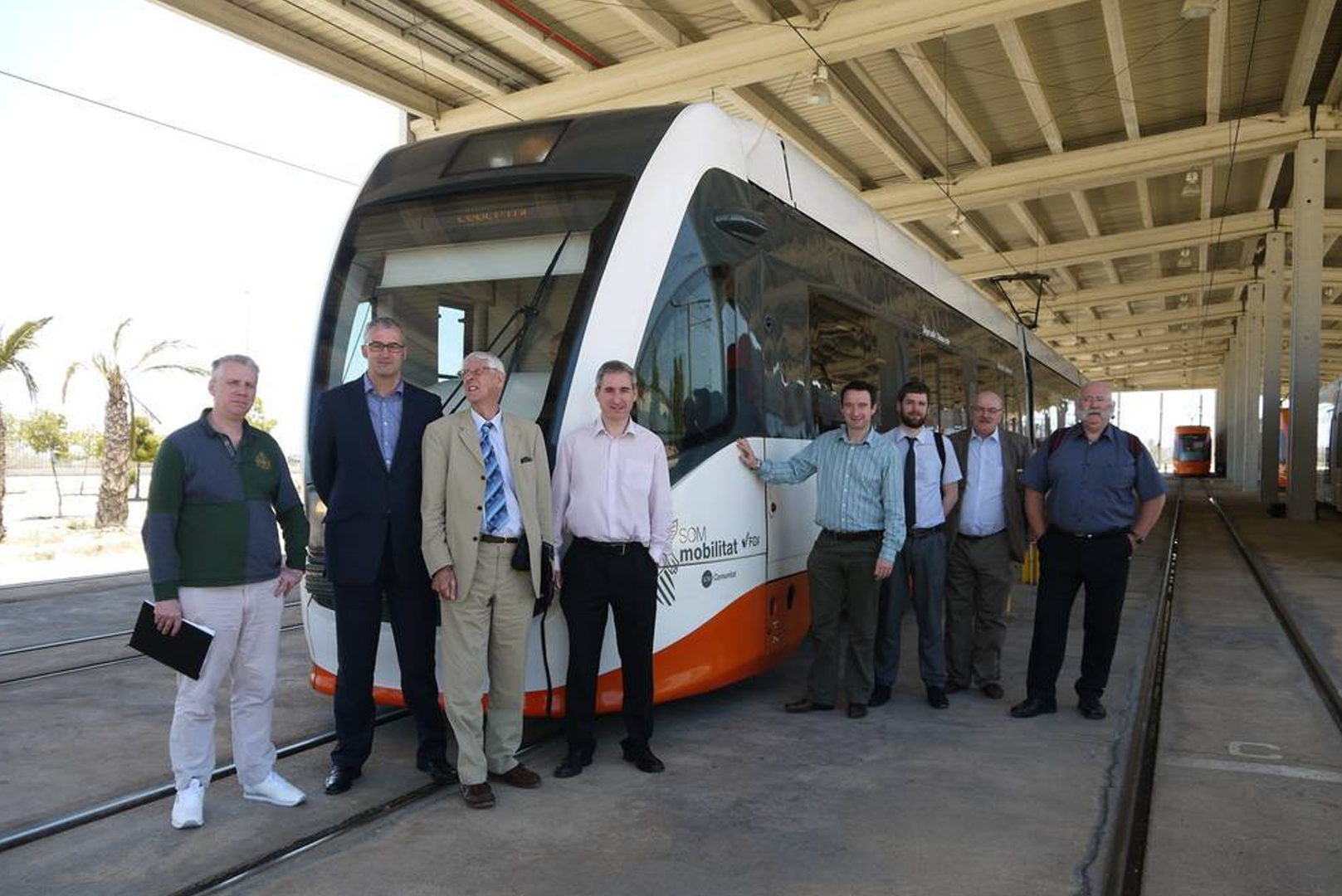
Would you like to know more?
Head to our contact page to get in touch with us. We are always happy to help.
Light Rail (UK) Group